
Inversion (linguistics)
Inversion is the alteration of the normal word order in a clause, often swapping verb and subject. This article outlines types, cross-linguistic patterns, examples, and functions in English and other languages.
Overview
Inversion in linguistics refers to constructions where the usual sequence of constituents in a clause is changed so that an element—often a verb—appears before its normal partner, such as the subject. In English this most frequently takes the form of subject–auxiliary inversion in questions. For a general introduction see basic sources, and for practical examples consult explanatory material.
Image gallery
1 Image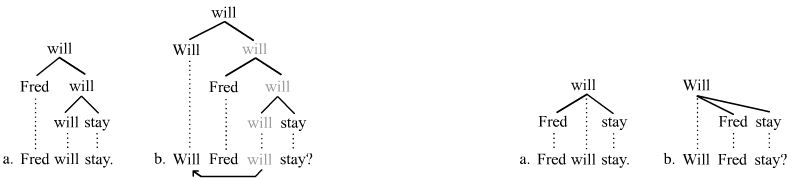
Common types
Several distinct inversion patterns are recognized; in English the main ones include:
- Subject–auxiliary inversion: the auxiliary and subject switch places in yes/no questions: "Are you coming?"; related materials: questions and auxiliaries.
- Locative inversion: a locative phrase is fronted and the verb precedes the subject: "On the hill stood a lone tree." Background discussion: locative constructions.
- Negative or restrictive fronting: fronting of negative adverbials causes auxiliary inversion: "Never have I seen such chaos." See negation and inversion.
- Conditional inversion: omission of if with inversion: "Had I known, I would have acted differently." Further notes at conditional forms.
History and cross-linguistic patterns
Inversion patterns vary widely across languages. Germanic languages show verb-second (V2) constraints that create apparent inversion when non-subjects are fronted. Languages with freer word order may allow full verbs to invert with subjects or permit inversion in a broader set of environments. Comparative overviews are available via comparative linguistics.
Functions and examples
Inversion can signal grammatical functions (forming questions), mark focus or topic, create stylistic or poetic effects, or satisfy word order constraints of a language. Examples: "Do you know the way?" (question formation), "Into the room ran the child" (dramatic emphasis), "Should you need help, call me" (conditional inversion). Many pedagogical descriptions discuss how inversion interacts with do-support, auxiliaries, and tense.
Distinctive points and cautions
Inversion is not a single phenomenon but a set of constructions with different triggers and constraints. It should be distinguished from simple fronting or topicalization where word order changes without verb movement. Analyses differ among frameworks, so descriptions often depend on theoretical assumptions about movement, agreement, or surface order. For deeper study consult specialized grammars and cross-linguistic surveys referenced above.
Questions and answers
Q: What is inversion in linguistics?
A: Inversion in linguistics is when the words in a sentence are in a different order than normal.
Q: What is the most common kind of inversion in English?
A: The most common kind of inversion in English is subject-auxiliary inversion.
Q: In which situations does subject-auxiliary inversion usually occur?
A: Subject-auxiliary inversion usually occurs in questions such as 'Are you coming?'.
Q: What happens in subject-auxiliary inversion?
A: In subject-auxiliary inversion, the auxiliary verb changes places with its subject.
Q: Can inversion occur with more verbs in other languages?
A: Yes, in many other languages with a freer word order than English, inversion can also happen with more verbs (not just auxiliaries) and other kinds of words.
Q: What is an example of subject-auxiliary inversion in a question?
A: 'Are you coming?' is an example of subject-auxiliary inversion in a question.
Q: Is subject-auxiliary inversion unique to English?
A: No, subject-auxiliary inversion is not unique to English and can also occur in other languages.
Related articles
Author
AlegsaOnline.com Inversion (linguistics) Leandro Alegsa
URL: https://en.alegsaonline.com/art/47917