
A Generation (Pokolenie) — 1955 Polish World War II drama by Andrzej Wajda
1955 Polish World War II drama directed by Andrzej Wajda, adapted from Bohdan Czeszko's novel; the director's feature debut and the first film in his wartime trilogy, notable for early Roman Polanski appearance.
A Generation is a 1955 Polish film directed by Andrzej Wajda and released in Poland under the title Pokolenie. Adapted from Bohdan Czeszko's novel, the picture was Wajda's first feature-length film and belongs to the postwar wave of Polish cinema that examined the recent national experience of occupation and resistance.
Image gallery
1 Image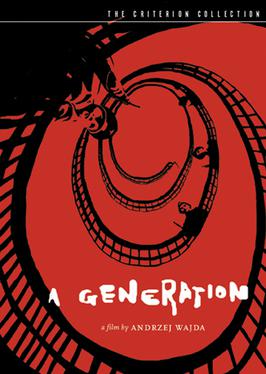
Overview and plot focus
The story follows young people in German-occupied Poland who become involved in underground activity and face moral choices shaped by war. The narrative concentrates on ordinary city life transformed by occupation: friendships, betrayals, and the hardening of adolescents into participants in the resistance movement. The film is presented in stark black-and-white, emphasizing a realist and sometimes documentary-like tone.
Production and literary source
Bohdan Czeszko's novel provided a framework of characters and incidents that Wajda reshaped for cinema, concentrating on atmosphere and collective experience rather than a single heroic figure. Produced in the mid-1950s, the film reflects the constraints and artistic possibilities of Polish studios at the time, with an economy of staging and an emphasis on ensemble performance.
Cast and characters
- Tadeusz Łomnicki — one of the principal actors of the period
- Urszula Modrzyńska — supporting lead
- Tadeusz Janczar and Ryszard Kotys — key members of the ensemble
- Roman Polanski — appears in an early acting role before becoming widely known as a director
Themes, style and significance
A Generation explores youth radicalization, ethical ambiguity, and communal resilience under occupation. Wajda's approach mixes social realism with expressive visual choices: tight interiors, street-level action, and close attention to faces and gestures. The result is less a traditional war epic than an intimate study of how war shapes ordinary lives.
Legacy and trilogy context
The film is commonly seen as the opening entry in Wajda's informal World War II trilogy, followed by Kanal and Ashes and Diamonds. Together these films helped establish Wajda's reputation and influenced subsequent generations of Polish filmmakers. While not as internationally famous as later entries, A Generation remains important for its historical perspective and for introducing a major director and several prominent actors.
For further reading on the film and its place in Polish cinema, see contemporary critical surveys and director retrospectives that discuss the trilogy's formal development and cultural impact.
Tags
Related articles
Author
AlegsaOnline.com A Generation (Pokolenie) — 1955 Polish World War II drama by Andrzej Wajda Leandro Alegsa
URL: https://en.alegsaonline.com/art/47
Sources
- culture.pl : ""Pokolenie", reż. Andrzej Wajda"