
House of Dunkeld: medieval Scottish royal dynasty (11th–13th centuries)
Medieval Scottish royal house that supplied kings from the mid-11th century to 1290. Known for reforming government, introducing continental ties, and ending with the succession crisis after Margaret, Maid of Norway.
Overview
The House of Dunkeld was the dominant royal line in Scotland across the eleventh to late thirteenth centuries. Its monarchs shaped the transition from a chiefly, kin-based Gaelic polity toward a more centralized medieval kingdom with stronger links to England and continental Europe. Scholarly practice varies: some authors begin the line with Malcolm III (often called Canmore), while others include earlier rulers such as Duncan I and his successors.
Image gallery
9 Images



Origins and succession
The dynasty emerged from the complex dynastic politics of early medieval Scotland. It succeeded the earlier rulers associated with the House of Alpin and, over generations, absorbed competing claims. Succession in this period could be contested by rival branches, and a mix of Gaelic, Norse and Anglo-Norman influences affected royal marriage strategies and alliances. For contemporary readers, the line is commonly presented as the sequence of Scottish kings who governed from the 1030s or 1050s until 1290.
Notable monarchs
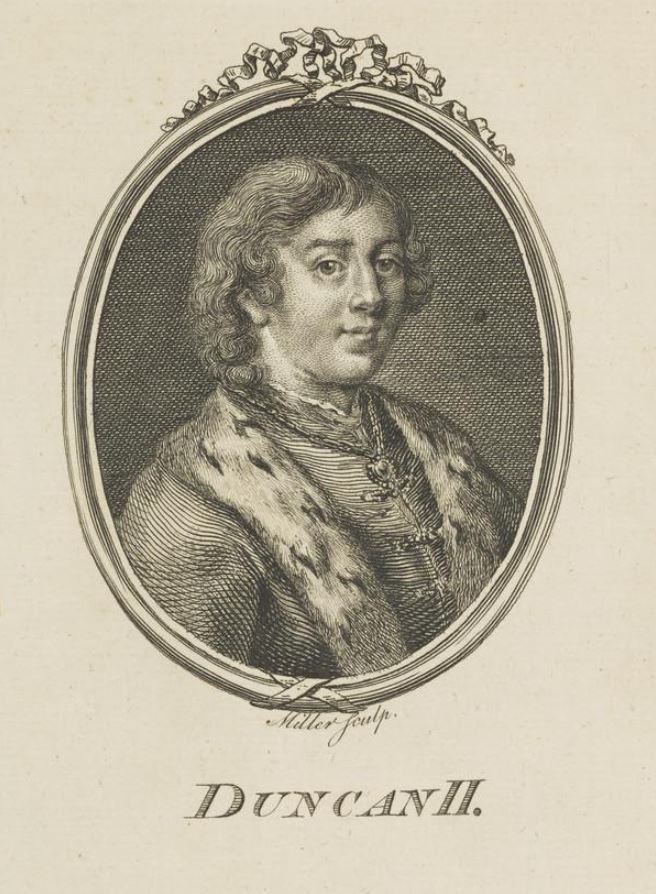
- Duncan I (early 11th century) — traditionally cited as an early figure associated with the dynasty.
- Macbeth and Lulach — rulers of the mid-11th century, often discussed in both history and literature.
- Malcolm III (Canmore) (reigned mid–late 11th century) — expanded continental contacts and married Margaret of Wessex, strengthening Anglo-Norman ties.
- David I (12th century) — introduced administrative and ecclesiastical reforms, foundation of burghs and Norman-style government practices.
- William I "the Lion", Alexander II and Alexander III (12th–13th centuries) — consolidated royal authority and law across the realm.
- Margaret, the Maid of Norway (died 1290) — her death precipitated the succession crisis that ended the dynasty's uninterrupted rule.
Government, law and reform
Under Dunkeld kings the Scottish monarchy adopted many continental institutions: the creation and support of monasteries, the establishment of royal boroughs (burghs) for trade, and the adoption of feudal practices in landholding and governance. David I is often singled out for introducing Norman-style feudal tenure and for encouraging immigration of continental and Anglo-Norman knights and clerics, which reshaped elites and administration.
Decline, legacy and historical debate
The dynasty's end was not a sudden collapse but the result of dynastic misfortune. The death of Alexander III and then of his heir, Margaret the Maid of Norway, left no clear adult successor and opened a political crisis that led to arbitration, competing claims, and ultimately to the wars of the late 13th and early 14th centuries. Historians debate when the House of Dunkeld properly begins and how distinct it is from the House of Alpin; the alternative name "Canmore" is often used for Malcolm III's descendants. For an overview of succession and lists of rulers, see Scottish rulers.
Notable facts
- The dynasty bridged Gaelic and Anglo-Norman cultures, leaving lasting legal, ecclesiastical and urban foundations.
- Its reign saw Scotland become more integrated into European political and ecclesiastical networks.
- Scholarly sources vary over whether to start the house with Duncan I or Malcolm III; both conventions appear in modern works.
Related articles
Author
AlegsaOnline.com House of Dunkeld: medieval Scottish royal dynasty (11th–13th centuries) Leandro Alegsa
URL: https://en.alegsaonline.com/art/45308