
Homs: Syrian city on the Orontes, historical Emesa and regional center
Homs (Arabic: حمص) is a major city in west-central Syria on the Orontes River, historically Emesa. It is the administrative capital of Homs Governorate, with universities, historic sites, and noted sports clubs.
Overview
Homs is one of Syria's largest cities and the administrative centre of the Homs Governorate and its district. Situated on the Orontes River in west‑central Syria, the city has long been a regional market and transport junction linking the Mediterranean coast with inland Syria. Its Arabic name is reflected in local usage; see the Arabic name for the native form. The city is often identified among Syria's principal urban centres and appears frequently in modern geographical and historical references to Syria.
Image gallery
10 Images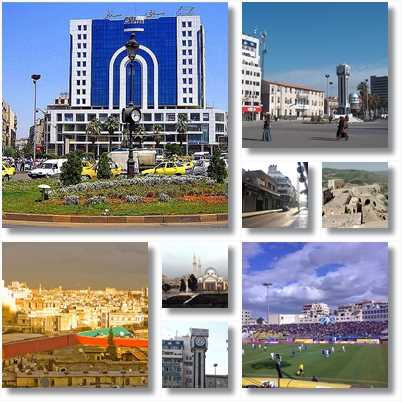


Geography and economy
Homs lies on fertile plains alongside the Orontes and is surrounded by agricultural land that produces cereals, fruit and vegetables. Historically its location made it an important stop on inland trade routes. In the 20th century the urban economy diversified to include food processing, textiles, engineering workshops and other light industry. The city functions as a local commercial hub for the governorate and nearby rural districts, with marketplaces and transport corridors connecting to larger regional centres.
History
The site of Homs has been inhabited since antiquity and appears in classical sources under the name Emesa. In the Roman and Byzantine periods the city was a regional centre with a distinctive local elite; in the early Islamic era it continued as an administrative and commercial town. Over many centuries Homs accumulated archaeological remains and historic architecture that reflect its layered past, from ancient ruins to medieval mosques and Ottoman‑era structures.
Demography and administration
According to the 2004 census the city had around 652,609 inhabitants; demographic figures have shifted since then. Administratively, Homs serves as the capital of the governorate and of the Homs District, providing government services for the surrounding province and acting as a focal point for regional governance and public institutions.
Culture, education and landmarks
Homs hosts Al‑Baath University, one of Syria's major public universities, and several other colleges and educational centres that serve students from across the region. Cultural life is expressed through traditional markets (souks), religious buildings and community festivals. Key landmarks often noted by visitors and scholars include:
- Khalid ibn al‑Walid Mosque and other historic religious sites of local significance
- The old city quarters with narrow streets and traditional souks
- Riverside promenades and civic squares that reflect the city's urban history
Sports and recreation
Sport plays an active role in community life. Homs is home to prominent football clubs, including Al‑Karamah, one of the city's longstanding clubs founded in the early 20th century, and Al‑Wathba. The principal stadium, Khaled ibn al‑Walid Stadium, has served as a venue for domestic league matches and regional events and has accommodated tens of thousands of spectators at major fixtures.
Heritage and modern context
Because of its long history and continuous habitation, Homs is of interest to historians and archaeologists. In the early 21st century the city experienced significant social and infrastructural challenges and parts of its urban fabric and heritage were damaged during armed conflict. Since then there have been local and international efforts to document, preserve and restore historic sites and to rebuild civic life, though recovery has been uneven. Visitors and researchers approach Homs both as a living urban centre and as a place with layered historical identities.
Further reading and resources
- General historical and geographical guides to Homs and its province; see regional overviews and administrative sources.
- Information on higher education and public institutions at Al‑Baath University and other colleges.
- Local sports histories and club records, including those of Al‑Karamah and Al‑Wathba.
Related articles
Author
AlegsaOnline.com Homs: Syrian city on the Orontes, historical Emesa and regional center Leandro Alegsa
URL: https://en.alegsaonline.com/art/44956
Sources
- sana.sy : "President al-Assad Swears in Homs New Governor"
- cbssyr.org : Homs city population
- weltfussballarchiv.com : "Al-Karamah Sports Club"
- weltfussballarchiv.com : "Al-Wathba"