
Harz (district)
A rural district in Saxony-Anhalt, Germany, covering the northern Harz mountains and including the Brocken; noted for national park areas, historic towns and a tourism-oriented economy.
Overview
The Harz district is an administrative district in Saxony-Anhalt in central Europe. It takes its name from the Harz mountain range that dominates the area and contains the Brocken, the highest peak of the range and the highest point in northern Germany. The district combines upland forests, valleys and a number of small to medium-sized towns, and is a recognized destination for outdoor recreation and cultural tourism.
Image gallery
1 Image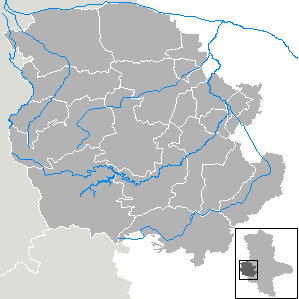
Geography and natural environment
The district covers parts of the northern slopes of the Harz mountains and adjacent lowlands. Terrain ranges from dense coniferous and mixed woodland to high moorland and rocky summits. Much of the higher ground lies within protected areas and national park zones designed to conserve characteristic mountain ecosystems. The Brocken rises to about 1,141 metres and is a focal point for visitors and for scientific observation of highland climates.
Administrative makeup and towns
Harz is organized as a rural district with an administrative centre in Halberstadt. It contains a number of historically and architecturally important towns, including Quedlinburg, known for its well-preserved medieval old town and timber-framed houses, and Wernigerode, with its castle and historic centre. The district was formed during a regional administrative reform in the 2000s and brings together urban centres and numerous smaller municipalities.
Economy, transport and tourism
Tourism is a major economic driver, supported by hiking trails, winter sport facilities and heritage attractions such as the Harz Narrow Gauge Railways—steam and historic trains that run to mountain stations including the Brocken. Forestry, small-scale manufacturing and services also contribute. The long history of mining in the broader Harz region shaped settlements and culture, though modern economic activity is far more diverse.
Cultural significance and notable facts
The Harz region has a strong place in German folklore and literature; the Brocken figures prominently in myths and in works such as Goethe’s Faust. Quedlinburg’s old town is recognized for its cultural value, and parts of the Harz are managed to balance conservation with public access. Visitors commonly combine natural sightseeing with historic town centres when exploring the district.
Quick facts and attractions
- Named after the Harz mountains and including the Brocken summit.
- Contains protected natural areas and sections of the Harz National Park.
- Notable towns: Halberstadt (administrative centre), Quedlinburg, Wernigerode.
- Heritage railway services and a strong tourism sector for hiking and winter sports.
- Located within Germany, offering both cultural heritage and natural landscapes.
Related articles
Author
AlegsaOnline.com Harz (district) Leandro Alegsa
URL: https://en.alegsaonline.com/art/42721