
Hatay: crossroads of cultures on Turkey’s southeastern Mediterranean coast
Hatay, a province and historic region centered on Antakya (ancient Antioch), links the Mediterranean to Syria. Noted for its multicultural heritage, archaeology, cuisine and strategic port cities.
Hatay commonly refers to a province in southern Turkey whose administrative centre is the city of Antakya (historically known as Antioch). The region lies on the eastern Mediterranean coast and shares an international border with Syria. Its geography includes coastal plains, fertile river valleys and a short maritime shoreline that has shaped local trade and agriculture.
Image gallery
10 Images


Identity and population
Hatay has a long history of cultural and religious diversity. Today its society includes Turkish and Arab communities alongside smaller groups such as Alawites and various Christian denominations. Many residents practice Islam, including adherents of Sunni Islam, and there are longstanding Christian traditions carried from the region’s ancient past. Public life in Hatay reflects this multicultural mix in language, food and festivals; Arabic and Turkish are both commonly heard.
History and historical importance
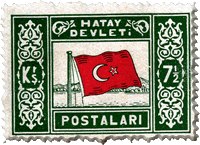
The area was an influential urban centre in antiquity under the name Antioch, famed as a Hellenistic and later Roman city and an early centre of Christianity. Over centuries it was ruled by successive empires. In the 20th century the modern political status of Hatay was shaped by the collapse of the Ottoman Empire, post–World War I arrangements and local efforts for autonomy. The short-lived Hatay State (1938–1939) preceded the province’s integration into the Republic of Turkey in 1939, an episode that remains an important element of local memory.
Economy, culture and sites
Hatay’s economy mixes agriculture, commerce and industry. Fertile lands support citrus fruits, olives and other crops, while the coastal district of İskenderun functions as an industrial and port hub. Cultural attractions include archaeological museums with celebrated mosaics, ancient ruins, and vibrant local cuisine—famous dishes reflect Arab and Turkish influences. The region is also known for its traditional handicrafts and religious pilgrimage sites.
Contemporary notes and distinctions
Hatay’s border position gives it strategic significance and a distinct cross-border character. It has experienced the effects of regional events due to proximity to Syria and has been part of international humanitarian and reconstruction attention in recent years. The province is frequently cited in studies of minority rights, regional history and Mediterranean trade corridors. Local identity tends to emphasize coexistence and a layered historical legacy.
- Major urban centers: Antakya (historic Antioch), İskenderun and other coastal towns.
- Key attractions: Antakya museums and archaeological sites, traditional markets and regional cuisine.
- Cross-border links: close historical, familial and commercial ties with communities in Syria and the wider Levant.
- Communities: includes Turkish and Arab communities, with diverse religious practices.
For further reading and resources about Hatay’s archaeology, demographics and modern governance, consult regional studies and museum collections that focus on its unique role as a cultural crossroads in the eastern Mediterranean. Additional official or academic sources provide up-to-date administrative and social information.
Related articles
Author
AlegsaOnline.com Hatay: crossroads of cultures on Turkey’s southeastern Mediterranean coast Leandro Alegsa
URL: https://en.alegsaonline.com/art/42781