
Happiness (1998 film)
Todd Solondz’s controversial 1998 black comedy-drama about suburban loneliness and secret desires, noted for its ensemble cast, NC-17 rating dispute, unrated release and Golden Globe screenplay nomination.
Overview
Happiness is a 1998 American black comedy-drama written and directed by Todd Solondz. The film interweaves multiple storylines about people in suburban New Jersey whose lives reveal longing, alienation and private transgressions. Its stark tone and willingness to address taboo topics marked it as a provocative entry in late-1990s independent cinema and established Solondz’s reputation for confronting difficult emotional and ethical material.
Image gallery
1 Image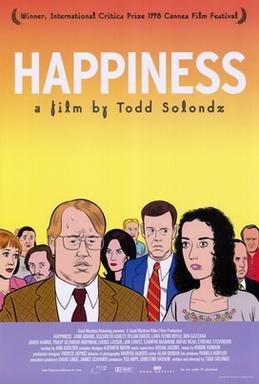
Themes and structure
The narrative is built as an ensemble mosaic: distinct but thematically connected characters cross paths or echo each other’s struggles. Key themes include the search for intimacy, isolation within domestic life, the disparity between public appearance and private impulse, and the ethical problems of empathy for morally compromised figures. The film balances uncomfortable humor with serious drama, inviting viewers to examine how sympathy and judgment operate when characters commit or endure harm.
Cast and characters
- Jane Adams — plays a character whose attempts to form connections reveal the film’s emotional core.
- Jon Lovitz — cast against the broader comic persona he was known for, in a supporting role that complicates viewer expectations.
- Philip Seymour Hoffman — delivers an early-career performance as one of the film’s troubled figures, showing the intensity that would define his later work.
- Dylan Baker — portrays an ordinary-looking but morally ambiguous character, contributing to the film’s exploration of hidden lives.
- Lara Flynn Boyle — appears as part of the interlaced stories that map suburban relationships and dissatisfaction.
Production and rating controversy
After completion, the Motion Picture Association initially assigned the film an NC-17 rating because of explicit content and its frank approach to sexual material and disturbing behavior. That classification posed practical problems for advertising and theatrical bookings. Rather than make cuts to secure an R rating, the filmmakers and distributor chose to release the film unrated, a decision that intensified public debate about film classification, censorship, and the commercial limits placed on provocative independent work. The dispute highlighted how ratings can influence a film’s distribution and audience reach.
Reception and legacy
Critical response upon release was divided. Some critics praised the screenplay’s dark wit and the ensemble’s performances; others criticized its tone as mean-spirited or exploitative. The film’s screenplay earned a Golden Globe nomination for Best Screenplay, recognizing industry acknowledgement of its writing. Over time, many critics and scholars have reassessed the film as an important, if polarizing, work that challenged conventions about sympathetic protagonists and moral clarity in cinema.
Notable facts
- The film helped to define Todd Solondz’s body of work: provocative, character-driven stories that probe suburban malaise and ethical ambiguity.
- Its release without an MPAA rating is often discussed in analyses of how classification systems affect marketing and exhibition; the issue affected the movie’s advertising and distribution.
- Because of its uncompromising approach to sensitive subjects, Happiness continues to be studied in film courses and featured in retrospectives examining late-20th-century independent American cinema.
For viewers approaching the film, it is useful to know that Happiness intentionally unsettles and provokes in service of exploring complex human emotions and social taboos. Its combination of dark humor, formal ambition and contentious subject matter ensures the film remains a frequent topic of discussion among critics, filmmakers and scholars interested in the ethics of representation and the boundaries of cinematic storytelling.
Related articles
Author
AlegsaOnline.com Happiness (1998 film) Leandro Alegsa
URL: https://en.alegsaonline.com/art/42337