
Harry Potter and the Deathly Hallows – Part 1 (2010 film)
2010 fantasy film directed by David Yates adapting the first half of J.K. Rowling's final novel. Darker in tone, it follows Harry, Ron and Hermione as they flee, hunt Horcruxes, and set up a cliffhanger conclusion.
Harry Potter and the Deathly Hallows – Part 1 is a 2010 British–American fantasy film adaptation of the final novel by J. K. Rowling. The picture completes the transition of the long-running series toward a more mature, somber style: its emphasis shifts away from school life and toward a tense, mobile search for fragments of Voldemort's soul. The film was directed by David Yates and released by Warner Bros.. For more on the production entry itself see the main film record.
Image gallery
3 Images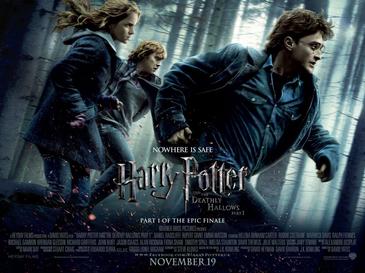
Overview and narrative
The storyline follows Harry Potter and his friends as they leave Hogwarts to complete a quest laid out in the novel. Rather than a single contained mystery, the plot is structured as a road story and survival drama: the trio confronts moral choices, dwindling resources, and growing hostility as the wizarding war expands. The film intentionally ends without resolving the central conflict, because it was released as the first of two cinematic parts adapted from the concluding book; the split allowed the filmmakers to preserve key scenes and to conclude on a deliberate cliffhanger.
Cast, crew and style
Principal performances are by Daniel Radcliffe, Rupert Grint, and Emma Watson, supported by a large ensemble. The creative team chose a muted palette, handheld and intimate camera work, and a restrained approach to visual effects to underline the darker mood. The score and production design further distance the film from earlier, more whimsical entries in the franchise.
Production and adaptation choices
Adapting the expansive final novel required editorial decisions: some material was condensed or re-ordered, new connective scenes were added, and other moments were omitted to fit the film’s tone and runtime. The choice to split the book into two films was controversial among fans and critics but allowed more space to dramatize character moments and to stage large set pieces in the follow-up.
Reception, significance and legacy
Critics noted the film's deliberate pacing and mature themes; many praised the principal trio’s performances and the visual atmosphere, while some viewers found the first half quieter than earlier entries. Commercially and culturally, the movie reinforced the series’ shift into adult material and prepared audiences for the concluding chapter. It is often discussed for its tone, its cliffhanger ending, and its role in rounding out a decade-spanning film saga.
Notable aspects and further reading
- The film is directly based on J. K. Rowling’s novel and intentionally leaves major revelations to the second installment.
- Direction and production choices emphasize character and atmosphere over spectacle; this is a defining characteristic of the two-part adaptation.
- For cast biographies and production credits see individual entries for key figures and the studio distribution notes at Warner Bros. and affiliated resources.
Questions and answers
Q: What is Harry Potter and the Deathly Hallows – Part 1?
A: Harry Potter and the Deathly Hallows – Part 1 is a British-American fantasy movie released in 2010, based on the book by J. K. Rowling, directed by David Yates and distributed by Warner Bros. Pictures.
Q: Who stars in Harry Potter and the Deathly Hallows – Part 1?
A: The movie stars Daniel Radcliffe as Harry Potter, along with Rupert Grint and Emma Watson.
Q: Who directed Harry Potter and the Deathly Hallows – Part 1?
A: The movie was directed by David Yates.
Q: Is Harry Potter and the Deathly Hallows – Part 1 based on a book?
A: Yes, it is based on the book by J. K. Rowling.
Q: When was Harry Potter and the Deathly Hallows – Part 1 released?
A: The movie was released in 2010.
Q: Who distributed Harry Potter and the Deathly Hallows – Part 1?
A: The movie was distributed by Warner Bros. Pictures.
Q: What genre is Harry Potter and the Deathly Hallows – Part 1?
A: The movie belongs to the fantasy genre.
Related articles
Author
AlegsaOnline.com Harry Potter and the Deathly Hallows – Part 1 (2010 film) Leandro Alegsa
URL: https://en.alegsaonline.com/art/42630
Sources
- thewrap.com : "Get Ready for the Biggest 'Potter' Opening Yet"
- thewrap.com : "'Harry Potter' Looks to Shatter Box Office Record With $150M+ Debut"
- boxofficemojo.com : "Harry Potter and the Deathly Hallows Part 1 (2010)"