
Hamiet Bluiett — American Baritone Saxophonist and Composer
Overview of Hamiet Bluiett, his instruments, career with the World Saxophone Quartet, stylistic contributions, recordings, and legacy in jazz and baritone sax performance.
Overview
Hamiet Bluiett (pronounced BLUE-et; September 16, 1940 – October 4, 2018) was an American jazz saxophonist, clarinetist and composer best known for bringing the baritone saxophone to prominence as a lead voice in modern jazz. Born and raised in Brooklyn, Illinois, Bluiett combined a large, resonant tone with a deep grounding in blues and African American musical traditions. He was widely admired for his technical command, inventiveness, and ability to move the baritone sax beyond its traditional role as an accompanimental or rhythm-section instrument.
Image gallery
2 Images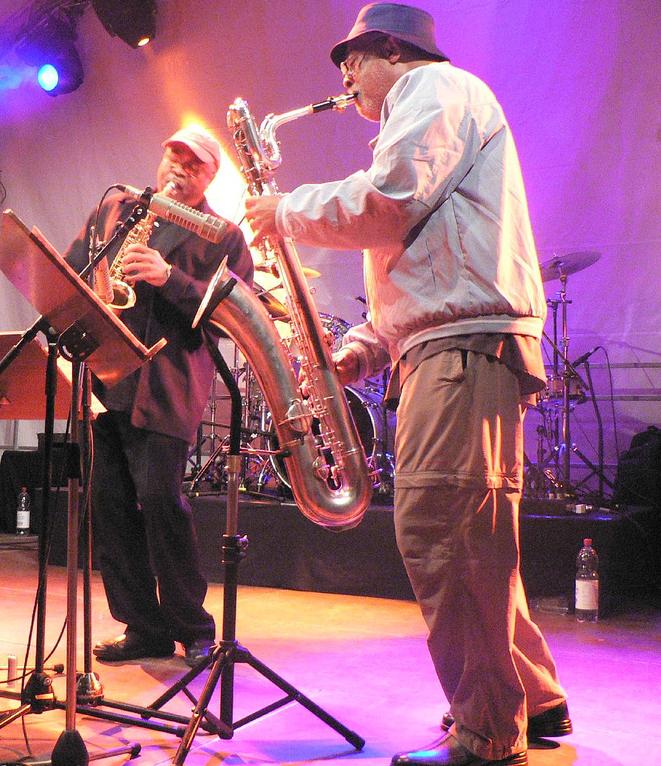

Instruments and stylistic traits
Bluiett was a multi-instrumentalist whose primary instrument was the baritone saxophone. He also performed and recorded on a variety of low-register and auxiliary woodwinds, which contributed to his distinctive sonic palette. Characteristics often associated with his playing include a muscular low register, rhythmic drive, and an expressive use of extended techniques that stretched the instrument's conventional capabilities.
- Baritone saxophone (principal instrument)
- Bass saxophone
- E-flat alto clarinet and E-flat contra-alto clarinet
- Wooden flute and other reed instruments
His approach emphasized both individual improvisation and collective ensemble textures. He could command dense, orchestral textures as well as intimate blues-inflected phrases, which made him a flexible collaborator in free jazz, avant-garde, and more traditional settings.
Career and notable collaborations
Bluiett came to wide attention as a founding member of the World Saxophone Quartet, an influential ensemble that explored saxophone-only chamber music and improvisation. The group, formed in the late 1970s, was notable for treating the saxophone quartet as a complete sonic entity rather than a section of a larger band. Outside that ensemble he led his own groups, composed original works, and appeared on numerous recordings as a sideman and leader.
Throughout his career he toured internationally, contributed to festivals, and recorded across a range of labels. Bluiett's work often bridged the gap between avant-garde experimentation and the blues-rooted language of jazz, helping to broaden audiences for the baritone sax and for expanded woodwind timbres in contemporary music.
Legacy and final years
Hamiet Bluiett is remembered for elevating the baritone saxophone's profile, inspiring subsequent generations of low-register players, and for his role in landmark ensembles that reimagined small-group jazz. He continued to perform and teach into his later years. Bluiett died of complications following a stroke in Brooklyn, Illinois on October 4, 2018, at the age of 78.
Further reading and resources
For recordings, interviews, and selected discographies consult dedicated jazz archives and musician profiles. Contemporary entries and retrospectives often highlight Bluiett's recordings with the World Saxophone Quartet and his solo projects; many such resources provide listening guides and analyses of his signature pieces. See also ensembles and musicians who collaborated with him for a broader view of his influence in modern jazz.
Selected resources and reference points: biographical summaries, compositional listings, and local histories of Brooklyn, Illinois. Additional medical and news accounts relating to his death are cited in reports referencing the medical cause.
Related articles
Author
AlegsaOnline.com Hamiet Bluiett — American Baritone Saxophonist and Composer Leandro Alegsa
URL: https://en.alegsaonline.com/art/42028