
Habitation at Port-Royal
Early 17th-century French colonial settlement at Port-Royal (now Annapolis Royal, Nova Scotia); reconstructed today as a National Historic Site illustrating colonial life, trade, and relations with Mi'kmaq.
Overview
The Habitation at Port-Royal was a small French colonial settlement established in 1605 on the shores of the Bay of Fundy in what is now Nova Scotia. Founded under the direction of Pierre Dugua, Sieur de Mons, with the involvement of cartographer and explorer Samuel de Champlain, it became one of the earliest sustained French presences in northeastern North America. The site represents early attempts at permanent European settlement, agriculture, and trade in the region.
Image gallery
6 Images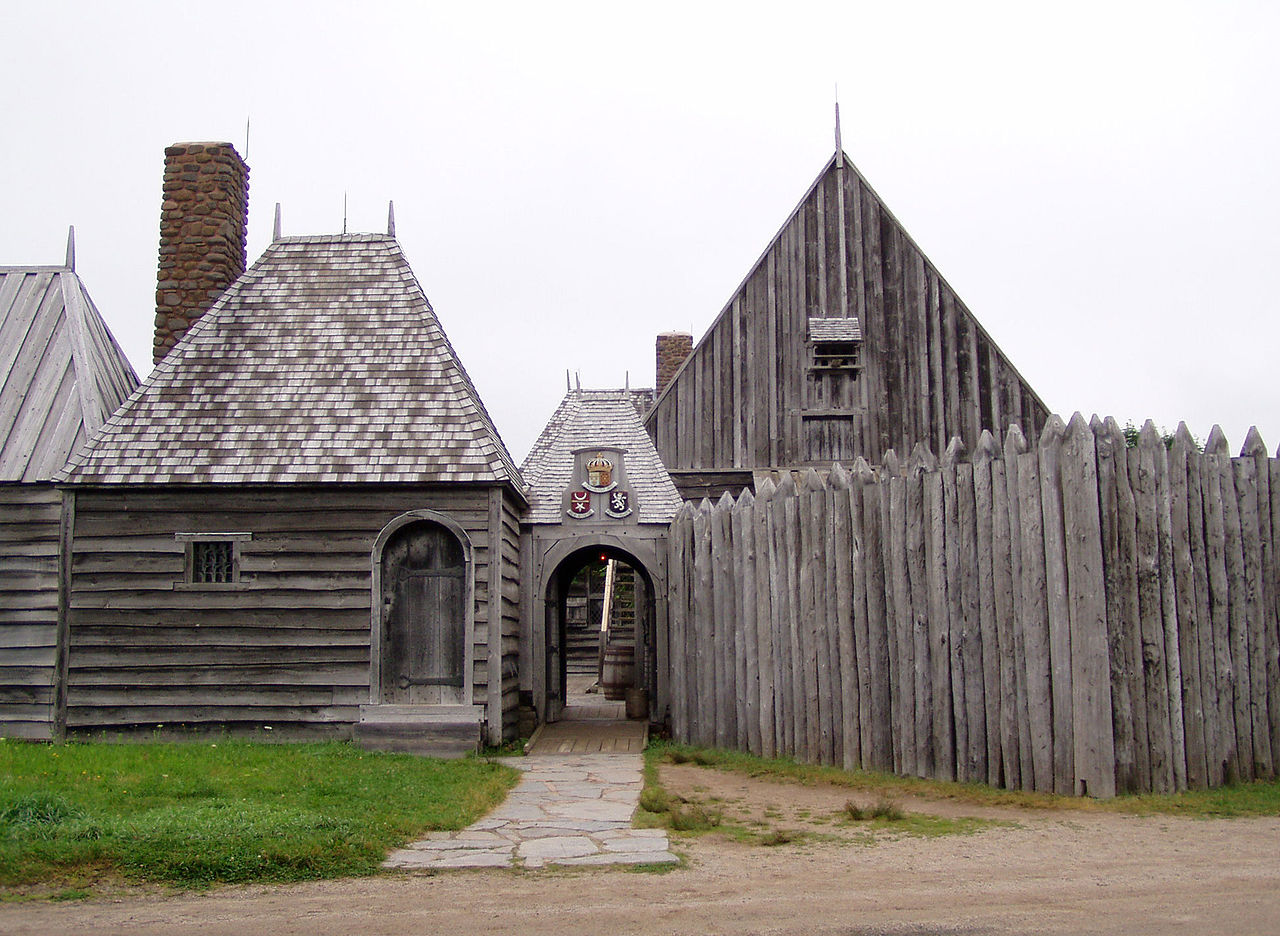


Structure and daily life
The original habitation combined housing, workshops and storage within a fortified enclosure. Buildings were timber-framed with thatch or wooden roofs; a palisade protected inhabitants from weather and conflict. Residents practiced mixed subsistence: small-scale farming, livestock, fishing and fur trade. Daily life included carpentry, cooking, preserving food for winter, and maintaining relations with visiting Indigenous peoples, notably the Mi'kmaq, who traded and sometimes assisted with local resources.
History and development
Created in 1605, the settlement was mapped and described by Champlain during the early years. It served as a seasonal and then semi-permanent base for exploration, mapmaking and trade. The habitation was attacked and dismantled in the early 17th century by English forces from Virginia, which disrupted the French presence for a time. Throughout the 17th and early 18th centuries the area remained central to the colony of Acadia and later changed hands between French and British authorities, eventually becoming the town of Annapolis Royal.
Significance and legacy
Port-Royal is important for its role in early European colonization, its agricultural and maritime adaptations to a new environment, and its interactions with Indigenous nations. The site is often cited as an antecedent to Acadian culture and the later development of Nova Scotia. A reconstructed habitation built in the 20th century interprets 17th-century construction and lifestyles for visitors and scholars.
Notable facts
- The site illustrates early French colonial architecture and settlement organization.
- Samuel de Champlain’s observations from Port-Royal contributed to early maps of the region.
- Relations with the Mi'kmaq were central to survival and trade in the settlement’s early years.
Further information
For official descriptions, visitor information and archival resources see: site overview, provincial heritage pages at Nova Scotia heritage, and broader Canadian historic listings at national register.
Related articles
Author
AlegsaOnline.com Habitation at Port-Royal Leandro Alegsa
URL: https://en.alegsaonline.com/art/41679