
Guillain–Barré syndrome: acute immune-mediated peripheral neuropathy
Acute immune-mediated disorder causing rapidly progressive, often ascending, weakness and sensory changes. Rare but the leading cause of acute non‑traumatic paralysis; treated with immunotherapy and supportive care.
Overview
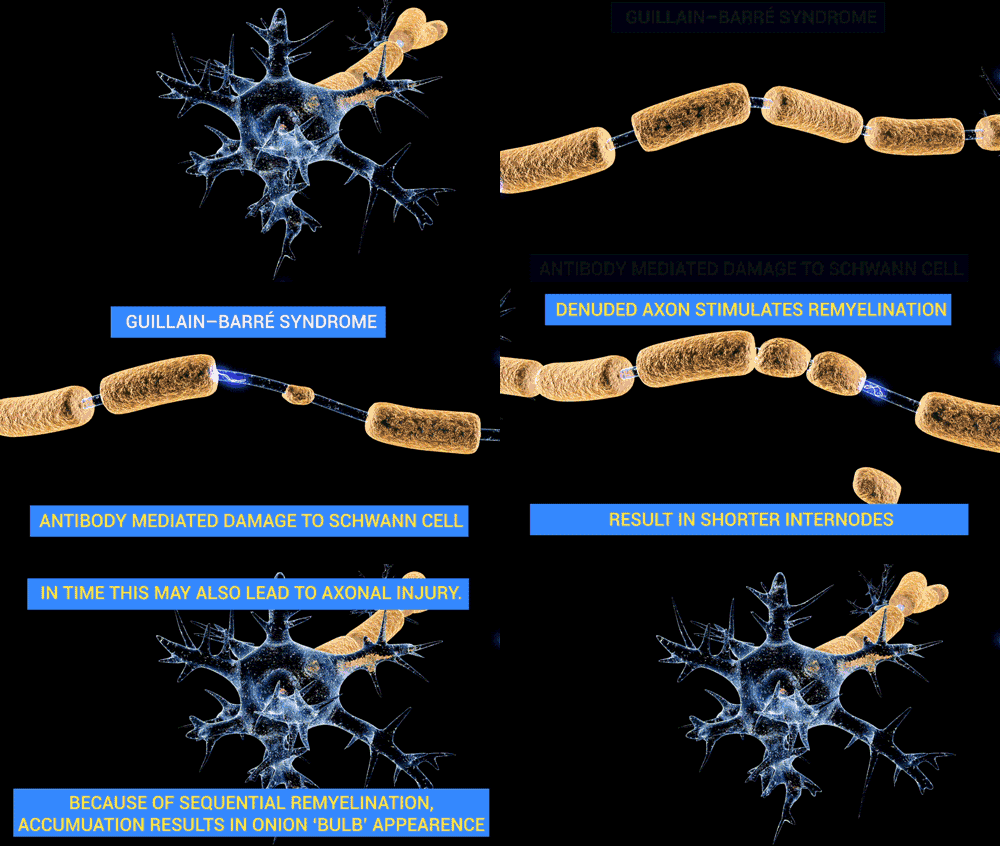
Guillain–Barré syndrome (GBS) is an acute immune-mediated disorder that attacks the peripheral nervous system, producing rapidly progressive weakness and sensory disturbance. Symptoms commonly begin in the feet and hands and move upward (an "ascending" pattern), but the course is variable. GBS is uncommon, with roughly 1–2 cases per 100,000 people each year, yet it is the most frequent cause of acute non‑traumatic paralysis in otherwise healthy individuals.
Image gallery
4 Images


Typical features and variants
Clinical features may include muscle weakness, decreased or absent reflexes, numbness or tingling, and autonomic dysfunction (blood pressure or heart‑rate instability). Key variants and patterns are recognized rather than a single uniform disease:
- Acute inflammatory demyelinating polyneuropathy (AIDP) – the most common form in Europe and North America.
- Acute motor axonal neuropathy (AMAN) and other axonal forms – more common in some geographic regions and often linked to specific infections.
- Miller Fisher syndrome – a variant with prominent eye movement problems, ataxia and areflexia.
Causes, triggers and pathophysiology
GBS is generally regarded as an autoimmune reaction often triggered by an antecedent infection. Commonly cited triggers include gastrointestinal or respiratory infections; Campylobacter jejuni is a well documented antecedent. The immune response mistakenly targets components of peripheral nerves, damaging myelin or axons and impairing nerve conduction.
Diagnosis and management
Diagnosis is clinical and supported by tests: cerebrospinal fluid often shows elevated protein with few cells (albuminocytologic dissociation), and nerve conduction studies demonstrate demyelination or axonal loss. Management focuses on immune therapy (intravenous immunoglobulin or plasma exchange), vigilant respiratory and autonomic monitoring, and multidisciplinary supportive care including physiotherapy. Early treatment reduces the likelihood of severe disability.
History, epidemiology and notable facts
The syndrome was characterized by Georges Guillain and Jean Alexandre Barré in 1916; historical descriptions and subsequent study established its immune basis and clinical spectrum. Most patients improve over weeks to months, though recovery can take a year or longer and some people have persistent weakness or sensory symptoms. Because respiratory muscles can be involved, GBS may require intensive care. Rarely, GBS has been temporally associated with vaccinations or other immune stimuli, but infection remains the more common antecedent.
Importance and further information
Prompt recognition of progressive weakness and early referral to neurology or critical care are essential. Rehabilitation and follow‑up address persistent deficits and quality of life issues. For historical and clinical resources see the original description and summaries at the 1916 account and related clinical reviews.
Related articles
Author
AlegsaOnline.com Guillain–Barré syndrome: acute immune-mediated peripheral neuropathy Leandro Alegsa
URL: https://en.alegsaonline.com/art/41284