
Grand Olympic Auditorium — Los Angeles landmark for boxing, wrestling and events
Historic Los Angeles indoor arena opened 1925; hosted boxing, weightlifting, wrestling and roller derby, served as a film and music venue, and later was repurposed for community and religious use.
Overview
The Grand Olympic Auditorium is a historic indoor arena in Los Angeles, California, located at 1801 S. Grand Avenue. Constructed in the mid-1920s and opened on August 5, 1925, it was one of the largest indoor venues of its time, with an original seating capacity of roughly 10,500. The building is commonly called the Olympic Auditorium or simply the Grand Olympic and is best known for hosting boxing, professional wrestling and roller derby events for much of the 20th century.
Image gallery
3 Images
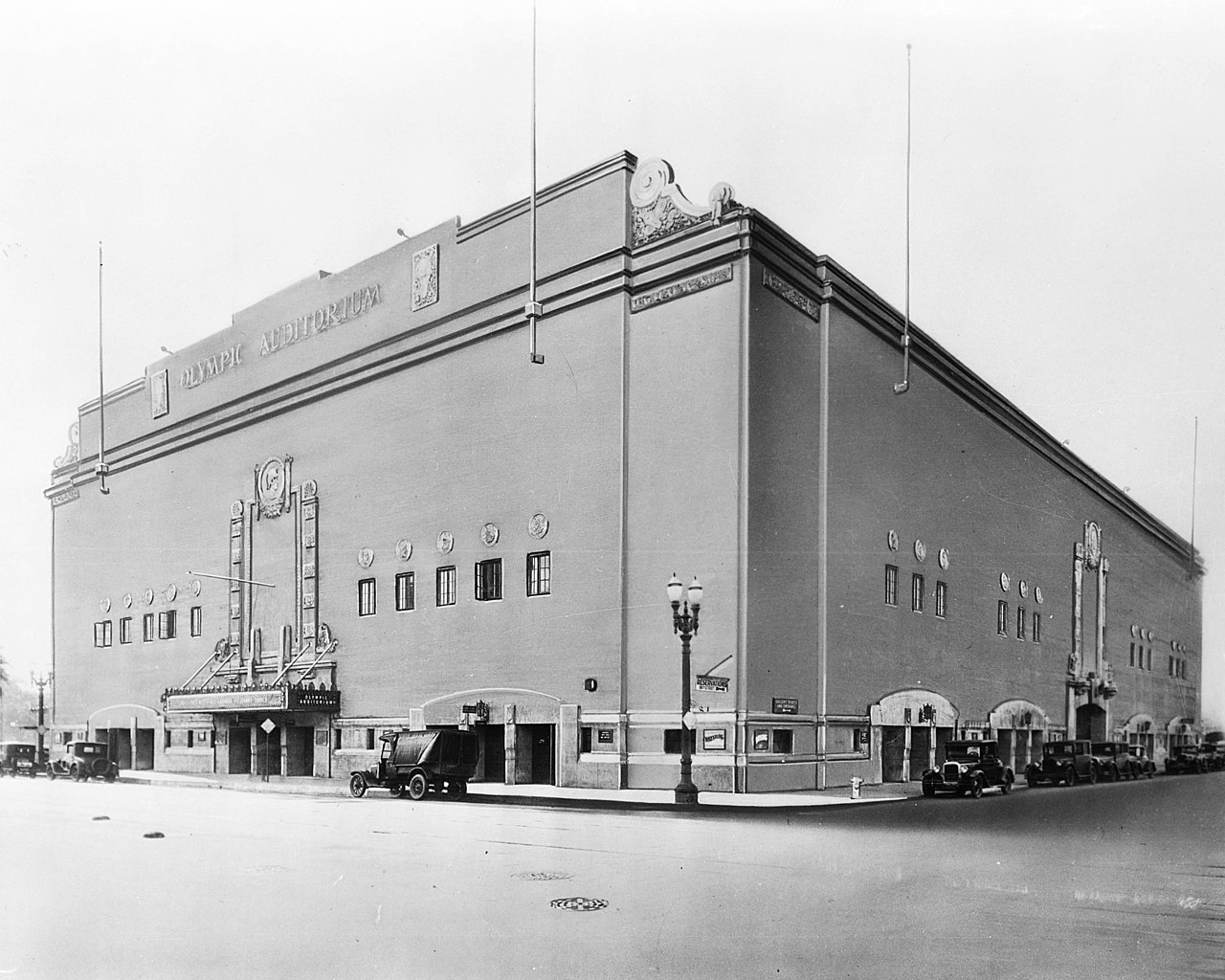

Origins and early years
Planned in the 1920s as a major indoor venue, the auditorium was built in the run-up to the 1932 Summer Olympics and was used for Olympic competitions, including Olympic events in Los Angeles. During the 1932 Games it hosted boxing, weightlifting and wrestling competitions, and the venue drew attention as a modern, flexible indoor space suited for amateur and professional sports alike.
Sports and popular entertainment
The hall quickly became synonymous with combat sports. It staged regular boxing cards and was often a preferred site for west coast championship fights; boxing shows there helped sustain the sport's popularity in Southern California. The auditorium also became a center for professional wrestling, where weekly and biweekly cards attracted steady local audiences and touring stars.
Roller derby found a passionate following at the facility: teams such as the T-Birds performed in packed houses and helped establish roller derby as a popular spectator sport during its mid-century heyday. The arena's adaptable floor and tiered seating made it suitable for a wide range of sporting formats.
Cultural uses and film
Beyond sport, the Grand Olympic Auditorium served as a location for films and television, and it hosted concerts, political rallies and community gatherings. Some scenes from the film Rocky and other productions were filmed at the venue, adding to its presence in popular culture and reinforcing its visual identity as a gritty, urban sporting arena.
Notable visitors and public profile
At its public opening and in early decades the auditorium attracted prominent sports figures and entertainers. Notable early attendees included heavyweight boxer Jack Dempsey and film star Rudolph Valentino, who attended events and lent celebrity profile to the new arena. Over time the hall hosted many of the region's celebrated fighters, wrestlers and performers, contributing to its reputation as a must-play venue in Los Angeles.
Physical changes and capacity
Over the decades the interior and seating configuration were altered to meet changing needs. In the late 1980s several thousand seats were removed—about 3,000 seats were taken out in order to reconfigure sightlines and support different types of events—reducing capacity from its original figure to around 7,500. These modifications reflect a pattern common to older arenas adjusting to new standards for audience comfort and production requirements.
Later ownership and adaptive reuse
In June 2005 the property was sold to the Glory Church of Jesus Christ, a Korean-American congregation that adapted the facility for worship and community programming. The new ownership changed the building's primary use while retaining its basic arena form; in 2007 the exterior received a repainting intended to restore aspects of its earlier appearance. The purchase and adaptation of the auditorium illustrate how historic urban venues can be repurposed to meet contemporary community needs.
Legacy and significance
The Grand Olympic Auditorium stands as a symbol of Los Angeles's sporting and entertainment history. It remains remembered for its central role in popularizing boxing, wrestling and roller derby on the West Coast, and for its recurring presence in film, music and subcultural scenes. Researchers, fans and local historians often consult archival photographs and event listings to trace the venue's influence on the development of professional sports and live entertainment in Southern California.
Events and highlights
- Olympics: Used for competitions during the 1932 Summer Olympics; associated pages note boxing, weightlifting and wrestling as Olympic events and the site's role in the Games (boxing, weightlifting, wrestling).
- Boxing and wrestling: Regular cards and weekly wrestling shows across several decades helped sustain both sports locally and nationally.
- Roller derby and live music: Home to teams such as the T-Birds and a frequent stage for concerts and punk rock events during later decades.
- Film and media: Served as a shooting location for motion pictures and television productions, reinforcing its cultural image.
Research and visiting
While the building's use has changed since its sporting prime, the Grand Olympic Auditorium remains of interest to historians of sport, architecture and urban culture. For primary documents, event programs and photographic records, consult local archives and historical societies that collect materials related to Los Angeles venues and the region's athletic history. The auditorium's story is an example of the multiple lives that a single urban landmark can lead: from a premier sporting palace to a community-oriented facility under new stewardship.
For further context on the 1932 Games and the arena's role in that Olympiad, see dedicated historical summaries and Olympic records. Additional reading and archival references may provide detailed event lists and chronological accounts of notable matches and performances held at the Grand Olympic Auditorium.
Related articles
Author
AlegsaOnline.com Grand Olympic Auditorium — Los Angeles landmark for boxing, wrestling and events Leandro Alegsa
URL: https://en.alegsaonline.com/art/40209