
Boxing: rules, history, equipment, and cultural significance
A concise encyclopedia overview of boxing covering its rules, victory conditions, history, equipment, weight classes, safety concerns, and cultural role in sport and society.
Overview
Boxing is a combat sport in which two competitors, known as boxers, meet in a roped square called a ring and attempt to score by striking an opponent with gloved fists according to defined rules. It is widely regarded as one of the world's oldest organized fighting activities and has been practiced in various forms across many cultures. Modern boxing combines athleticism, technique, strategy and conditioning, and is contested at amateur and professional levels.
Image gallery
10 Images





Rules and victory conditions
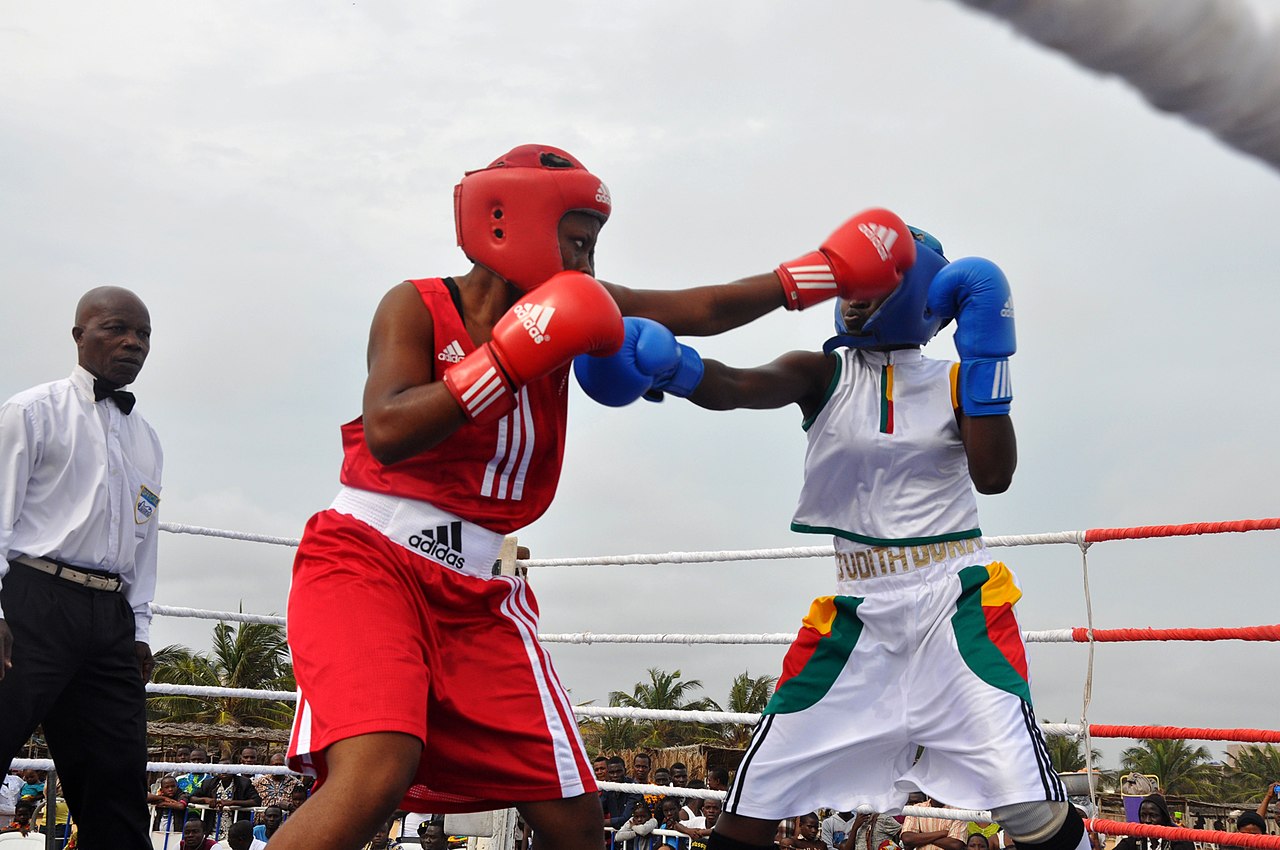
Matches are divided into timed rounds with rest intervals; professional rounds are usually three minutes long, while some amateur and women's contests have historically used shorter rounds. A bout is supervised by a neutral official who enforces the rules and protects the fighters. Key outcomes include:
- Knockout (KO): a boxer is floored and cannot rise and demonstrate readiness to continue within a prescribed count (commonly ten seconds).
- Technical knockout (TKO): the contest is halted because a competitor cannot safely continue, either on the referee's, ringside physician's or corner's instruction.
- Judges' decision: when a fight lasts the scheduled distance, appointed judges score each round and determine a winner, often using the 10-point must system in professional bouts.
- Draw or no contest: a bout may be scored even, declared a draw, or ruled a no contest when results are invalidated by accidental fouls or other irregularities.
The referee has central responsibility for fighter safety and may issue warnings, deduct points, or disqualify a boxer for repeated fouls; see the role of the referee for more context.
Equipment, ring and officials
Boxers wear padded gloves and protective items such as mouthguards and groin protectors; amateurs also commonly use headgear in some competitions. Bouts take place in a square ring with ropes and are overseen by a referee, ringside physician and appointed judges. Sanctioning bodies and athletic commissions set standards for equipment, medical tests and licensing.
History and development
Forms of fist fighting date back to antiquity and were recorded in ancient civilizations. The modern regulated sport of boxing evolved in Britain during the 18th and 19th centuries, transitioning from bare-knuckle contests to gloved fighting governed by formal rules. The publication of the Marquess of Queensberry Rules in the 1860s introduced timed rounds and mandatory gloves, helping establish boxing as an organized, spectator sport. Since then it has developed into a global pastime with professional circuits, amateur competitions and Olympic inclusion.
Weight classes, styles and competition formats
To promote fair competition, boxers fight in weight categories ranging from lightest divisions to heavyweight. Styles vary—some fighters rely on counterpunching and defense, others on pressure and power. Competitions include single-bout professional cards, multi-fight tournaments and amateur meets at national and international levels. Governing and sanctioning organizations maintain rankings, title belts and rules that shape careers and championships; for background on the sport's origins and cultural reach see ancient combat sports.
Safety, training and cultural impact
Boxing training emphasizes cardiovascular fitness, footwork, punching technique, defense and tactical planning. The sport has produced celebrated athletes and played a significant role in social and cultural history, providing pathways for personal advancement and serving as a focal point for national pride. At the same time, boxing raises public-health concerns: repeated head trauma can cause acute injuries and contribute to long-term neurological conditions. To address these risks, modern boxing uses medical screening, ringside medical personnel, and evolving regulations to improve safety without altering the sport's competitive essence.

Word Origin
From the 16th century onwards, the verb "to box" is gradually used in English with the meaning "to beat with fists" and "to hit someone", the further origin is unclear. From the 18th century onwards, "boxen" then also appears in German. In today's usage, "Faustkampf" is considered a synonym or elevated for "boxing, the boxing match".
Boxing
- English boxing (today's most famous boxing sport)
- Kickboxing
- Thai boxing (Muay Thay; known from the Asian region)
- French Boxing (Savate)
- San Shou (Chinese Kickboxing)
Related articles
Author
AlegsaOnline.com Boxing: rules, history, equipment, and cultural significance Leandro Alegsa
URL: https://en.alegsaonline.com/art/13504