
Graham "Polly" Farmer
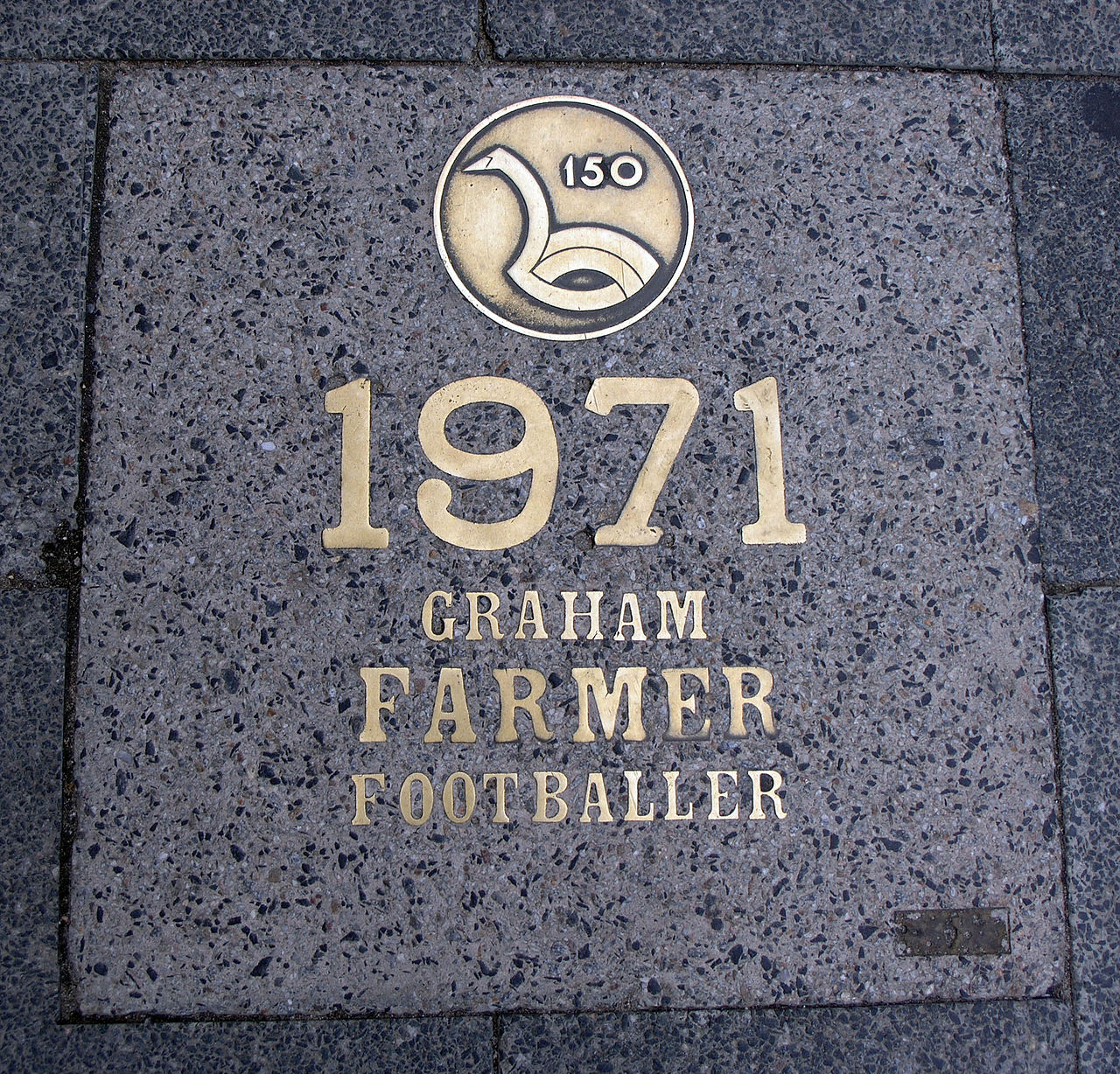
Graham 'Polly' Farmer (1935–2019) was an Indigenous Australian rules footballer and coach who transformed ruck play and handballing; he starred with East Perth, Geelong and West Perth and was widely honoured for his influence.
Graham Vivian "Polly" Farmer MBE (10 March 1935 – 14 August 2019) was an Australian rules footballer and coach widely acknowledged as one of the sport's most influential figures. An Indigenous Australian, Farmer combined athletic strength and skill with strategic thinking, becoming noted for the use of handball as an attacking tool and for redefining the role of the ruckman in top-level football.
Image gallery
4 Images


Early life and background
Farmer was born in 1935 in Western Australia. He grew up playing local football before making his senior debut. His early development in country and state competitions laid the foundation for a career that would span state and national levels and have a lasting tactical impact on the game.
Playing career
Farmer began his senior career with the East Perth Football Club in the West Australian competition in 1953, establishing himself as a dominant ruckman. In 1962 he moved to Victoria to play in the Victorian Football League (VFL) with the Geelong Football Club, where he played more than 100 matches. After his time in Victoria he returned to Western Australia and took on the role of captain and coach at the West Perth Football Club from 1968, continuing to influence the game both on and off the field.
Style and innovations
At a time when handball was often used only as a short defensive option, Farmer developed precise, long-range handpasses to clear contests and launch attacks. His ability to direct the ball accurately to teammates from ruck contests opened new tactical approaches to ball movement. Observers and later generations credit him with helping to accelerate the game's speed and encouraging more creative use of the handball as part of general play.
Coaching and influence
As a captain-coach and later as a coach, Farmer emphasised team structures, quick ball use and skill development. His influence extended beyond match tactics; he became a role model for Indigenous athletes and for players seeking to broaden the responsibilities of the ruck position. Clubs, coaches and players cite his combination of physical contest work and ball distribution as a template that influenced subsequent coaching philosophies.
Honours and legacy
- Recognised as one of the game's great ruckmen and innovators.
- Awarded an MBE for services to the sport.
- Inducted into hall of fame institutions for his contribution to Australian football.
- Remembered as a pioneering Indigenous sportsman who increased the visibility and opportunities for Aboriginal players.
Farmer's career is closely associated with the broader history of Australian rules football and with the clubs he represented, including East Perth and West Perth in Western Australia and the Geelong Football Club in the VFL. His tactical innovations and leadership continue to be studied by players and coaches.
Later life and health
In 1999 Farmer was diagnosed with Alzheimer's disease, a condition that affected his later years. He remained a respected figure in the football community and was honoured at many events recognising his contribution to the sport. Farmer died on 14 August 2019 in Murdoch, Western Australia, leaving a lasting legacy in Australian football.
Related articles
Author
AlegsaOnline.com Graham "Polly" Farmer Leandro Alegsa
URL: https://en.alegsaonline.com/art/40094
Sources
- thewest.com.au : "Aussie rules great Graham 'Polly' Farmer dies aged 84 at Fiona Stanley Hospital"
- theguardian.com : "Indigenous AFL trailblazer Graham 'Polly' Farmer dies aged 84"