
Indian Independence Act 1947
United Kingdom statute that partitioned British India into the Dominions of India and Pakistan in August 1947 and provided the legal framework for transfer of sovereignty.
Overview
The Indian Independence Act 1947 was an Act of the Parliament of the United Kingdom that provided the statutory authority for ending British rule over most of the Indian subcontinent and creating two independent Dominions: India and Pakistan. It received the royal assent on 18 July 1947 and set the formal transfer of power dates—Pakistan on 14 August 1947 and India on 15 August 1947.
Image gallery
2 Images
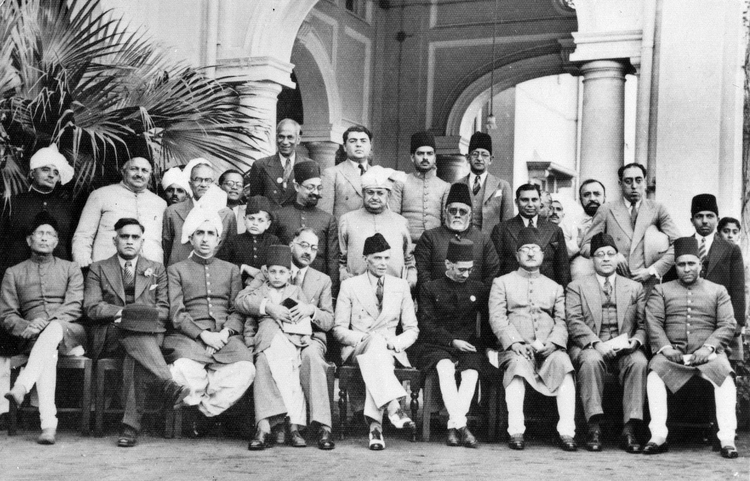
Main provisions and structure
The Act was primarily a short statutory text that effected constitutional and territorial change. Key elements included:
- Partition of British India into two dominions, with the definition of boundaries to be determined by a boundary commission.
- Termination of British suzerainty and legislative authority over the provinces designated for the new dominions.
- Provision for the continuation of existing laws and civil institutions until altered by the new dominion governments.
- Clauses dealing with the administration of the armed forces, public services, and division of assets and liabilities.
- Recognition that princely states would no longer be under British paramountcy and would be free to accede to either dominion or remain independent subject to negotiations.
Background and enactment
The Act followed political negotiations and announcements in 1947 which recommended partition as a means to resolve communal tensions in British India. Implementation involved the appointment of boundary commissions, arrangements for the transfer of executive authority, and transitional roles for Governors-General until each dominion adopted its own constitution. The work of demarcating borders (commonly associated with the Radcliffe Line) and the mechanics of princely state accession were separate but related processes.
Consequences and legacy
Legally, the Act brought an end to the British Parliament's direct legislative control over the parts of the subcontinent it affected and enabled India and Pakistan to enact independent constitutions. Politically and socially, partition triggered massive population movements and communal violence; estimates and interpretations vary, but the upheaval shaped the politics of South Asia for decades. The Act remains a central legal milestone in the histories of both successor states.
Notable distinctions and further reading
The Indian Independence Act was an Act of the UK legislature rather than a bilateral treaty between two new states. Its implementation intersected with administrative measures, local agreements, and later constitutional changes within each dominion. For legislative text, historical context, and archival documents, see primary sources and parliamentary records: UK parliamentary records, contemporary reports at partition studies, and retrospective analyses hosted by institutions linked at scholarly repositories.
Related articles
Author
AlegsaOnline.com Indian Independence Act 1947 Leandro Alegsa
URL: https://en.alegsaonline.com/art/39947
Sources
- books.google.com : Indian Administration
- bbc.co.uk : "The history of partition"
- thehindu.com : "India's benign constitutional revolution"