
Gothenburg Municipality (Göteborgs kommun) — overview and features
Gothenburg Municipality (Göteborgs kommun) is the local government covering Gothenburg and nearby districts in Västra Götaland County, Sweden, noted for its port, universities, industry and cultural life.
Overview
Gothenburg Municipality, known in Swedish as Göteborgs kommun, is the administrative authority centred on the city of Gothenburg. It lies within Västra Götaland County on Sweden’s west coast and forms the core of a larger metropolitan area in western Sweden. The municipality combines an urban centre, riverfront and harbour zones, suburban districts and nearby islands of the archipelago. Responsibilities include local planning, schools, social services and a wide range of public amenities.
Image gallery
4 Images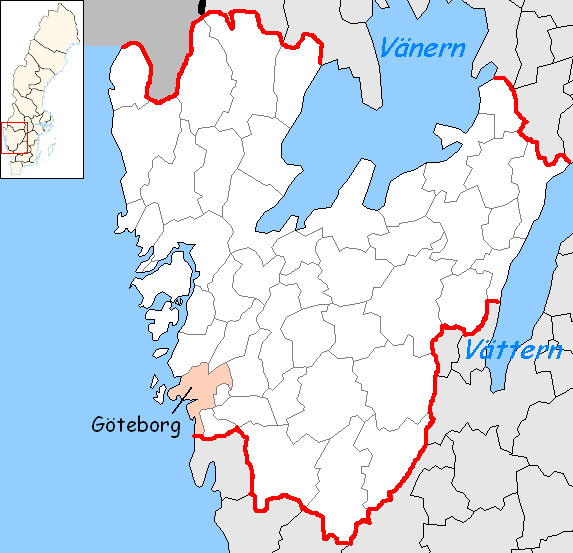


Geography and urban structure
The municipality is built around the Göta älv river and a protected inner harbour, with an outer coastline leading to an accessible archipelago. Urban districts range from historic central blocks and industrial waterfronts to modern residential neighbourhoods and green belts. Waterfront redevelopment and mixed-use schemes have been important features of recent planning.
History and governance
Gothenburg began as a fortified trading post in the early 17th century and grew into a major maritime gateway and industrial centre. During the 19th and 20th centuries it expanded through industrialisation and municipal reform, incorporating surrounding communities into the contemporary municipal structure. Local government is exercised by an elected municipal council and executive boards responsible for municipal services and regulation.
Economy, education and culture
The Port of Gothenburg is one of the busiest in the Nordic region and a key node for freight, ferry and logistics. The local economy includes advanced manufacturing, maritime services, technology and research. Higher education institutions such as the University of Gothenburg and Chalmers University of Technology anchor research and innovation. Cultural life features museums, theatres, music venues, festivals and an international film festival; parks and the archipelago are important recreational assets.
Services, transport and sustainability
The municipality manages primary and secondary education, childcare, elder care and local social services. Public transport is provided through a network of trams, buses and regional rail connections, and cycling infrastructure is widely promoted. Recent urban policies emphasise sustainable mobility, energy-efficient building and climate adaptation in coastal and waterfront areas.
Practical information
- Core municipal responsibilities: planning, schools, social care, local roads and parks.
- Major institutions: ports, universities and research centres support employment and development.
- Public engagement: municipal councils, local committees and public consultations inform decisions.
For official information on administration, services and local initiatives consult the municipal portal: municipal information. Further regional resources are available via the municipal pages at Göteborgs kommun and county-level information through Västra Götaland County.
Related articles
Author
AlegsaOnline.com Gothenburg Municipality (Göteborgs kommun) — overview and features Leandro Alegsa
URL: https://en.alegsaonline.com/art/39867
Sources
- scb.se : "Statistiska centralbyrån den 1 januari 2010"
- scb.se : "SCB, Befolkningsstatistik 30 juni 2012"