
Goose Island (Chicago): artificial island, history, and redevelopment
Goose Island is a 160-acre artificial island on the North Branch of the Chicago River in Chicago, Illinois, known for industrial history, brewery ties, and recent mixed-use redevelopment.
Overview
Goose Island is an artificial landmass located north of downtown Chicago in Illinois. The island is bounded by the North Branch of the Chicago River on its west side and by the man-made North Branch Canal on the east, creating a roughly 1.5-mile long and 0.5-mile wide strip of land covering about 160 acres. Though built and shaped by 19th-century waterways and industrial works, the island today is a mix of legacy industrial sites, commercial properties and newer development.
Image gallery
4 Images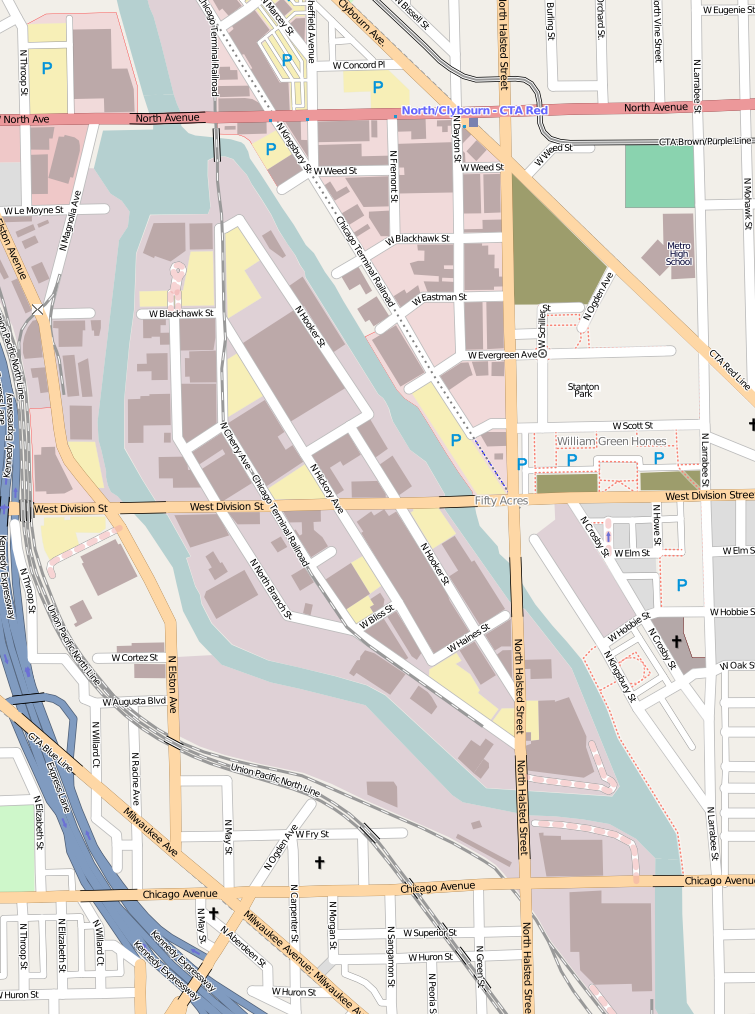


Physical characteristics
Geographically Goose Island is narrow and elongated, a linear parcel defined by parallel water channels. Its footprint and access points were shaped to serve shipping and rail needs. Key physical features include:
- the canal and river channels that separate it from surrounding neighborhoods,
- a grid of streets and industrial lots laid out during the island's manufacturing era,
- several bridges and rail spurs that historically carried goods on and off the island.
History and origin
The island emerged in the 19th century as alterations to the Chicago River and the construction of a canal created a distinct parcel of land. Its name is commonly attributed to wild geese that frequented the area before and during early settlement. For many decades Goose Island hosted factories, warehouses, rail yards and foundries that serviced Chicago's growing economy. While specific enterprises changed over time, the island remained an industrial nucleus through the 20th century.
Uses and contemporary development
In recent decades Goose Island has experienced a transition from heavy industry toward mixed uses. Present-day activities include light manufacturing, office space, research and development facilities, food and beverage production, and some residential or hospitality projects. The island has attracted businesses seeking riverfront space close to downtown and benefits from improved access to the city's transit arteries. Adaptive reuse of former industrial buildings has been a prominent trend.
Access, infrastructure and neighborhoods
Vehicle, bicycle and pedestrian access to Goose Island is provided by several bridges linking it to adjacent Chicago neighborhoods. Rail infrastructure that once dominated the island has diminished but traces remain and influence current property layouts. The island sits near neighborhoods such as River North and Lincoln Park and is considered part of the broader North Branch corridor that has seen significant urban reinvestment.
Notable facts and distinctions
Goose Island is notable for being one of Chicago's larger artificial islands and for its enduring association with manufacturing and brewing—its name has been adopted by local breweries and businesses. The island's evolution illustrates wider trends in post-industrial American cities: preservation and repurposing of industrial heritage, increasing demand for waterfront real estate, and the blending of commercial, creative and residential uses. For further local planning or historical context, consult municipal or conservancy resources and maps that document river engineering and redevelopment initiatives.
Chicago, Illinois, and the North Branch of the Chicago River are central reference points for maps and official documents about the island.
Related articles
Author
AlegsaOnline.com Goose Island (Chicago): artificial island, history, and redevelopment Leandro Alegsa
URL: https://en.alegsaonline.com/art/39708