
Golaniad (1990 student protests in Romania)
A nonviolent student-led protest in University Square, Bucharest (April–June 1990) opposing the National Salvation Front and calling for decommunization and democratic reforms.
The Golaniad was a series of public demonstrations and a weeks-long occupation of University Square in Bucharest, Romania, that began in April 1990. Primarily organized by students, intellectuals and civic groups, the movement protested the continued political influence of former communist officials after the 1989 revolution and pressed for faster democratization, transparency and vetting of public office holders.
Image gallery
2 Images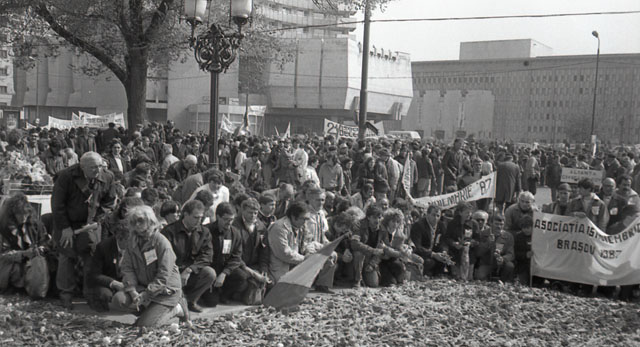

Background
After the fall of Nicolae Ceaușescu in December 1989, the National Salvation Front (FSN) assumed control and later transformed into a political party. Many Romanians feared that former Communist Party structures persisted within the new leadership. Public distrust, a contested transition, and the first post-revolution elections set the stage for sustained civic action in the spring of 1990.
Course and character of the protests
The demonstrations in University Square combined daily gatherings, debates, cultural events and symbolic petitions. Organizers emphasized nonviolent tactics and civic education. Protesters adopted the name "Golaniad" after a derogatory label used by President Ion Iliescu; they reclaimed the term as a badge of defiance. Demands focused on lustration, fair elections and accountability for former regime officials.
Key demands and tactics
- Removal or public vetting of former communist officials from posts of power
- Transparent transition measures and free media
- Peaceful occupation of a central public space to sustain attention
Organizers used speeches, writings and assemblies to articulate reform proposals. The movement drew support from writers, students and civic associations, and it provoked counter-demonstrations and political tension.
End and aftermath
In mid-June 1990 the standoff ended abruptly when large groups of miners and others arrived in the capital and clashes followed, resulting in a violent dispersal of the protest camp. The events that closed the Golaniad remain controversial and prompted widespread debate about the pace and direction of Romania's post-communist transition.
Legacy
Golaniad is remembered as a defining episode of civic resistance in early post-communist Romania. Its symbolism—particularly the reclamation of the word "golan"—and its calls for decommunization and democratic norms influenced later debates about transitional justice, public memory and the role of civil society in democratic consolidation.
Related articles
Author
AlegsaOnline.com Golaniad (1990 student protests in Romania) Leandro Alegsa
URL: https://en.alegsaonline.com/art/39455