
Goidelic languages (Gaelic languages)
Branch of the Insular Celtic family including Irish, Scottish Gaelic and Manx; overview of features, history, geographic distribution, literary tradition and modern status.
Overview
The Goidelic languages, often called Gaelic languages, form one branch of the Insular Celtic languages. They are traditionally spoken in parts of western Scotland, most of Ireland, and the Isle of Man, and comprise three living varieties: Irish, Scottish Gaelic and Manx. These languages share a common origin and many core grammatical and phonological features, while also developing distinctive forms and literatures.
Image gallery
3 Images
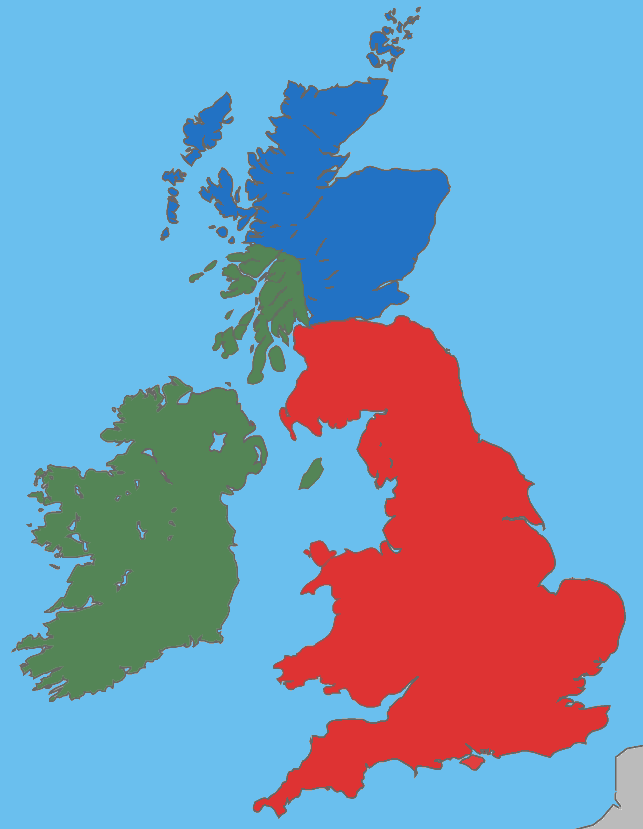

Members and characteristics
- Irish — the national and historic language of Ireland with a continuous written tradition.
- Scottish Gaelic — spoken primarily in the Highlands and islands of Scotland and with its own modern media and education institutions.
- Manx — native to the Isle of Man; it experienced near extinction but has been actively revived.
Linguistically, Goidelic languages show initial consonant mutation, a VSO (verb–subject–object) tendency in sentence order, a rich system of inflection for nouns and verbs, and a shared core vocabulary inherited from Primitive Irish. Orthographies diverge: Irish and Scottish Gaelic use related Latin-based scripts, while Manx orthography reflects later English influence.
History and development
The Goidelic branch developed from the Celtic spoken in Ireland and neighbouring islands in the early medieval period. Ogham inscriptions, early glosses and medieval manuscripts document stages of the languages and their literatures. Over centuries, migration, political change and contact with Norse, English and Scots shaped each variety.
Modern status and use
Today the three languages occupy different social and legal positions. Irish has official status in Ireland and is taught in schools; Scottish Gaelic is recognised and supported in Scotland with broadcasting and education initiatives; Manx benefits from active revival programs and community learning. All three appear in place-names, cultural festivals, music and oral traditions.
Notable facts and distinctions
Although mutually intelligible to varying degrees, the three Goidelic varieties have distinct pronunciation, vocabulary and idioms. Comparative study illuminates early medieval history of the British Isles and contributes to wider Celtic studies. For regional context see Scotland, Ireland and the Isle of Man.
Related articles
Author
AlegsaOnline.com Goidelic languages (Gaelic languages) Leandro Alegsa
URL: https://en.alegsaonline.com/art/39433