
Go Ask Alice — the 1971 diary-style book, controversy and legacy
Go Ask Alice is a diary-style 1971 book about a teenage girl's drug use. Initially presented as nonfiction, its authorship and authenticity have been disputed; later editions are labeled fiction.
Overview
Go Ask Alice first appeared in 1971 as a short, diary-style book purporting to be the real journal of an anonymous teenage girl who experiments with drugs and suffers increasingly severe consequences. The title alludes to the countercultural era: it references the Jefferson Airplane song "White Rabbit," itself inspired by Lewis Carroll's Alice stories and their druglike imagery. Readers encountered a raw, day-by-day narrative that was presented as immediate and personal, which helped the book attract attention and controversy soon after publication. For contemporary context about its cultural references see Jefferson Airplane and Lewis Carroll.
Image gallery
2 Images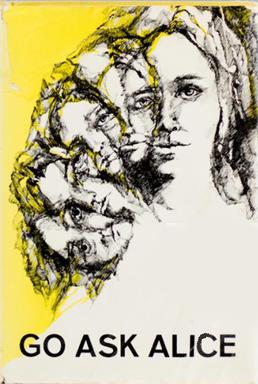

Content and structure
The book is organized as a sequence of dated diary entries following an adolescent narrator through friendships, parties, sexual experimentation and escalating use of various substances. Its voice is intimate and confessional, moving from insecurity and curiosity to fear, disorientation and crises linked to drug use. The narrative treats drug experiences and their aftermath as central events; readers and educators often interpreted it as a cautionary tale about addiction and the dangers of recreational drugs. Because the diarist remains unnamed and the entries are episodic, the book reads like a compact moral and psychological arc rather than a conventional novel.
Authorship and authenticity
Although Go Ask Alice was released under the byline "Anonymous," questions about its origin surfaced early and persist. Press reporting and copyright records indicate substantial editorial involvement by Beatrice Sparks, who has been described in some accounts as the book's editor or primary contributor. Over time, publishers have acknowledged uncertainty about the diarist's reality and have listed later editions as fictionalized. Scholars and critics have pointed to internal inconsistencies in dates and details as reasons to doubt a strictly documentary reading; for further discussion of its disputed origins see contemporary critical material and publisher statements (publisher note, anonymous attribution).
Publication, reception and impact
On release the book made a strong impression, becoming widely read among teenagers, parents and educators and spawning debate about youth culture, drug education and censorship. Some schools and libraries placed it on recommended reading lists for drug-prevention programs, while others challenged or banned it because of explicit material and perceived sensationalism. The book's blunt portrayal of a young person's descent into problematic substance use contributed to ongoing national conversations about how to address youth drug problems in the 1970s and beyond. Contemporary reactions and retrospective commentary can be found in a range of critical sources and cultural histories (early reception).
Themes, criticism and uses
Readers and critics have weighed Go Ask Alice in two main ways: as an effective cautionary tale that communicates the risks of drug experimentation, and as a problematic text whose factual ambiguities and moralizing tone undermine its credibility. Critics argue that the book simplifies complex social and psychological factors and sometimes reads like didactic fiction, while defenders note its visceral immediacy and its utility as an entry point for conversations about peer pressure, mental health and substance abuse. Educational use of the book has declined in some contexts as awareness of its disputed provenance grew, but it continues to be cited in discussions of youth literature and preventative messaging.
Notable facts and legacy
- First published in 1971; presented originally as an actual diary.
- Author listed as "Anonymous"; later editorial role attributed to Beatrice Sparks.
- Publisher records and subsequent editions have identified the work as fictionalized since about the 1980s; see publisher statements and analyses for detail (editor profiles, drug discussion).
- Has remained in print in various editions and formats and continues to provoke debate over authenticity, censorship and the role of confessional-style teen literature (addiction themes, anonymous voice).
Because the book sits at the intersection of popular youth literature, anti-drug messaging and publishing ethics, it remains a frequent subject for classroom discussion, media commentary and scholarly study. For more perspectives and archival material, consult contemporary reviews and later critical essays (literary antecedents, historical responses).
Related articles
Author
AlegsaOnline.com Go Ask Alice — the 1971 diary-style book, controversy and legacy Leandro Alegsa
URL: https://en.alegsaonline.com/art/39342