
Gion Festival (Gion Matsuri)
An annual July festival in Kyoto centered on Yasaka Shrine, known for its ornate yamaboko floats, processions, community rituals and month-long events reflecting Japan’s cultural heritage.
The Gion Festival, commonly called Gion Matsuri, is Kyoto’s best-known summer festival, held every July around Yasaka Shrine. Its public ceremonies and street processions attract residents and visitors alike, and the month-long schedule mixes religious rites, parade preparation and popular street activities. For general festival information see Gion Festival overview.
Image gallery
10 Images




Origins and historical development
The event traces its roots to ancient purification rites invoked to ward off epidemics and misfortune. Beginning as a Shinto ritual to placate vengeful spirits, the observances gradually took on a civic character. Over centuries the religious ceremony grew into a complex civic pageant that showcased neighborhood pride, local craftsmanship and seasonal devotion centered on Yasaka Shrine.
Main features and components
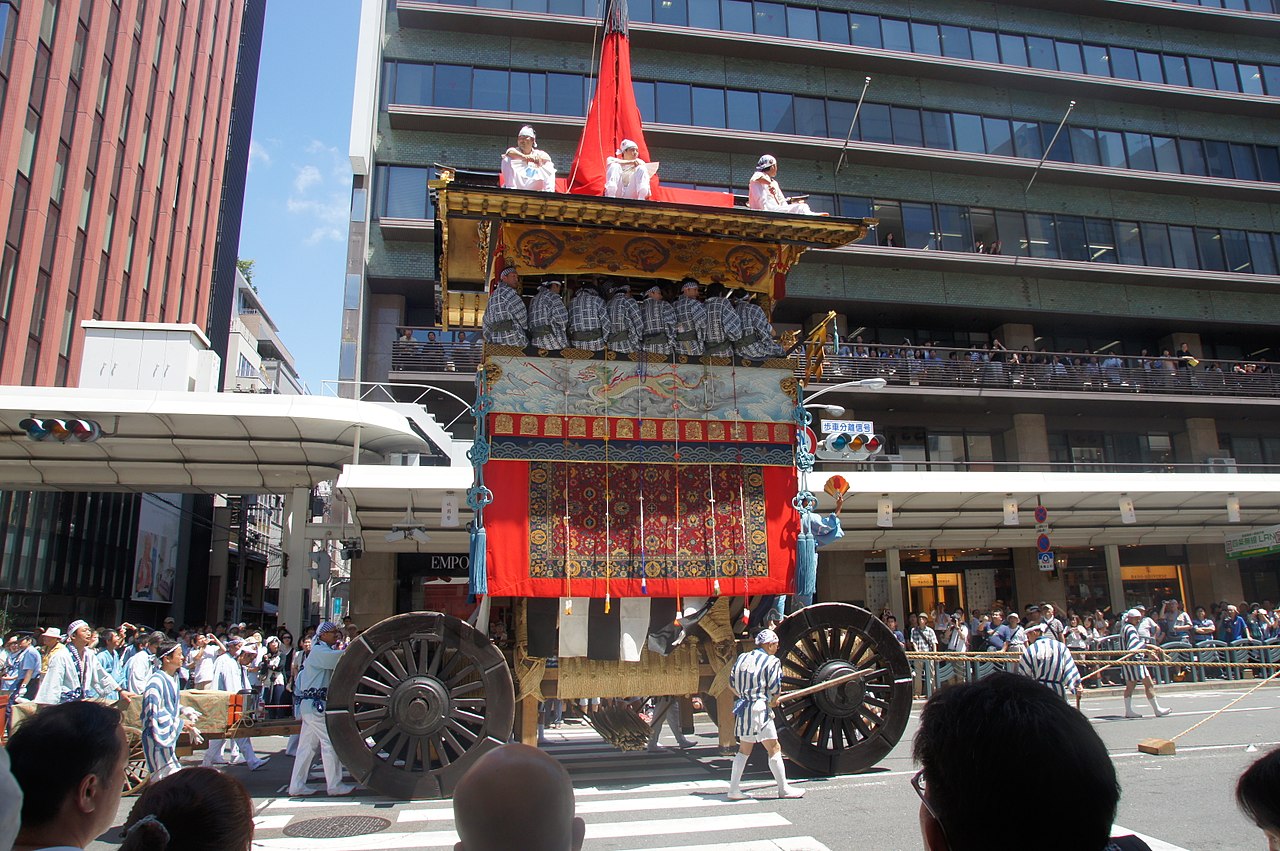
Gion Matsuri is best known for its large, decorated floats collectively called yamaboko. These floats are maintained by neighborhood guilds and combine fine textiles, woodwork and metal fittings. Two broad types are commonly distinguished:
- Hoko – very tall, imposing festival wagons often requiring many pullers; they have a solemn, ceremonial presence.
- Yama – somewhat smaller floats decorated with figures, tapestries and seasonal motifs, often carrying performers or displays.
Calendar and public events
While activity runs through July, the festival’s high points are the illuminated nights (Yoiyama) when floats stand on display and the main parades of decorated floats. The principal processions traditionally occur in mid-July (commonly observed on July 17 and July 24), when the yamaboko are pulled through central Kyoto. Streets around Kyoto’s historic districts are closed, and spectators in summer kimono mingle with street vendors.
Significance, conservation and visitor notes
Gion Matsuri is important both spiritually and culturally: it preserves traditional performing arts, textile techniques and community organization. Scholars and local craftsmen work to conserve the floats and their historic fabrics, and the festival supports neighborhood identity. For visitors, practical tips include arriving early to view floats, respecting shrine areas, and observing local etiquette during rituals.
Notable facts
- The festival blends Shinto ritual with centuries of urban tradition, making it a living example of community heritage.
- Many floats are treated as mobile art collections, with careful restoration and seasonal display outside the festival period.
- Further reading and schedules can be found through official and local resources: see festival guides and shrine notices at Yasaka Shrine.
Related articles
Author
AlegsaOnline.com Gion Festival (Gion Matsuri) Leandro Alegsa
URL: https://en.alegsaonline.com/art/38907