
Gilbert Islands
A central group of atolls and islands in Kiribati, known in Gilbertese as Tungaru; historically called the Kingsmill Islands. Important for Pacific history, culture, and climate vulnerability.
Overview
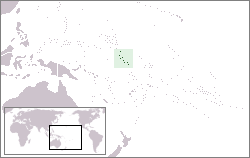
The Gilbert Islands, called Tungaru in the local Gilbertese language, form the principal island chain of the Republic of Kiribati. This cluster of mainly coral atolls and low islands lies in the central Pacific Ocean. European navigators once referred to the group as the Kingsmill or King’s-Mill Islands. Today the Gilberts are recognized for their cultural continuity, strategic history, and environmental sensitivity.
Image gallery
3 Images

Geography and settlements
The island group comprises roughly sixteen islands and atolls arranged along an east–west arc. Most are narrow, low-lying coral formations with limited freshwater and land area. Population and administrative functions are concentrated on Tarawa atoll, where South Tarawa hosts the national government and the largest urban communities. Other notable islands and atolls include:
- Butaritari and Makin — northern atolls with traditional villages;
- Abaiang and Maiana — centrally located and largely rural;
- Tabiteuea, Nonouti and Arorae — southern atolls with strong local identities.
History and development
The islands were long inhabited by Micronesian and Polynesian peoples before contact with European explorers in the 18th century. During the 19th and 20th centuries the Gilberts were drawn into European colonial systems and administered as part of the Gilbert and Ellice Islands colony. The islands were the scene of intense fighting during the Pacific theater of World War II, most notably the Battle of Tarawa in 1943. After decolonization the Gilbert group became central to the independent state of Kiribati in the late 20th century.
Language, society and economy
Residents are mainly I-Kiribati and speak the Gilbertese language, an Austronesian tongue closely linked to other Micronesian languages. Traditional livelihoods centered on fishing, small-scale agriculture and copra production; contemporary economies also depend on public service employment, remittances and modest tourism. Social life remains organized around extended family, local traditions and communal activities.
Environment and significance
The Gilberts exemplify the vulnerabilities of low-lying atoll nations: limited freshwater lenses, coastal erosion, and exposure to sea-level rise and storm surges. These environmental pressures have made the islands prominent in international discussions about climate change and adaptation. Conservation of reef ecosystems and sustainable resource use are ongoing priorities for local communities and policymakers.
Notable facts: the native name Tungaru is commonly used in cultural contexts; the group's historical label, Kingsmill, appears in older accounts; and the chain remains the demographic and political heart of Kiribati. Maps and further reading are available through general Pacific reference sources (Pacific studies and regional archives).
Related articles
Author
AlegsaOnline.com Gilbert Islands Leandro Alegsa
URL: https://en.alegsaonline.com/art/38808