
George Rogers Clark
American frontier military leader (1752–1818) who led Revolutionary War campaigns in the Old Northwest, captured British posts including Vincennes, and established a settlement at the Falls of the Ohio that became Louisville.
George Rogers Clark (1752–1818) was an American militia officer and frontier leader whose campaigns in the trans‑Appalachian region during the Revolutionary War helped shape the early United States. Operating from western Virginia and the Illinois country, Clark organized irregular forces, relied on rapid marches and surprise action, and captured a series of British posts that weakened enemy influence north of the Ohio River.
Image gallery
9 Images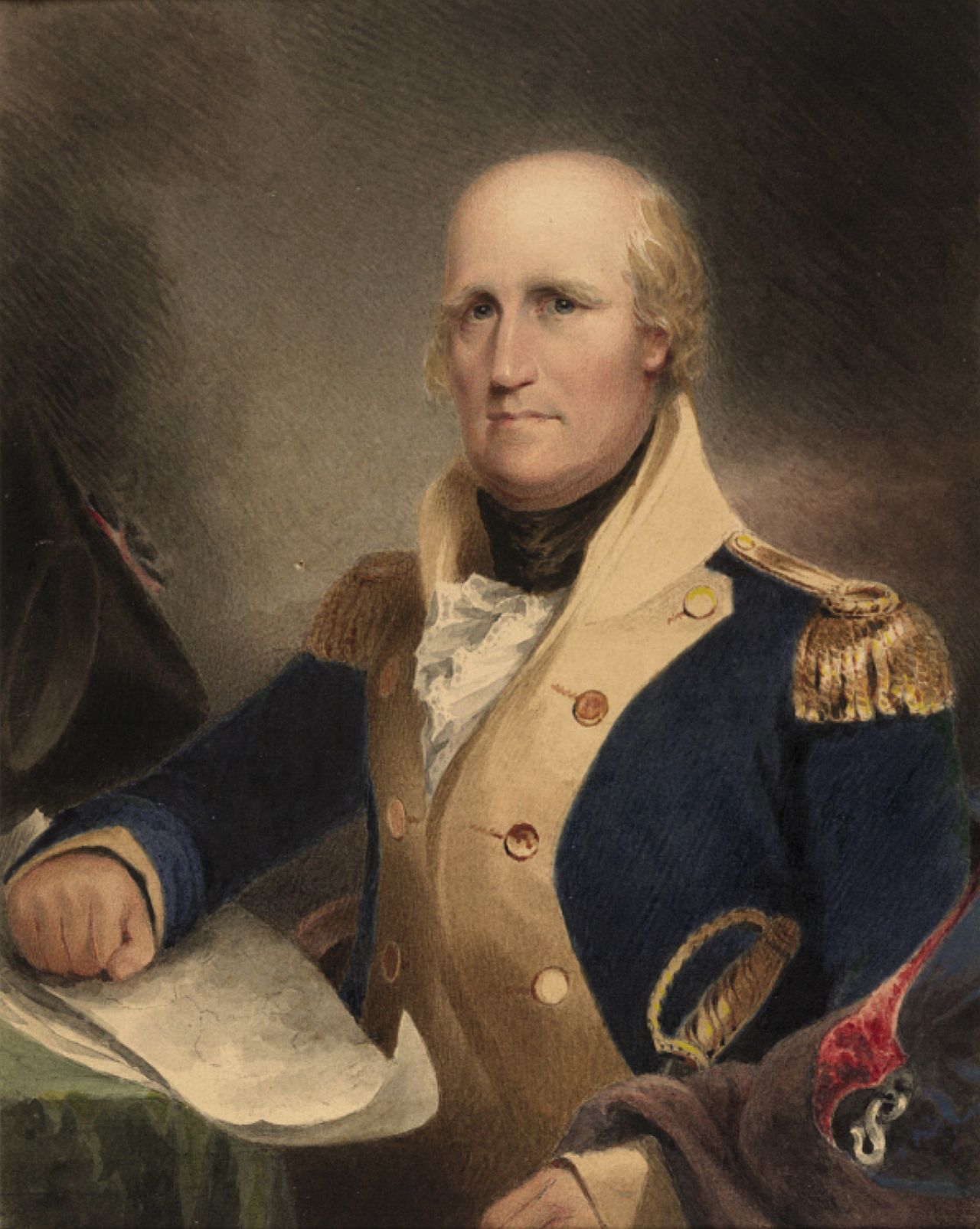


Early life and frontier role
Born in the Virginia backcountry, Clark learned wilderness skills and frontier diplomacy at an early age. He rose in local militia ranks and by the 1770s was active in coordinating settlers, scouts, and allied Native American groups. His experience on the frontier made him a key military figure where regular British garrisons were thin and control depended on outposts and rivers.
Illinois campaign and Vincennes
In 1778–1779 Clark led expeditions into the Illinois country, capturing British positions such as Kaskaskia and later retaking Vincennes. These actions relied on mobility, local intelligence, and surprise rather than large conventional forces. The American gains in the region were influential in strengthening U.S. claims to territory north of the Ohio River during postwar negotiations.
Settlement at the Falls and Louisville
During the same period Clark established a fortified station at the Falls of the Ohio, an important river crossing and gathering point for settlers and river traffic. That post and the community it attracted are widely credited as the beginnings of what became Louisville, Kentucky.
Later life and legacy
After the war Clark faced disputed land claims, limited government support, and financial hardship. He never secured the rewards he sought, though later generations commemorated his role with monuments and place names. He was the uncle of William Clark of the Lewis and Clark Expedition. For further information see additional resources.
- Notable actions: Illinois campaign and the recovery of Vincennes.
- Impact: Helped tip control of the Old Northwest toward the United States in the Revolutionary era.
- Memorials: Numerous towns, counties, and monuments recall his name and role.
Related articles
Author
AlegsaOnline.com George Rogers Clark Leandro Alegsa
URL: https://en.alegsaonline.com/art/38274
Sources
- books.google.com : Old South Meeting House · web.archive.org