
George Gamow: physicist, cosmologist, and popular science author
Concise biography of George Gamow (1904–1968), his work on quantum tunneling, early-universe nucleosynthesis, science popularization and his influence on twentieth-century cosmology and physics.
George Gamow (born Georgiy Antonovich Gamov; Russian: Георгий Антонович Гамов) was a theoretical physicist and cosmologist whose research and writing influenced both the technical development of twentieth‑century physics and public understanding of science. He was born in Odessa in the Russian Empire in 1904 (see date conventions: old style/modern calendar) and is widely remembered for applying quantum ideas to nuclear processes, for early work on the hot Big Bang picture of cosmology, and for popular books that explained abstract concepts with wit and illustration. His Russian name and transliteration are discussed in specialist accounts (Russian form and transliteration).
Image gallery
10 Images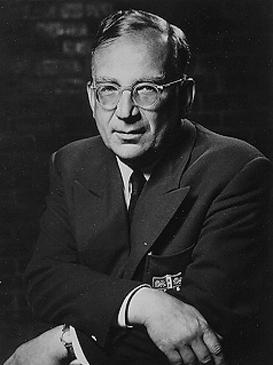





Early life and career
Gamow grew up in the cultural and scientific milieu of the late Russian Empire and trained in physics in the Soviet period before leaving the Soviet Union in 1933. He spent time working in Europe and later settled in the United States, where he held research and teaching positions and remained active in both theoretical work and public communication of science. His Odessa origins and early education are described in biographical sources (Odessa and early life).
Contributions to physics
One of Gamow’s most widely cited scientific results was his explanation of alpha decay by quantum tunneling. He showed that an alpha particle can escape a nucleus not by climbing over the potential barrier but by tunneling through it, an effect now characterized by the so‑called Gamow factor, which quantifies tunneling probabilities in nuclear reactions. This work established a clear connection between quantum mechanics and observable radioactive decay rates and influenced later applications of barrier penetration ideas in nuclear and atomic physics (atomic physics background).
In cosmology, Gamow became a central figure in the development of the hot Big Bang framework. He and his collaborators explored how an early, hot, dense state could produce the lightest chemical elements during rapid cooling and expansion—a process known as primordial nucleosynthesis. Collaborations with younger researchers led to theoretical expectations for relic radiation left over from the hot early phase; these anticipations formed part of the conceptual groundwork for what later became the observational discovery of the cosmic microwave background. He also worked on related problems across nuclear and astrophysical contexts (other research areas).
Collaborations and notable papers
Gamow worked with a number of young physicists and is associated with memorable publications that combined serious calculation with a lighthearted style. A famous example is the theoretical program on primordial nucleosynthesis, which involved Ralph Alpher and Robert Herman; a published joke that included Hans Bethe’s name led to the oft‑quoted authorship line that playfully read Alpher, Bethe, Gamow, underlining both the collaborative and sometimes whimsical nature of his scientific circle. These collaborative efforts helped shape later, more detailed quantitative accounts of element formation in the early universe.
Popularization and writing
Gamow was also a prolific writer for non‑specialist audiences. His best‑known popular book, One Two Three... Infinity, presented mathematical and scientific ideas with clear prose, visual examples and playful exposition. He created fictional vignettes—most famously the "Mr. Tompkins" stories—to introduce counterintuitive aspects of relativity and quantum theory through everyday scenarios. Gamow published in several languages and was comfortable writing in German, French, Russian and English; this multilingual output broadened his readership across scientific communities and the general public.
Style, legacy and recognition
- Gamow combined rigorous theoretical work with clear, often humorous exposition aimed at general readers, leaving a durable model for science communication.
- His tunneling explanation of alpha decay remains a standard example in quantum mechanics courses, while his early cosmological work laid conceptual foundations for later observational tests of Big Bang theory.
- Collections of his papers, translations of his popular books and historical studies preserve both his technical contributions and his outreach efforts; institutional pages and archives summarize his positions and writings (academic associations and collected papers).
George Gamow died in 1968, leaving a legacy that spans technical results in nuclear physics and cosmology as well as an influential body of popular science writing. Readers interested in deeper study may consult specialist biographies, historical reviews and selections of his scientific papers and essays; many such resources note his life, work and the broader context of mid‑twentieth‑century physics (dates and general bibliographic notes, name and transliteration, early life and background, atomic and nuclear studies, cosmology and astrophysics topics, institutional and archival pages).
Related articles
Author
AlegsaOnline.com George Gamow: physicist, cosmologist, and popular science author Leandro Alegsa
URL: https://en.alegsaonline.com/art/38217