
Gene Sharp: Scholar of Nonviolent Action and Author of Strategic Manuals
Overview of Gene Sharp, an American political scientist who studied and promoted nonviolent struggle, his major works, influence on movements, recognitions, and debates about his legacy.
Gene Sharp (1928–2018) was an American political scientist and activist best known for systematic studies of nonviolent action. He founded a small research organization dedicated to the practical study of methods for social and political change and spent much of his career teaching, writing, and advising on strategies of civil resistance. His work put the tactics of peaceful collective action into a framework intended to be usable by activists, scholars, and policymakers.
Image gallery
1 Image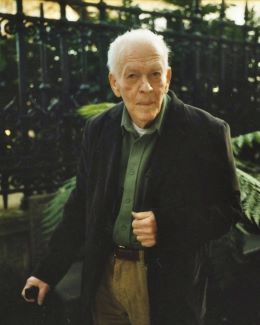
Life and education
Sharp was born in North Baltimore, Ohio and later pursued higher education in the United States and abroad. He studied at colleges including his Ohio hometown and attended programs at institutions such as Ohio State University and Oxford University. He served as a professor of political science at a public university in Massachusetts, where he taught courses on conflict, revolution, and nonviolent action. In 1983 he established the Albert Einstein Institution, a nonprofit devoted to researching nonviolent methods of political change.
Key ideas and works
Sharp sought to treat nonviolent action as a disciplined form of political struggle rather than as spontaneous moral protest alone. He cataloged a large set of practical methods and divided the dynamics of nonviolent struggle into principles such as strategic planning, undermining the authority of opponents, and building parallel institutions. His writings are known for their pragmatic tone and focus on tactics, organization, and discipline.
- Major publications: Among his most cited works are a handbook often used by activists, a multi-volume study of the theory and practice of nonviolent action, and a compendium that lists numerous methods of protest and resistance.
- Methods catalog: He is widely credited with assembling a detailed list of nonviolent methods—often cited as 198 separate actions—that range from symbolic public demonstrations to economic and political noncooperation.
Influence and reception
Sharp's manuals and analyses have been read and used by a variety of social movements around the world. Activists and scholars credit his work with providing concrete tools for planning campaigns that rely on civil resistance rather than armed struggle. At the same time, his pragmatic approach drew criticism: some scholars and commentators argued that a tactical orientation risked oversimplifying complex political contexts, while certain governments and commentators accused his ideas of being linked to foreign-sponsored regime change. Reports indicate his writings have been translated, circulated, and at times restricted in different countries.
Awards, recognition and later life
Across his lifetime Sharp received several recognitions for his contributions to the study of peace and democracy. He was a recipient of awards that honor peace education and contributions to democracy, including the El-Hibri Peace Education Prize and the Right Livelihood Award. Unofficial reports and media accounts suggested he was nominated for the Nobel Peace Prize in multiple years, though Nobel nominations are often confidential and such claims are sometimes repeated with caveats. Sharp spent his later years continuing to write and advise; he died in Boston, MA on January 28, 2018, a week after his 90th birthday. His death was noted in numerous obituaries and discussions of his legacy.
Legacy and distinctions
Gene Sharp left a mixed but unmistakable legacy: a body of practical, often-cited writings that helped shape nonviolent campaigns worldwide, and a continuing debate about how tactical manuals intersect with ethics, foreign policy, and grassroots agency. For readers seeking original texts or summaries, many of his essays and guides remain accessible through academic libraries and the nonprofit organization he founded. For contemporary movements, his work remains a reference point for debates about strategy, discipline, and the limits of peaceful political change.
Further reading and archival materials are available through institutional collections and public repositories that catalog his publications and related research. For general orientation and biographical details, see resources linked to his birthplace and universities, as well as institutional pages associated with his awards and place of death: biographical note, educational background, award citation, death notice, and state records.
Related articles
Author
AlegsaOnline.com Gene Sharp: Scholar of Nonviolent Action and Author of Strategic Manuals Leandro Alegsa
URL: https://en.alegsaonline.com/art/37921
Sources
- mdg.no : "Gene Sharp nominert til fredsprisen"
- afsc.org : Nonviolence scholar nominated for 2013 Nobel Peace Prize
- prio.no : "Nobel Peace Prize 2012: PRIO Director's Speculations"
- rawstory.com : "Former President Bill Clinton among Nobel Prize nominees"
- bloomberg.com : "Peace Institute Says Nobel Rankings Favor Sharp, Echo of Moscow"
- cnn.com : "Who will take home this year's Nobel Peace Prize? - CNN.com"
- foreignpolicy.com : "Handicapping the Nobel Peace Prize"
- elhibriprize.org : "El-Hibri Peace Education Prize"
- rightlivelihood.org : "Right Livelihood Award"
- prnewswire.com : "The Zambrano Foundation has announced The First Annual Democracy Symposium in The Americas 2012"
- abcnews.go.com : "Gene Sharp, advocate for nonviolent resistance, dies at 90"