
Galápagos Province — Ecuador's insular province and archipelago
Galápagos Province is Ecuador's Insular province comprising the Galápagos Islands. Renowned for unique biodiversity and Darwin's research, it is a focal point for conservation, research and regulated tourism.
Overview
The Galápagos Province is one of Ecuador's provinces in the country's Insular region. It encompasses the Galápagos archipelago, a remote cluster of volcanic islands located roughly a thousand kilometres west of the South American mainland. The provincial capital is Puerto Baquerizo Moreno, and administration combines local governance with strong national oversight because of the islands' ecological and cultural significance. Visitors and readers can find basic administrative and travel information through official Ecuadorian resources such as Ecuador and material specific to the islands at Galápagos Islands.
Image gallery
3 Images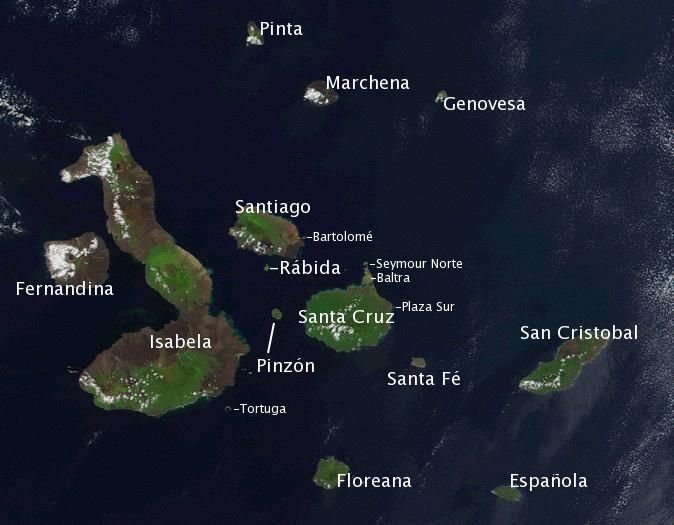

Geography and main islands
The province includes a number of larger islands and many smaller islets and rocks formed by volcanic activity along the Nazca tectonic plate. The most frequently visited and inhabited islands include:
- San Cristóbal (seat of the provincial government and location of Puerto Baquerizo Moreno)
- Santa Cruz (a central hub for tourism and transport)
- Isabela (the largest single island in the archipelago)
- Floreana, Española, Santiago and others that form the core of the protected area
History and conservation status
The islands became widely known after Charles Darwin visited in 1835; observations there contributed to his ideas about natural selection. Recognition of their global value led to protective measures in the 20th century: much of the land area is managed as a national park and surrounding waters are part of a marine reserve. The archipelago is a UNESCO World Heritage site and the focus of long-term scientific research programs that track species, habitats and island ecology.
Biodiversity and scientific importance
Galápagos Province supports numerous endemic species — plants, birds, reptiles and marine life found nowhere else. Iconic inhabitants include giant tortoises, marine iguanas, Darwin's finches and a rich assemblage of seabirds. The relative isolation and varied island environments have made the archipelago a natural laboratory for evolutionary biology, ecology and conservation science, attracting researchers and students worldwide.
Economy, human presence and management
Human communities are concentrated on a few islands and rely largely on tourism, research, public services and regulated fishing. Ecuadorian authorities balance local livelihoods with strict rules to limit environmental impact: visitor limits, quarantine and biosecurity measures, designated visitor sites and monitoring of fisheries. Scientific stations and conservation organizations play major roles in restoration, eradication of invasive species and habitat protection.
Challenges and notable facts
The province faces ongoing threats such as invasive species, pressures from tourism and the effects of climate variability. Management emphasises monitoring, community involvement and international cooperation to maintain ecological integrity. The Galápagos remain one of the world’s best-known examples of island-driven evolution and conservation effort, symbolising both the fragility and resilience of oceanic island ecosystems.
Related articles
Author
AlegsaOnline.com Galápagos Province — Ecuador's insular province and archipelago Leandro Alegsa
URL: https://en.alegsaonline.com/art/37254
Sources
- es.scribd.com : "Human Development Index in Ecuador"
- inec.gov.ec : Censo de Población y Vivienda, Galápagos 2006