
Fritz the Cat: Ralph Bakshi’s 1972 Adult Animated Film
Overview of the 1972 animated feature Fritz the Cat: its origins in underground comics, adult themes and controversy, MPAA rating history, reception and influence on adult animation.
Fritz the Cat is a 1972 animated feature adapted from the underground comic strips of Robert Crumb and directed by Ralph Bakshi. Unusually frank in its portrayal of sex, drugs and political satire, the film became a lightning rod for debate about the limits of animation as a medium for adult content. It occupies an important place in American film history as one of the first animated features aimed squarely at mature audiences.
Image gallery
4 Images
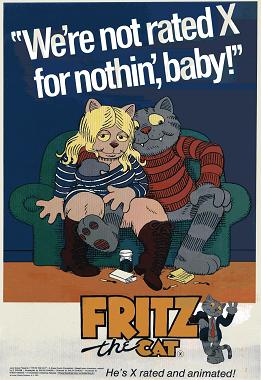


Origins and production
The film stems from the countercultural, hand‑drawn cartoons popular in late 1960s underground comix. Bakshi and his collaborators reinterpreted Crumb’s anthropomorphic protagonist for the screen, expanding the short-strip episodes into a feature‑length narrative that satirized urban life, campus activism and racial tensions of the era. Although based on Crumb’s work, the artist notably distanced himself from the finished film and withdrew his support.
Content and themes
- Adult material: explicit sexual situations and drug use were depicted more openly than in mainstream animated films of the time.
- Social satire: the film lampoons political movements, generational conflicts and aspects of 1960s counterculture.
- Race and urban life: city settings and racial dynamics are central to several sequences, which contributed to later debate about the film’s handling of sensitive topics.
The storytelling mixes black humor with scenes intended to shock, using anthropomorphism to comment on human behavior. Visually, it relied on economical, hand‑drawn animation suited to an independent production rather than the studios that typically dominated feature animation.
Reception and controversy
Upon release the film provoked strong reactions from critics, audiences and activists. Some praised its audacity and social critique; others condemned its explicitness and perceived insensitivity. The Motion Picture Association of America initially assigned an X rating to the film, a designation that signaled adult content. That rating was later surrendered and the distributor released the film without an MPAA certificate. The public debate surrounding the release highlighted tensions over censorship, artistic freedom and the evolving place of animation in adult culture; it remains a common reference point in discussions about mature animation.
Legacy and influence
Fritz the Cat is often cited as a landmark in the emergence of adult‑oriented animation in the United States. Its commercial visibility showed there was an audience for animated films outside family entertainment, helping to clear cultural space for later creators to explore mature themes. The film also inspired a sequel produced without Bakshi’s involvement and contributed to discussions about creators’ control when comics are adapted for other media.
For further reading on the film’s production, public response and place in animation history, see contemporary reviews and retrospective analyses of the controversy and director interviews with Ralph Bakshi. Additional archival and critical resources are available through film history collections and academic studies of underground comix and adult animation materials and ratings policy documents linked to the film’s initial MPAA classification.
Related articles
Author
AlegsaOnline.com Fritz the Cat: Ralph Bakshi’s 1972 Adult Animated Film Leandro Alegsa
URL: https://en.alegsaonline.com/art/36784