
Freerunning (free running)
Freerunning is an urban movement discipline derived from parkour that emphasizes creative, acrobatic, and expressive movements while traversing obstacles.
Freerunning is a movement discipline that blends physical training, acrobatics, and creative expression to move fluidly through an environment. Practitioners negotiate obstacles using jumps, vaults, climbs, flips and controlled landings, often with an emphasis on style and personal interpretation as much as efficiency. While closely related to parkour, freerunning places greater weight on aesthetic and gymnastic elements.
Image gallery
8 Images



Characteristics and common techniques
Typical freerunning techniques include vaults (clearing obstacles with the hands), precision jumps (landing accurately on small targets), wall runs, cat leaps (grabbing a wall or ledge), and a variety of flips and twists performed in the air. Movements are usually chained together to create flowing lines through both natural and built environments. Practitioners train strength, balance, spatial awareness and safe rolling techniques to reduce impact.
Origins and development
The activity developed from French parkour traditions and urban gymnastics. In the early 2000s, freerunning rose in public awareness through demonstrations, films and televised media, which highlighted acrobatic elements and personal style. It remains distinct from parkour in its acceptance of stylistic flourishes and aerial tricks, while both disciplines share training philosophies and techniques. For background on the closely related practice, see parkour.
Examples and practice settings
Freerunning is practiced in parks, gymnasiums, purpose-built training facilities and urban settings. Common training sessions focus on conditioning, drill work for individual moves, obstacle courses, and creative flow sessions where athletes link techniques into sequences. Events and jams often bring practitioners together to share skills, showcase lines and collaborate on new movements.
Benefits, risks and ethics
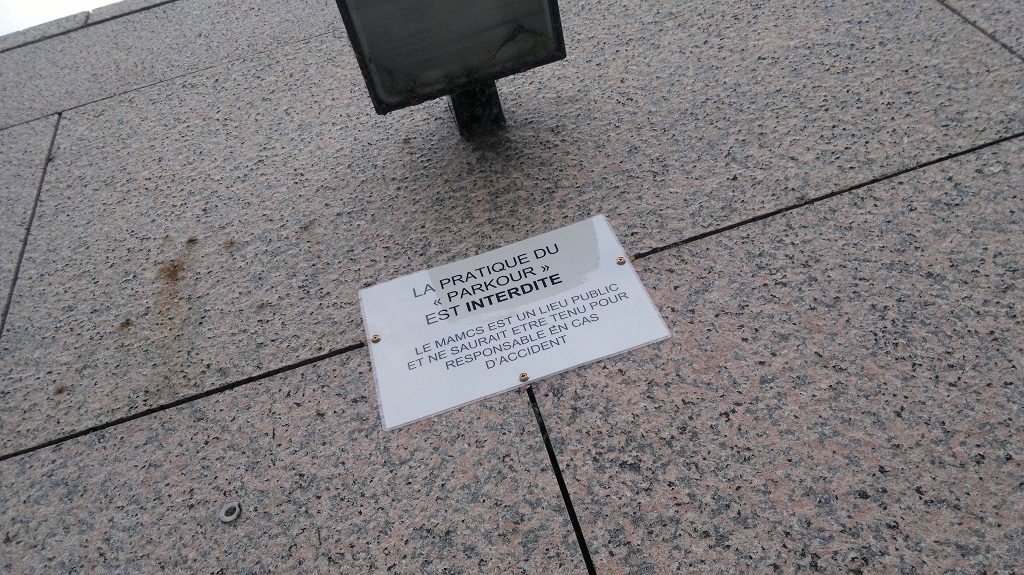
Benefits include improved strength, coordination, problem solving and self-confidence. Because many moves carry risk, progressive training, spotters, protective surfaces and knowledge of safe landings are essential. Practitioners should respect private property and local laws; ethical freerunning emphasizes minimizing damage to urban environments and respecting bystanders.
Distinctions and notable facts
- Freerunning emphasizes creativity and visible style; parkour emphasizes efficient point‑A‑to‑B movement.
- Many freerunners cross-train in gymnastics, breakdancing or martial arts to develop aerial and acrobatic skills.
- The discipline is practiced worldwide and is represented in films, video games and urban sports festivals.
Related articles
Author
AlegsaOnline.com Freerunning (free running) Leandro Alegsa
URL: https://en.alegsaonline.com/art/36467