
Franklin Expedition (1845–1848): disappearance of HMS Erebus and HMS Terror
Study of the 1845–1848 Franklin Expedition, when HMS Erebus and HMS Terror vanished in the Canadian Arctic, covering searches, wreck discoveries, archaeological evidence and theories on the crew’s fate.
Franklin's Lost Expedition was a mid-19th-century British voyage that set out to chart and traverse the Northwest Passage. Commanded by Sir John Franklin, the expedition left England in 1845 with two ships, HMS Erebus and HMS Terror, and ultimately ended with no survivors.
Image gallery
10 Images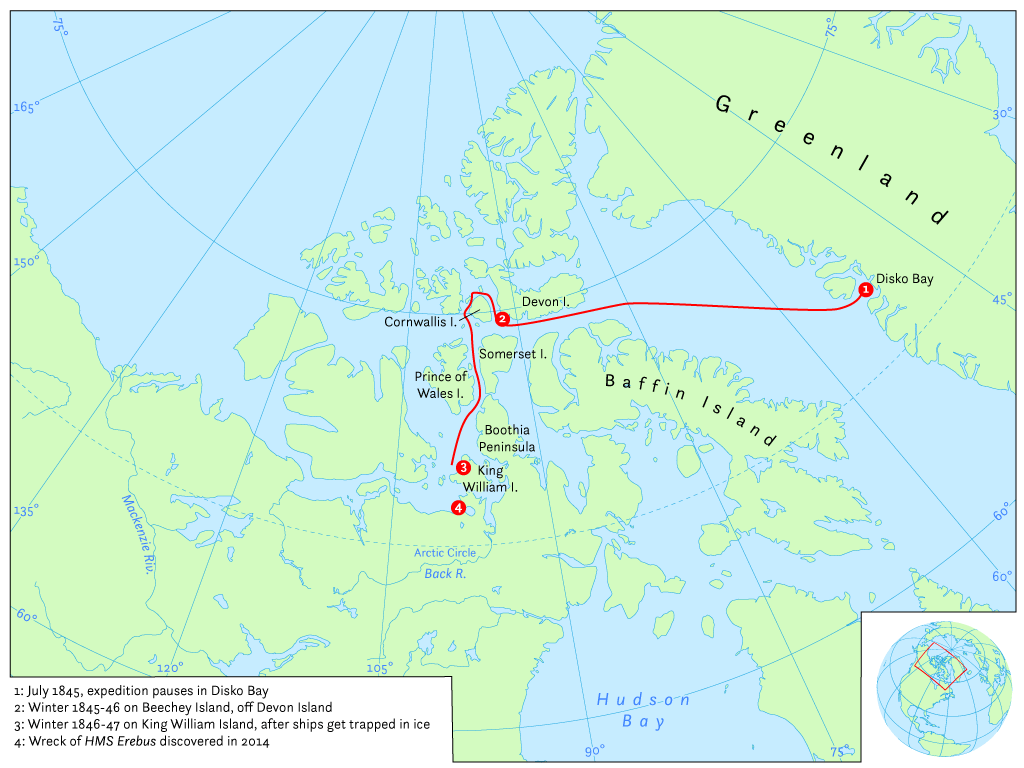


Overview
The mission combined exploration and scientific goals within the context of Arctic navigation. Franklin, an experienced polar officer, led a crew of officers and sailors aboard two well-equipped steam-assisted ships. After entering the Canadian Arctic, the expedition failed to return and was declared lost, triggering one of the largest and longest-running search efforts of the Victorian era.
Ships, route and final movements
The two vessels became icebound in the area of King William Island in what is now Nunavut. Contemporary records from the expedition are limited, but later searches and Inuit testimony indicate that Franklin died in 1847 and that the remaining men abandoned the ships the following year in attempts to reach the mainland. Some groups reached the southern shores of King William Island and nearby coastlines; none survived to be rescued.
Searches and later discoveries
Searches for the missing ships and crew began almost immediately and continued intermittently for more than a century, producing maps, reports, and new geographic knowledge of the Arctic. Archaeological work on land sites recovered artifacts and human remains that have informed modern understanding of the expedition's final months. More recently, the wrecks of both ships were located on the sea floor: HMS Erebus was found in 2014 and HMS Terror in 2016. These discoveries have provided well-preserved material evidence that archaeology and conservation teams continue to study.
Causes of loss: evidence and interpretation
There is no single, undisputed explanation for the complete loss of the expedition. Multiple contributing factors are likely, and different lines of evidence point to a complex combination:
- Harsh Arctic conditions, including prolonged ice entrapment and extreme cold, which would have impeded movement and survival.
- Malnutrition and disease; scurvy and other nutritional deficiencies were common on long polar voyages of the era.
- Contaminants in the diet — for example, elevated lead levels have been detected in some recovered remains and objects, and this has been proposed as a factor that may have impaired the crew's health, though the exact role of lead remains debated.
- Physical trauma and survival behaviors: forensic examinations of skeletal remains have identified cut marks consistent with attempts to extract marrow or remove flesh, which many researchers interpret as evidence of cannibalism during the expedition’s final phase. This conclusion is based on established archaeological criteria but is presented cautiously given the historical and ethical sensitivities.
Legacy
The disappearance of Franklin's expedition had a lasting impact on Arctic exploration, colonial policy and popular imagination. The searches led to improved maps and greater knowledge of the Canadian Arctic coast. The story has been the subject of extensive historical research, forensic study and public interest. Ongoing archaeological conservation of the wrecks and artifacts continues to refine our understanding of what happened and to preserve material culture from a pivotal episode in polar history.
Related articles
Author
AlegsaOnline.com Franklin Expedition (1845–1848): disappearance of HMS Erebus and HMS Terror Leandro Alegsa
URL: https://en.alegsaonline.com/art/36279
Sources
- pc.gc.ca : "The Franklin Expedition"
- thecanadianencyclopedia.ca : "Franklin Search | The Canadian Encyclopedia"
- surreynowleader.com : "Canadian researcher pinpoints burial site of officer from Franklin Expedition - Surrey Now-Leader"
- awesomestories.com : "FRANKLIN EXPEDITION MUMMIES"