
Four Weddings and a Funeral
1994 British romantic comedy-drama about a group of friends and one man's repeated meetings with an American woman at four weddings and a funeral, written by Richard Curtis and directed by Mike Newell.
Four Weddings and a Funeral is a 1994 romantic comedy-drama from the United Kingdom that follows an ensemble of friends as they attend a series of social ceremonies. The screenplay was written and the film was co-produced by Richard Curtis, and it was directed by Mike Newell. The leading characters are played by Hugh Grant and Andie MacDowell.
Image gallery
1 Image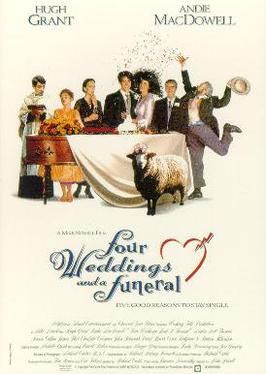
Overview and structure
The story is structured around a sequence of social events — four weddings and one funeral — that serve as the framework for episodic encounters, comic situations and emotional turning points. The protagonist, Charles, repeatedly encounters an American woman named Carrie at these gatherings. Through meetings at multiple weddings and at a funeral, the film traces how attraction and timing shape modern relationships.
Cast, characters and performances
The movie centers on Charles, an awkward but charming figure whose hesitations and dry wit define much of the film's tone. Carrie serves as his counterpart: reserved, practical and perceptive. The plot is supported by an ensemble of friends whose interactions provide both comic relief and emotional depth. Critics and audiences noted the chemistry between the leads and the strength of the supporting ensemble in conveying believable, human moments.
Production, music and release
Richard Curtis's script blends sharp, conversational dialogue with scenes that balance humor and melancholy. Mike Newell's direction emphasizes naturalistic performances and social detail. The soundtrack, particularly the popular cover of "Love Is All Around," became widely associated with the film and helped broaden its popular appeal. On release, the picture was a commercial and critical success in the United Kingdom and internationally, raising the profile of its cast and creative team.
Themes, legacy and reception
Four Weddings and a Funeral explores themes of timing, commitment, friendship and the rituals that surround romantic relationships. Its blend of comic banter and sincere emotion helped define a wave of 1990s British romantic comedies and influenced how such stories were told in mainstream cinema. Reviewers often highlighted the film's warm tone, sharp writing and its mix of laughter with poignant moments of loss and longing. The film's popularity helped launch lead actors to wider recognition and contributed to Richard Curtis's reputation for writing affectionate, character-driven romantic stories.
Notable facts
- The film revolves around repeated meetings and growing attraction between the two leads.
- It uses the familiar setting of weddings and a funeral to explore friendship and love.
- Its success revived interest in British romantic comedies and in ensemble-driven relationship stories.
For further reading about the film's cast, production history and critical response, see related entries and interviews with the creative team: genre notes, writer profile and director background.
Related articles
Author
AlegsaOnline.com Four Weddings and a Funeral Leandro Alegsa
URL: https://en.alegsaonline.com/art/35903