
Fort William (Kolkata) — British-era fortress and Indian Army headquarters
Fort William in Kolkata is an 18th-century bastioned fortress on the Hooghly River, rebuilt after 1756. It remains an active Indian Army headquarters and a major colonial-era military and urban landmark.
Overview
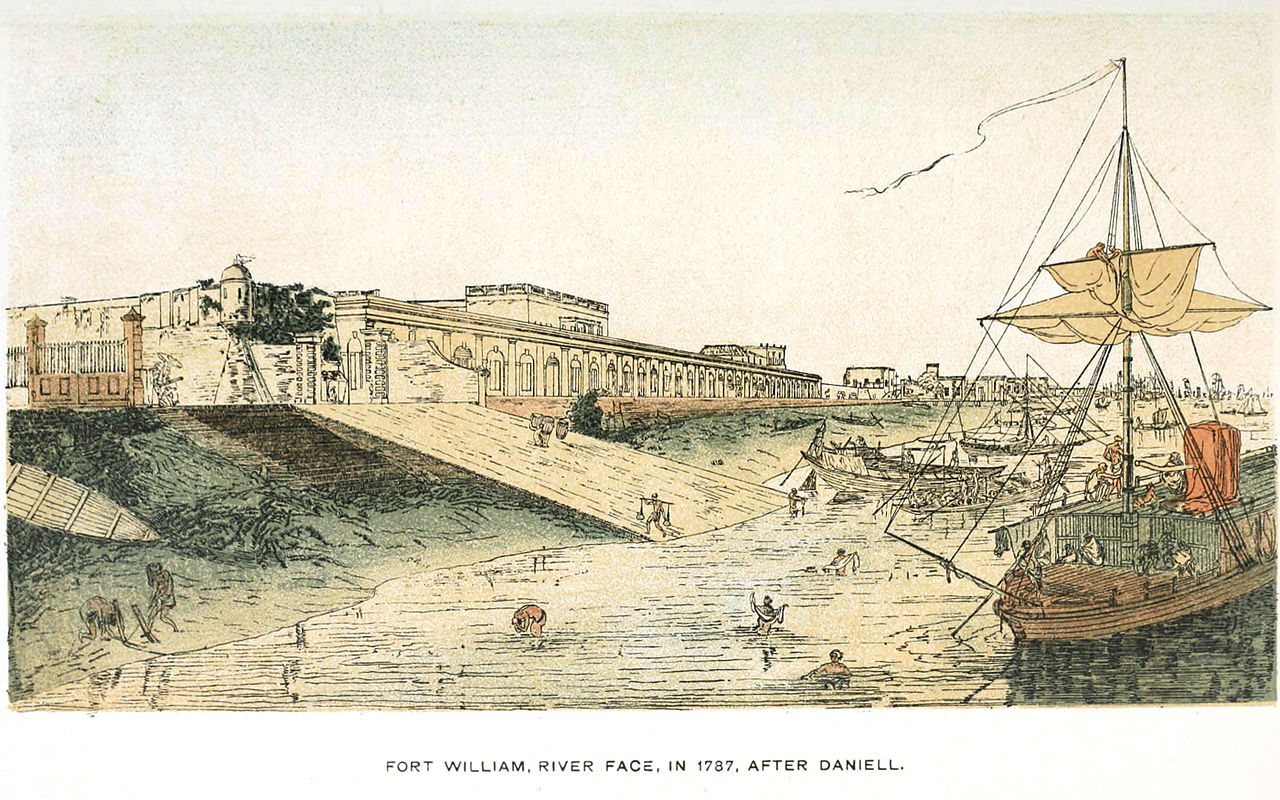
Fort William is a large fortified complex on the eastern bank of the Hooghly River in Kolkata (formerly Calcutta). The name refers to two successive British East India Company forts: an original trading-post stronghold established in the late 17th century and a substantially larger bastioned fortress erected in the later 18th century. The newer fort, set within extensive ramparts and a wide defensive ditch, survives as an active military cantonment and the headquarters of a major command of the Indian Army. Its mass, siting and adjacent open ground have long influenced the city's layout.
Image gallery
10 Images




Design and principal features
The extant Fort William is an example of European bastion fort design adapted to local conditions. Its features include angled bastions for artillery, thick earthen and masonry ramparts, a surrounding moat or ditch and broad parade areas within. Inside the enclosure are barracks, officers' quarters, magazines and administrative buildings arranged to serve a permanent garrison. The fortress was planned to command approaches by river and to provide clear fields of fire against attackers.
History
The first fort grew from the East India Company’s 17th-century trading settlement and defensive needs along the Hooghly. In 1756 the Nawab of Bengal captured Calcutta and the original fort; shortly after, dramatic events reported by British survivors became known as the "Black Hole of Calcutta," an episode whose details and casualty figures remain debated by historians. In the wake of these confrontations, British authorities undertook construction of a far stronger fortress. Work on the new Fort William began in the years after 1756 and continued into the later 18th century, producing the ramparts and layout largely seen today.
Significance
- Military: The fort served as a principal military base during Company and Crown rule and continues as a key Indian Army cantonment and command centre.
- Urban influence: The fort’s walls and the adjacent Maidan (an extensive open ground) shaped the pattern of colonial Calcutta, setting aside large public and administrative spaces next to the fortress.
- Historical associations: As a focal point of 18th-century conflict in Bengal, the site is associated with the rise of British power in eastern India and with contested memories of those struggles.
Visiting and access
Fort William remains an active military area with restricted public access. The exterior, the ramparts and the surrounding public grounds can be viewed from outside; entry into the fort itself is generally by prior permission or invitation for official or educational visits. Because it is both a functioning cantonment and a heritage landmark, it is of interest to students of military architecture, colonial history and urban development.
Related articles
Author
AlegsaOnline.com Fort William (Kolkata) — British-era fortress and Indian Army headquarters Leandro Alegsa
URL: https://en.alegsaonline.com/art/35788