
Fontaine-de-Vaucluse
A small Provençal village built around a dramatic karst spring. Famous for the Sorgue resurgence, Petrarch's house, and its name giving rise to the term 'vauclusian spring.'
Fontaine-de-Vaucluse is a small riverside commune whose identity is defined by a powerful karst spring. The settlement is centered on the point where the Sorgue river issues from a deep cliff-face—an element that shaped local history, industry and tourism. For official information see the commune page: Fontaine-de-Vaucluse.
Image gallery
10 Images


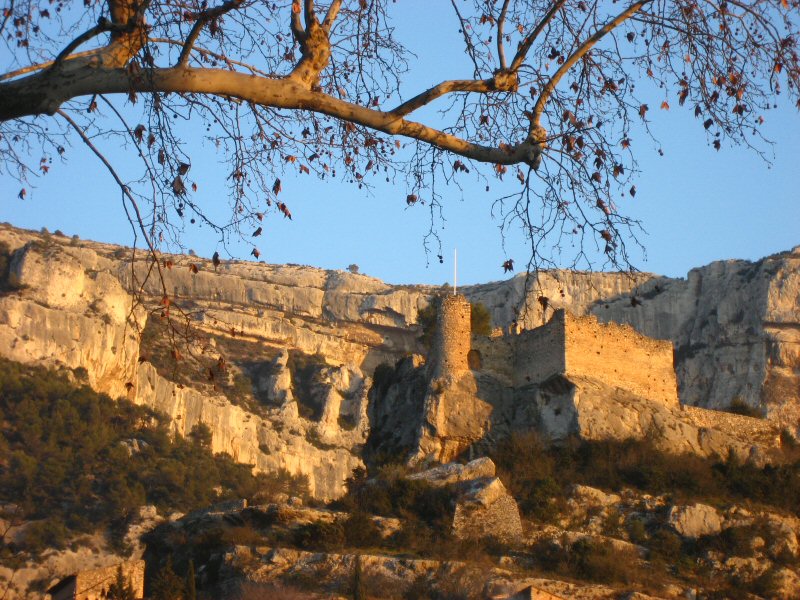
Geography and the spring
The village lies in southeastern France within the region of Provence-Alpes-Côte d'Azur. The spring is a classic example of a vauclusian resurgence: water emerging from a submerged shaft and cavern system. The flow varies with seasons and rainfall and has attracted geologists, speleologists and divers; exploration has revealed complex underground passages, but the full extent remains debated.
History and culture
People have lived and worked around the spring for centuries. Medieval and early modern industries—mills and paper making in particular—used the strong and steady flow of the Sorgue. The village is also associated with the Italian poet and humanist Petrarch, who admired the site; his former house in the village is preserved as a point of cultural interest.
Visiting and local economy
Today the village attracts day-trippers and hikers who come to see the spring, the cliff-side scenery and narrow streets. Popular activities include short walks along the river, interpretive paths, small museums and local cafés. The economy combines tourism, craft shops and agriculture in the surrounding countryside. Contemporary visitor information and events can be found via local resources: population and civic data.
Notable facts and distinctions
- The department name Vaucluse derives from the Latin for "closed valley," a reference to the spring's dramatic setting.
- The term "vauclusian spring" in hydrogeology originates from this site and is used internationally to describe similar resurgences.
- Though small in population, the village is a concentrated example of how geology can shape human settlement and cultural memory in France.
Visitors should respect fragile karst terrain and follow local guidance; much of the attraction lies in the natural spectacle of water pouring from the cliff and the layered history visible in the village's buildings and riverside works.
Related articles
Author
AlegsaOnline.com Fontaine-de-Vaucluse Leandro Alegsa
URL: https://en.alegsaonline.com/art/35404