
Flight number
Identifier assigned by an airline to a scheduled or special service; distinguishes a specific flight when combined with carrier and date and is distinct from an aircraft registration.
Overview
A flight number is the numeric (sometimes alphanumeric) identifier assigned by an airline to a scheduled service, charter, ferry or special operation. When combined with the airline and the date, the flight number uniquely identifies a particular instance of air transport. The term describes a commercial designation used for timetables, tickets, air traffic control records and passenger information.
Image gallery
1 Image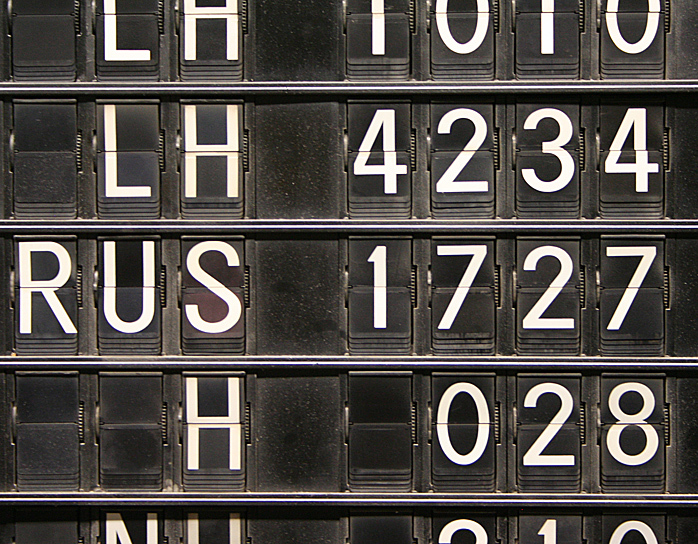
How it is used and what it identifies
Flight numbers simplify scheduling and communications. A single aircraft may operate many different flight numbers in a day, while the same flight number can be flown by different aircraft on different days. In radio communications the flight designator is usually spoken using the airline's telephony designator (for example, the airline name) plus the number. This should not be confused with the aircraft's registration or tail number, which is a legal identifier physically painted on the aircraft.
Characteristics and conventions
- Numbers are normally one to four digits in public schedules; internal or legacy systems may append letters or use longer codes.
- Many carriers adopt conventions—such as reserving low numbers for flagship routes or using odd/even numbering to suggest direction—but practices vary by airline and region.
- Codeshare arrangements may result in one operating flight being marketed under several different flight numbers by participating carriers; the operating airline remains responsible for the flight's operation.
History and development
Flight numbers developed as commercial aviation expanded and timetable complexity grew. They provide a compact way to reference a scheduled service in reservations systems, airport displays and regulatory paperwork. Over time, numbering systems adapted to computerized reservation systems and international designators; passengers today most commonly see the IATA-style pairing of a two-letter airline code with a numeric flight number.
Practical examples and notable facts
Airlines will sometimes retire or renumber a flight after an accident or incident, or for marketing reasons; reuse of numbers is also common after a period of inactivity. Special flights such as positioning (ferry) flights, training sorties, military charters or relief missions may use distinct series of numbers. For more detail on airline operations and identifiers, see resources about the airline industry and aircraft registration systems.
Distinctions and related identifiers
Key distinctions: the flight number identifies a scheduled service, the callsign used in voice communications may be based on the airline telephony designator plus that number, and the tail number or registration uniquely identifies the physical aircraft. In general aviation the aircraft registration often doubles as the radio callsign, whereas in commercial operations the carrier's callsign and flight number are standard.
Related articles
Author
AlegsaOnline.com Flight number Leandro Alegsa
URL: https://en.alegsaonline.com/art/35117