
First We Take Manhattan (song)
A song written by Leonard Cohen, first recorded by Jennifer Warnes and later released by Cohen; noted for its stark, ambiguous lyrics and wide range of covers and interpretations.
"First We Take Manhattan" is a song written by Leonard Cohen. Its lyrics and mood combine sparse melody with a penetrating, declarative refrain that names two cities — Manhattan and Berlin — and evokes a sense of calculated ambition. The song was first recorded by Jennifer Warnes for her 1986 tribute album Famous Blue Raincoat, which consisted entirely of Cohen compositions. Cohen recorded his own, more electronically arranged version for his 1988 album I'm Your Man.
Image gallery
2 Images
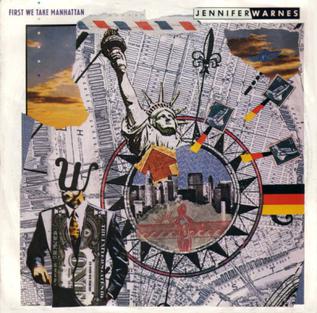
Characteristics and themes
The composition pairs minimalist verse with a memorable chorus: the repeated line about taking Manhattan, then Berlin, serves as a stark motif. Musically, Cohen's take on the song emphasized synth textures and a measured, almost march-like tempo that underscored the lyrics' ominous atmosphere. The narrator's voice is ambiguous — it can be read as political, prophetic, vengeful, or metaphorical — and that ambiguity has been central to the song's critical reception.
History and reception
After its initial appearance on Warnes's tribute album, the song became one of Cohen's best-known pieces from the late 1980s. Critics and listeners have debated its meaning: some interpret it as a meditation on power and ideology, others as a portrait of a charismatic antagonist, and still others as a darker form of spiritual or psychological commentary. Contemporary reviews noted the song's hard-edged tone compared with much of Cohen's earlier work.
Notable covers and influence
The song has been recorded and performed by a variety of artists. Among the better-known covers is the version by Joe Cocker, included on his 1999 album No Ordinary World. Live performances and reinterpretations have emphasized different aspects of the piece — some highlighting its pop hooks, others its menacing lyrical thrust — which has helped maintain its presence in Cohen's catalog and in popular culture.
Interpretations and notable commentary
Observers have often remarked on the song's apocalyptic or confrontational tone. Critics have pointed to the way its short, declarative lines summon geopolitical imagery while leaving motive and morality deliberately unclear. Cohen himself referred to the song in ways that encouraged readings of it as intentionally provocative and allegorical rather than a simple political manifesto.
Legacy
"First We Take Manhattan" remains a frequently cited example of Cohen's later-period songwriting, notable for combining stark lyrics with contemporary production choices. Its capacity to be reimagined by different singers and to sustain varied interpretations has kept it a subject of discussion among critics, musicians, and listeners exploring Cohen's work and the interplay of poetry and popular song.
- Original writer: Leonard Cohen
- First recorded: Jennifer Warnes (1986)
- Notable cover: Joe Cocker (1999)
Related articles
Author
AlegsaOnline.com First We Take Manhattan (song) Leandro Alegsa
URL: https://en.alegsaonline.com/art/34600
Sources
- theguardian.com : "Leonard Cohen: 10 of his best songs"