
First Battle of Maryang San
An October 1951 Korean War engagement in which Australian-led Commonwealth forces seized the strategically important Maryang San ridge from Chinese and North Korean troops, improving UN positions before armistice talks.
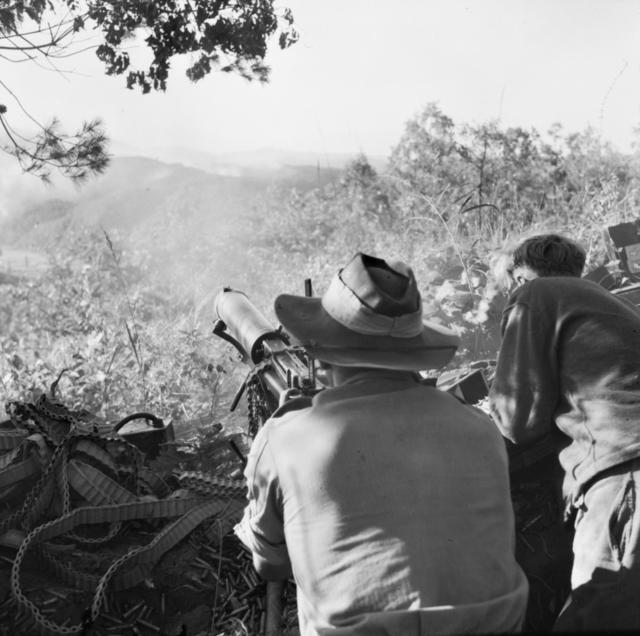
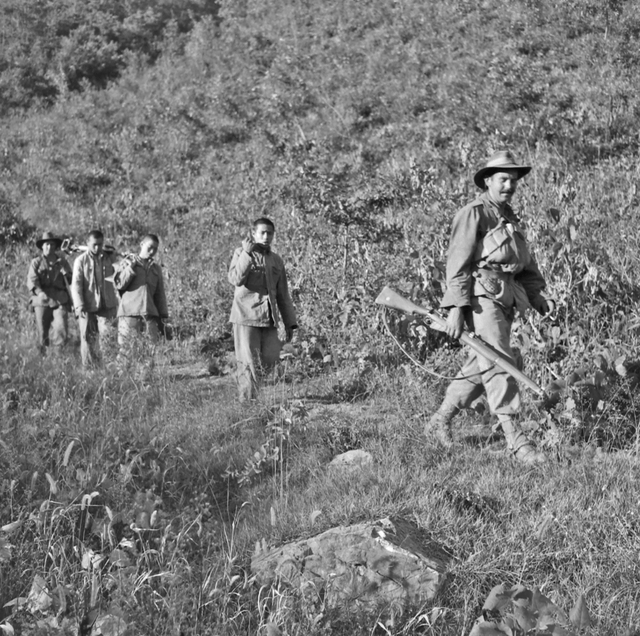
The First Battle of Maryang San was a tactical offensive fought during the Korean War in October 1951. Commonwealth forces, prominently including Australian infantry, assaulted and captured a series of well-defended ridgelines and outposts held by Chinese and North Korean units. The action is widely regarded as one of the more skillful and important Commonwealth operations of the conflict.
Image gallery
10 Images



Terrain and strategic purpose
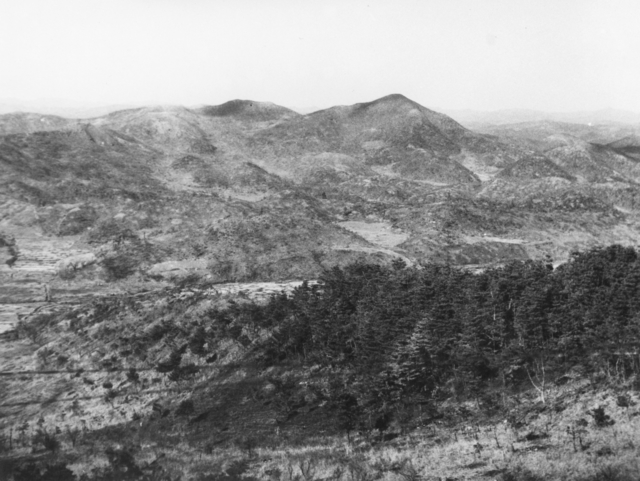
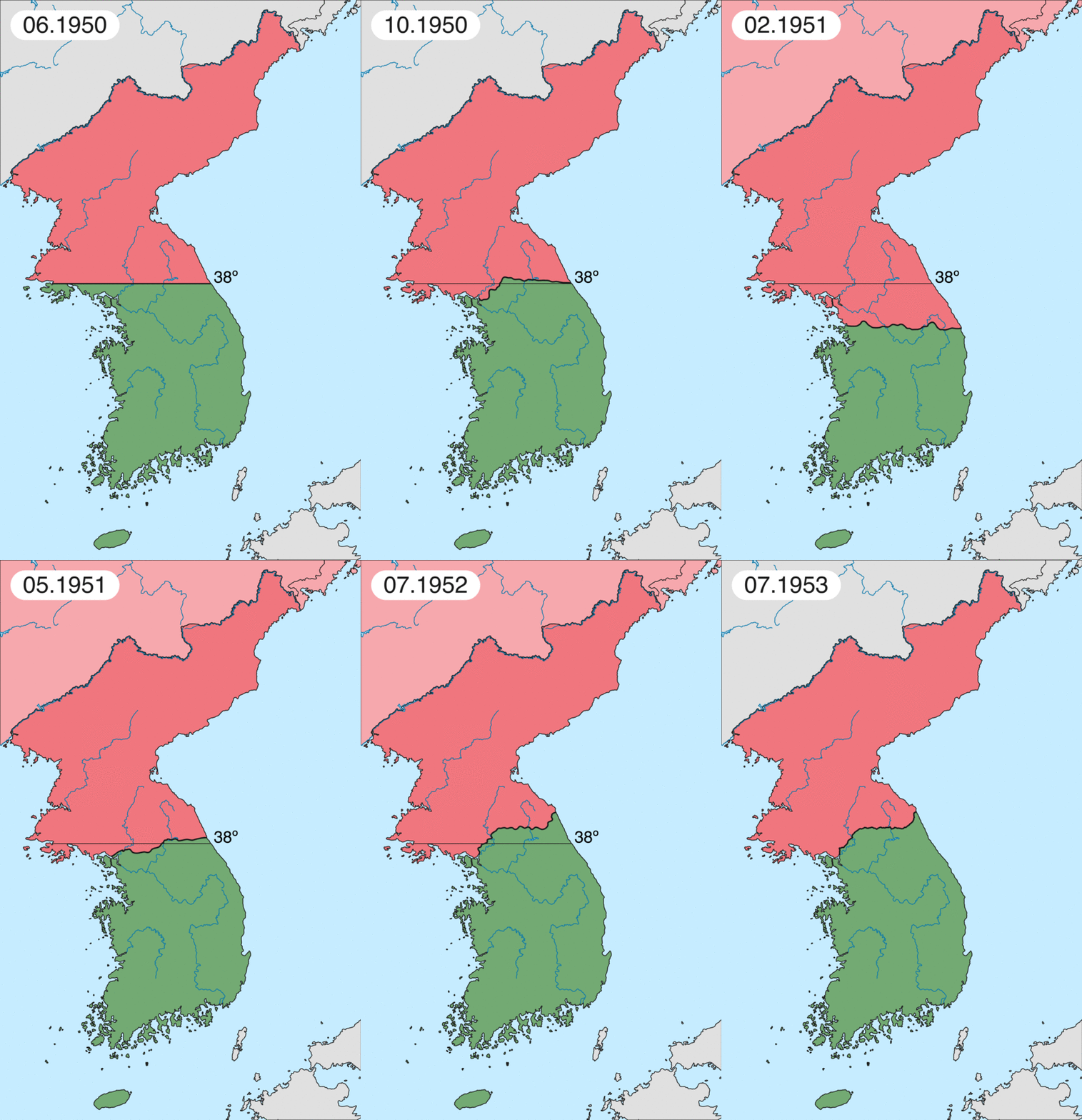
Maryang San is a steep, rocky ridge system whose summits dominate the surrounding valleys and roads. Control of these heights offered observation and defensive advantage, enabling forces to influence local supply routes and the wider UN-held line. In the war’s static phase of 1951, limited offensives sought to improve frontline positions and bargaining power during armistice negotiations.
- Steep, fragmented ridges and fortified hilltops.
- Importance for observation, artillery direction, and local defense.
- Fought during a period of positional warfare and limited offensives.
The attack combined carefully planned night moves, close infantry assault, and coordinated use of artillery and supporting fires. Small-unit leadership, reconnaissance, and infiltration tactics were emphasized to seize individual objectives and then consolidate them against counterattacks. Opposing defenders had prepared bunkers and wired positions, which made the fighting intense at key strongpoints.
Outcome and legacy
Commonwealth troops succeeded in capturing the principal summits and improving the UN defensive line in the sector. The gains were maintained against subsequent enemy probes and contributed to a locally stronger negotiating position before the armistice discussions. For Australia, the battle became an emblem of effective planning, leadership at platoon and company level, and cooperative action with allied units.
- Demonstrated effective small-unit tactics in mountainous terrain.
- Enhanced local UN battlefield positions ahead of truce talks.
- Remembered as a notable Australian achievement in the Korean War.
The engagement is often referenced in histories of the Korean War and in studies of infantry tactics. For further background and detailed accounts, see contemporary unit histories and scholarly treatments of the 1951 Korean campaigns, including summaries available online: Further reading.
Related articles
Author
AlegsaOnline.com First Battle of Maryang San Leandro Alegsa
URL: https://en.alegsaonline.com/art/34517
Sources
- tools.wmflabs.org : 38°8′6″N 126°55′15″E / 38.13500°N 126.92083°E / 38.13500; 126.92083