
First Battle of the Marne (September 1914)
A decisive 1914 battle near the Marne River that stopped the German advance into France, ended the campaign of maneuver and helped produce the trench stalemate of World War I.
Overview
The First Battle of the Marne was fought from 5 to 12 September 1914 between the forces of the German Empire and the Franco-British armies of the French and British Expeditionary Force. It took place northeast of Paris along the valley of the Marne River and in the surrounding plains. The battle halted the rapid German advance that had penetrated deeply into northern France during the opening weeks of the First World War.
Image gallery
10 Images
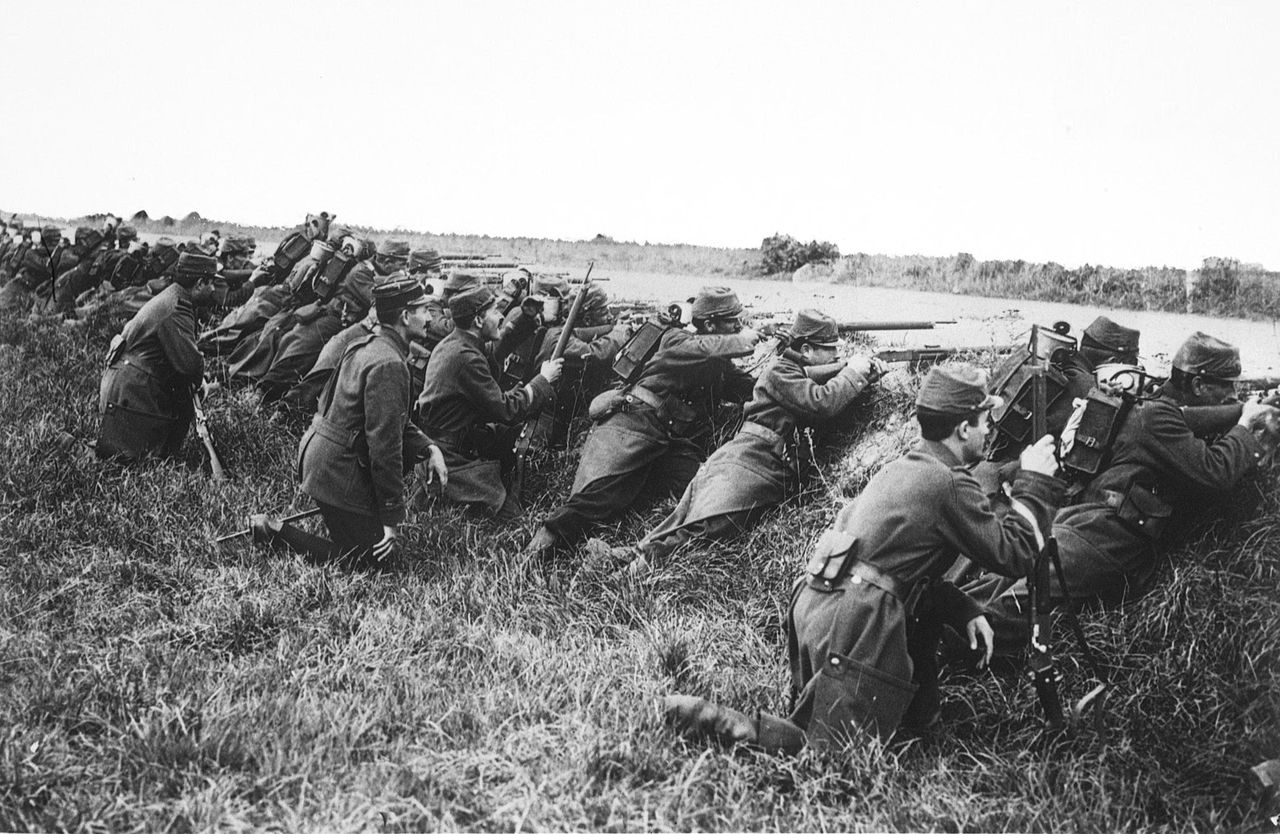

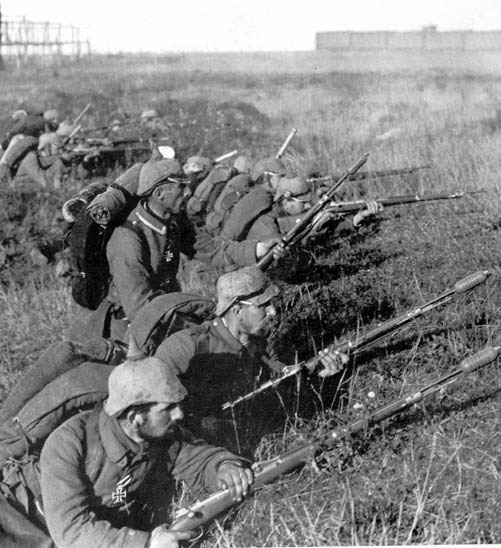


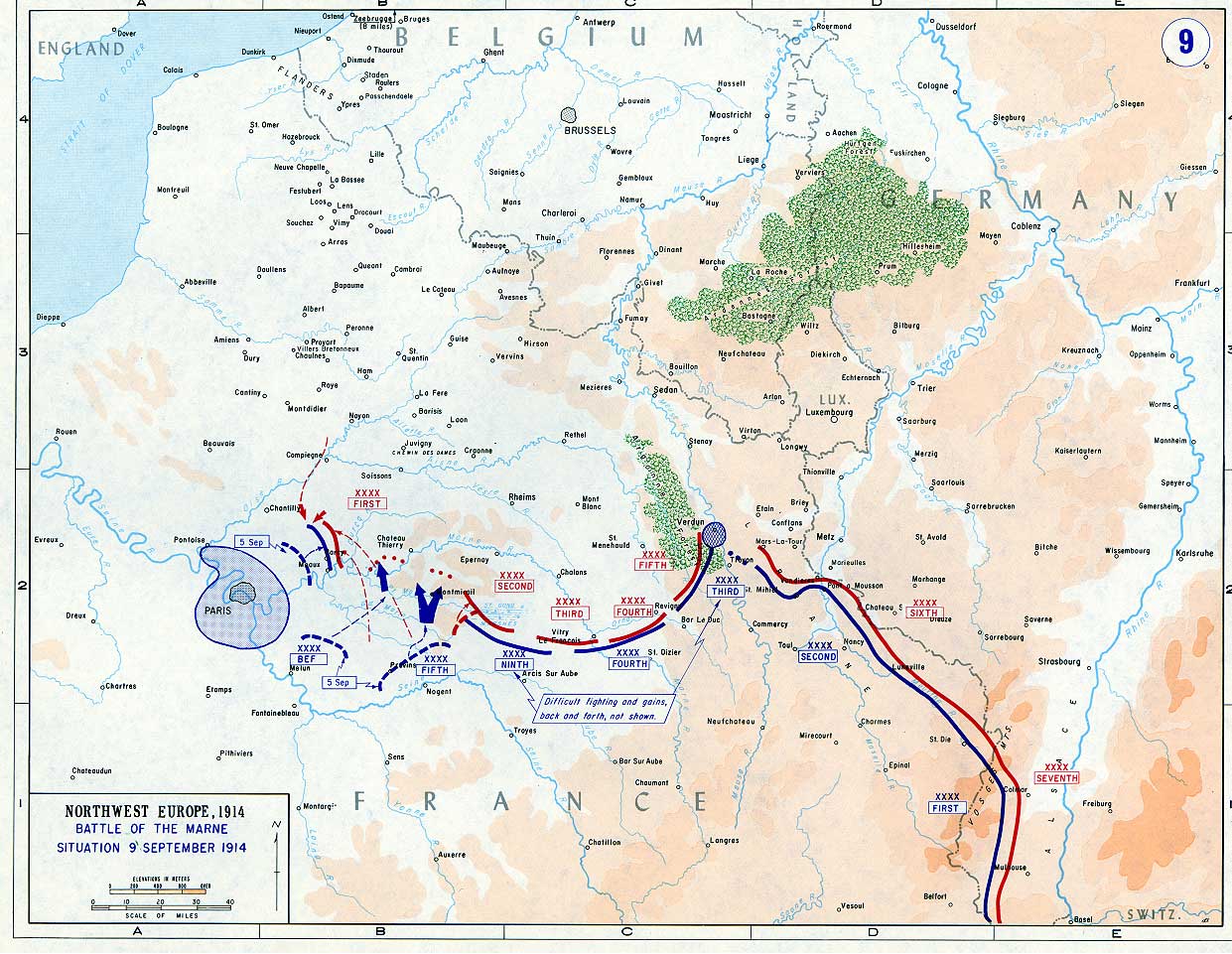
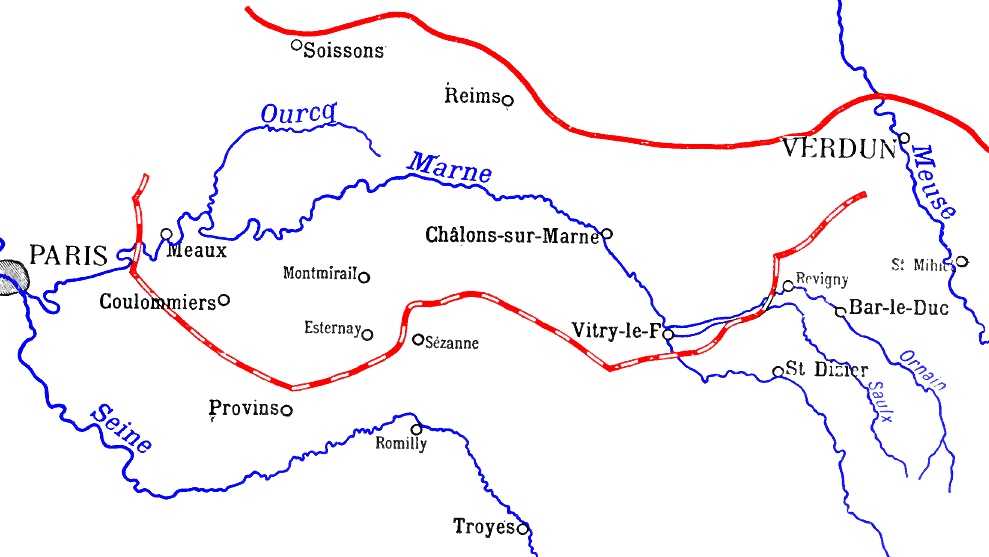

Strategic background
At the start of the war German strategy sought a quick victory in the west by enveloping French forces through a wide sweep via Belgium. This operational concept—commonly associated with the Schlieffen Plan—relied on speed, concentrated forces and the avoidance of a protracted two-front conflict. By early September the German right wing, however, had stretched its supply lines and encountered unexpectedly stiff resistance and operational setbacks. Allied leaders seized the moment to counterattack, forcing a change in German plans.
Course of the battle
The fighting comprised a series of coordinated French and British moves against exposed German formations. French commanders rapidly shifted armies from the eastern front and, together with British units, launched local counterattacks. One notable episode—often highlighted in popular accounts—involved the mobilization of Parisian taxis to move reserve troops to the front. Over several days of mobile combat the Allies inflicted enough pressure that German commanders chose to withdraw to avoid encirclement, a decision sometimes described as a tactical retreat.
Casualties and immediate results
The battle ended the German drive on Paris and marked the failure of a decisive quick victory in the west. Casualty figures for the campaign are not uniform in contemporary sources, but historians agree that losses were heavy on both sides, with combined casualties numbering in the hundreds of thousands. Different accounts and compilations provide varying totals for the Allied and German losses; for discussions and summaries see sources that estimate Allied casualties and German casualties. The human cost contributed to the sense that the war would be long and costly.
Aftermath and significance
After the battle both armies dug in, creating extensive defensive lines that soon developed into the entrenched systems characteristic of the Western Front. The shift from rapid maneuver to positional fighting is a central reason the First Battle of the Marne is often cited as the moment when large-scale trench warfare became the dominant pattern on the Western Front. The battle also had important political and military consequences: it preserved Paris from immediate capture, bolstered French morale, and forced German planners to adapt to a protracted war on two fronts.
Key facts
- Dates: 5–12 September 1914.
- Location: valley of the Marne and approaches northeast of Paris.
- Main belligerents: German Empire vs. France and the British.
- Strategic effect: stopped the German advance and led to stabilized, entrenched fronts.
The First Battle of the Marne remains a widely studied engagement because it reshaped the early course of World War I and illustrated how logistics, timing and rapid crisis decisions can alter strategic outcomes. For more detailed timelines, orders of battle and contemporary accounts consult specialized military histories and primary source collections referenced by scholars and archival institutions.
Questions and answers
Q: What was the First Battle of the Marne?
A: The First Battle of the Marne was a battle in the First World War fought between the German Empire and French and British forces.
Q: Who fought in the First Battle of the Marne?
A: The German Empire fought against French and British forces in the First Battle of the Marne.
Q: What was the result of the First Battle of the Marne?
A: The First Battle of the Marne resulted in a tactical retreat of the German army, marking the end of their advance into France.
Q: What is the Schlieffen Plan, and why did the First Battle of the Marne show it had failed?
A: The Schlieffen Plan was a strategy used by the Germans to quickly defeat France before turning their attention to Russia. The First Battle of the Marne showed that the plan had failed because the French and British were able to halt the German advance and force them to retreat.
Q: When was the First Battle of the Marne fought?
A: The First Battle of the Marne was fought from September 5-12, 1914.
Q: How many soldiers died in the First Battle of the Marne?
A: Over one million French and British soldiers, as well as over 750,000 soldiers on the German side, died in the First Battle of the Marne.
Q: What did the First Battle of the Marne mark the beginning of in World War I?
A: The First Battle of the Marne marked the beginning of trench warfare that World War I became famous for.
Related articles
Author
AlegsaOnline.com First Battle of the Marne (September 1914) Leandro Alegsa
URL: https://en.alegsaonline.com/art/34520
Sources
- historylearningsite.co.uk : "The First Battle of the Marne"
- smithsonianmag.com : "A Fleet of Taxis Did Not Really Save Paris From the Germans During World War I"
- american-remembrance.com : "American Remembrance"