
Final Fantasy VIII
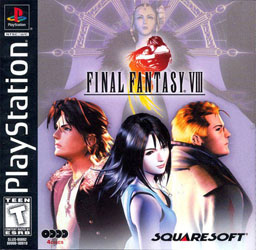
Final Fantasy VIII is the eighth mainline title in Square's RPG series (PlayStation 1999, Windows 2000). Known for its junction magic system, realistic character proportions and the Triple Triad card game.
Overview
Final Fantasy VIII is a single-player role-playing video game developed by Square (now Square Enix) and originally released for the PlayStation in 1999, with a Windows edition following in 2000 (PC release details). It is the eighth numbered entry in the Final Fantasy series (series page) and tells a character-driven story centered on a military academy cadet, Squall Leonhart, his relationship with Rinoa Heartilly, and a conflict involving sorcery and time-manipulation.
Image gallery
4 Images

Design and gameplay
The game departed from several previous series conventions. It replaced traditional MP-based spellcasting with a "Draw" and "Junction" mechanic: players draw magic from enemies or locations and assign those spells to characters' statistics, strengthening attributes rather than consuming a separate magic point pool. Summons appear as "Guardian Forces" (GFs), which serve both as powerful abilities and as systems that modify character growth. Battles remain turn-based but emphasize junction setup, item- and GF-based customization, and character-specific limit breaks.
Key features and characters
- Junction system — links magic to stats instead of MP.
- Guardian Forces — summon creatures that grant abilities and stat benefits.
- Triple Triad — a collectible card minigame that became widely popular.
- Major characters include Squall, Rinoa, Seifer, and Laguna, each with distinct roles in the plot.
History, presentation and releases
Final Fantasy VIII was notable for its more realistically proportioned 3D character models and a cinematic presentation that blended pre-rendered backgrounds, polygonal characters and full-motion sequences. Composer Nobuo Uematsu provided the soundtrack, which includes the well-known theme song and orchestral pieces. The title was later made available on the PlayStation Network as a PSone Classics release (PSN listing) and has since been issued in remastered form on modern platforms. For background on the original launch and platform-specific notes see official information and computer-specific details.
Legacy and reception
Reception was mixed to positive: critics praised the visuals, musical score and innovation, while some players found the junction system complex and the narrative divisive. Despite debate, Final Fantasy VIII remains influential for its experiments with mechanics and its successful minigame design, and it continues to be discussed among fans and game designers as a distinctive entry in the franchise.
Related articles
Author
AlegsaOnline.com Final Fantasy VIII Leandro Alegsa
URL: https://en.alegsaonline.com/art/34359