
Fine Wind, Clear Morning (Red Fuji) — Hokusai's Thirty-six Views of Mount Fuji
An overview of Hokusai's woodblock print 'Fine Wind, Clear Morning' (Red Fuji): its appearance, place in the Thirty-six Views series, historical context, technique, and cultural legacy.
Overview
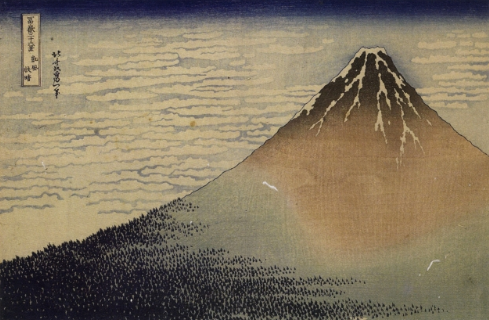
Fine Wind, Clear Morning, commonly called Red Fuji or South Wind, Clear Sky, is one of the most recognized woodblock prints by the Japanese artist Katsushika Hokusai. Created during the late Edo period, it belongs to Hokusai's celebrated series Thirty-six Views of Mount Fuji, and depicts Mount Fuji bathed in the warm colours of a clear, southerly morning.
Image gallery
6 Images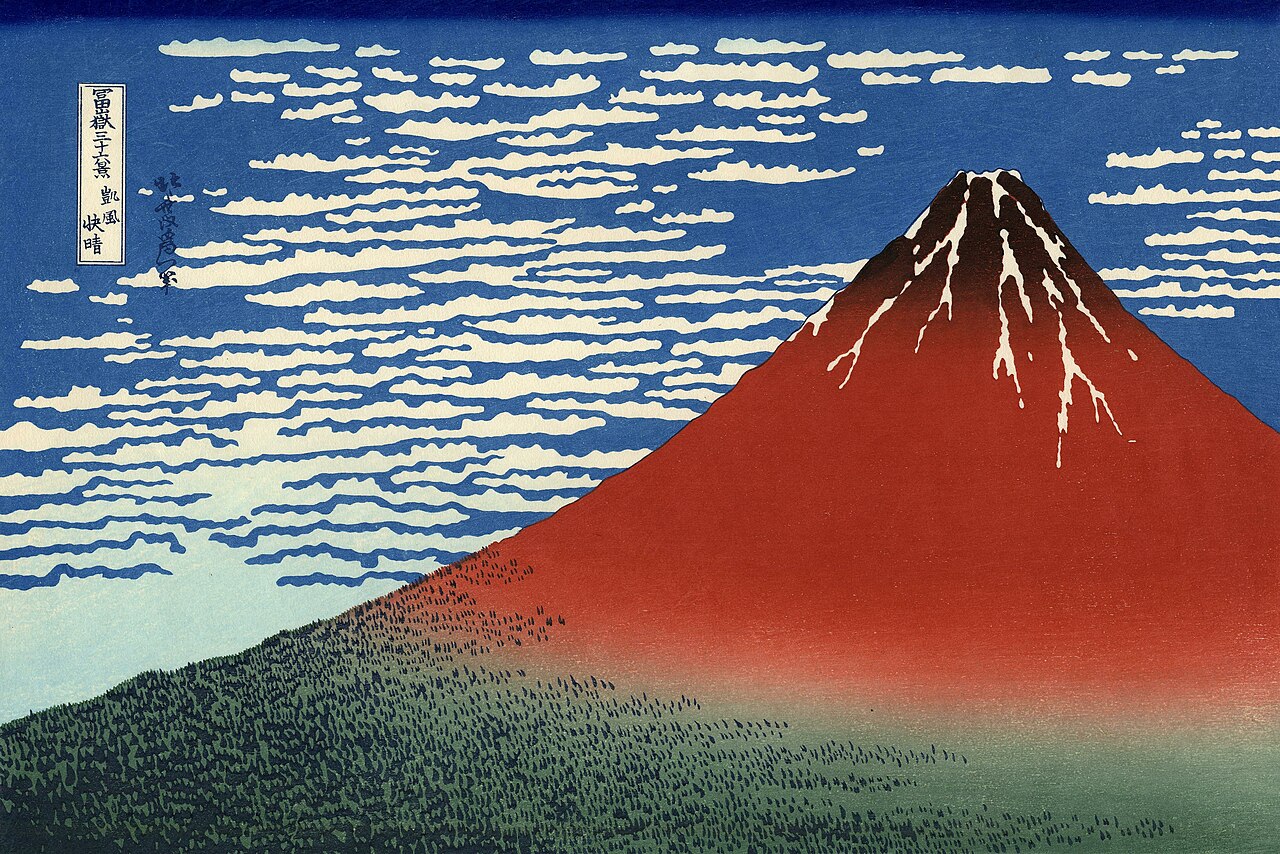


Description and visual characteristics
The image shows Mount Fuji filling much of the vertical composition, its upper slopes tinged reddish by early sunlight while the lower slopes remain in deep shadow. The sky is rendered in a smooth gradation, creating a strong contrast between the cool blues and the warm vermilion of the peak. The print uses traditional woodblock techniques and polychrome printing to achieve flat, bold colour areas, crisp outlines, and a simplified, almost abstracted landscape.
Historical context and production
Hokusai produced this print around the early 1830s during the Edo period, when woodblock printing (ukiyo-e) was a popular medium for mass-produced images. It is the second image in the Thirty-six Views series, a project that explored Mount Fuji from many vantage points and under different conditions. Hokusai combined careful observation with studio composition to distill the mountain’s form into a powerful emblem of place and atmosphere. For background on the era, see Edo period.
Notable features
- Colour contrast: the vivid red of the sunlit peak against the cool sky.
- Composition: a strong vertical thrust with minimal foreground detail.
- Technique: polychrome woodblock printing (nishiki-e) with careful registration.
- Seasonal and meteorological reference: the effect is associated with an early autumn dawn and a southerly breeze; see early autumn for seasonal context.
Legacy and influence
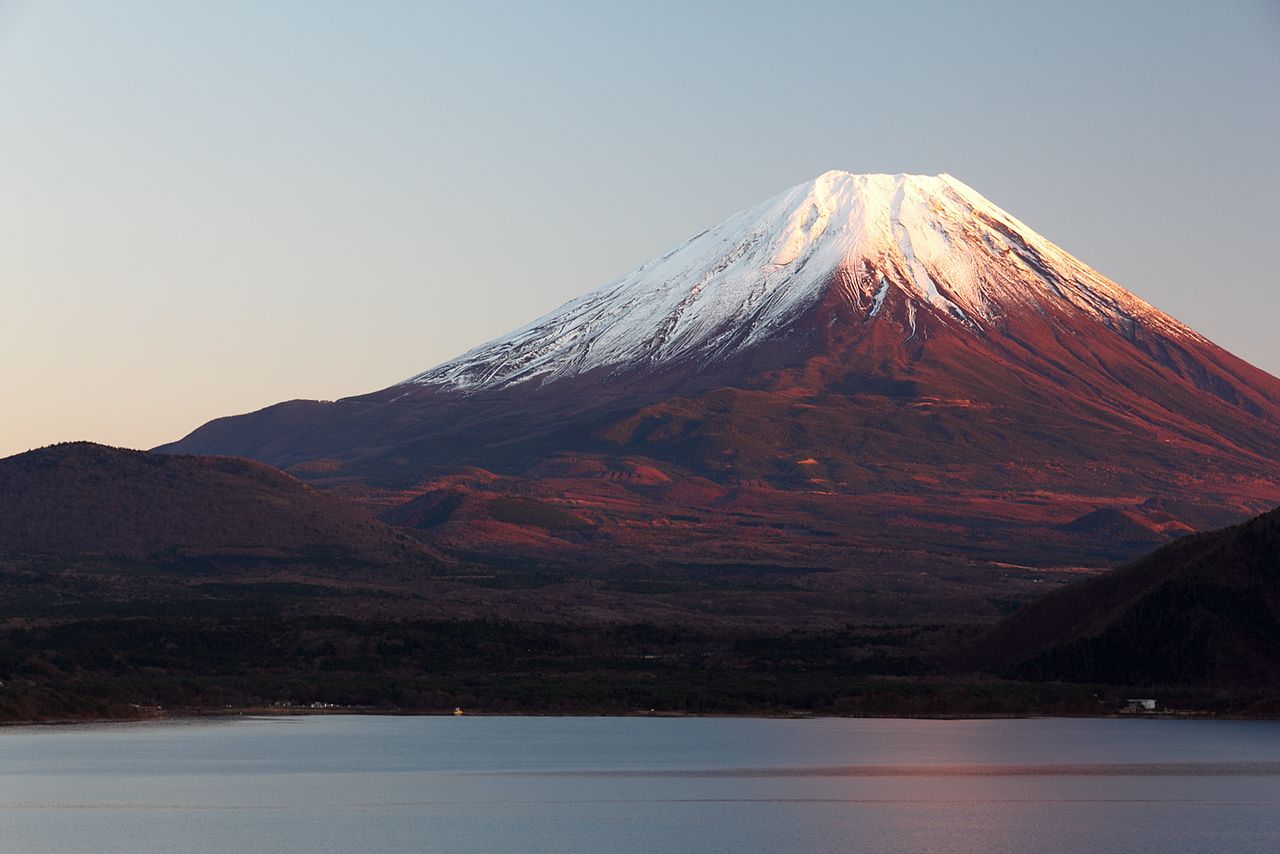
Fine Wind, Clear Morning became an iconic image both in Japan and abroad. Its simplified forms and striking palette influenced later Japanese printmakers and found admirers among European artists in the 19th century. The print is widely reproduced and appears in major museum collections, where it is often cited as an example of Hokusai’s ability to combine scientific observation, poetic sensibility, and graphic clarity. For more on the mountain itself, consult resources about Mount Fuji.
Although part of a larger set of views, Red Fuji stands out for its economy of means and its evocative capture of a brief, atmospheric moment—an instance where topography and light together become a symbol of national and artistic identity.
Related articles
Author
AlegsaOnline.com Fine Wind, Clear Morning (Red Fuji) — Hokusai's Thirty-six Views of Mount Fuji Leandro Alegsa
URL: https://en.alegsaonline.com/art/34390