
File (tool)
A hand tool with a roughened surface used to remove small amounts of material for shaping, smoothing, or fitting parts; comes in many shapes, cuts and materials for metal, wood and personal use.
A file is a hand tool with a hardened, abrasive surface designed to remove small amounts of material by sliding the tool across a workpiece. Files are used to shape, smooth, deburr, or finish parts made of metal, wood, plastic, or other materials. They operate by cutting away tiny chips or particles, producing a controlled change in dimension or surface texture.
Image gallery
10 Images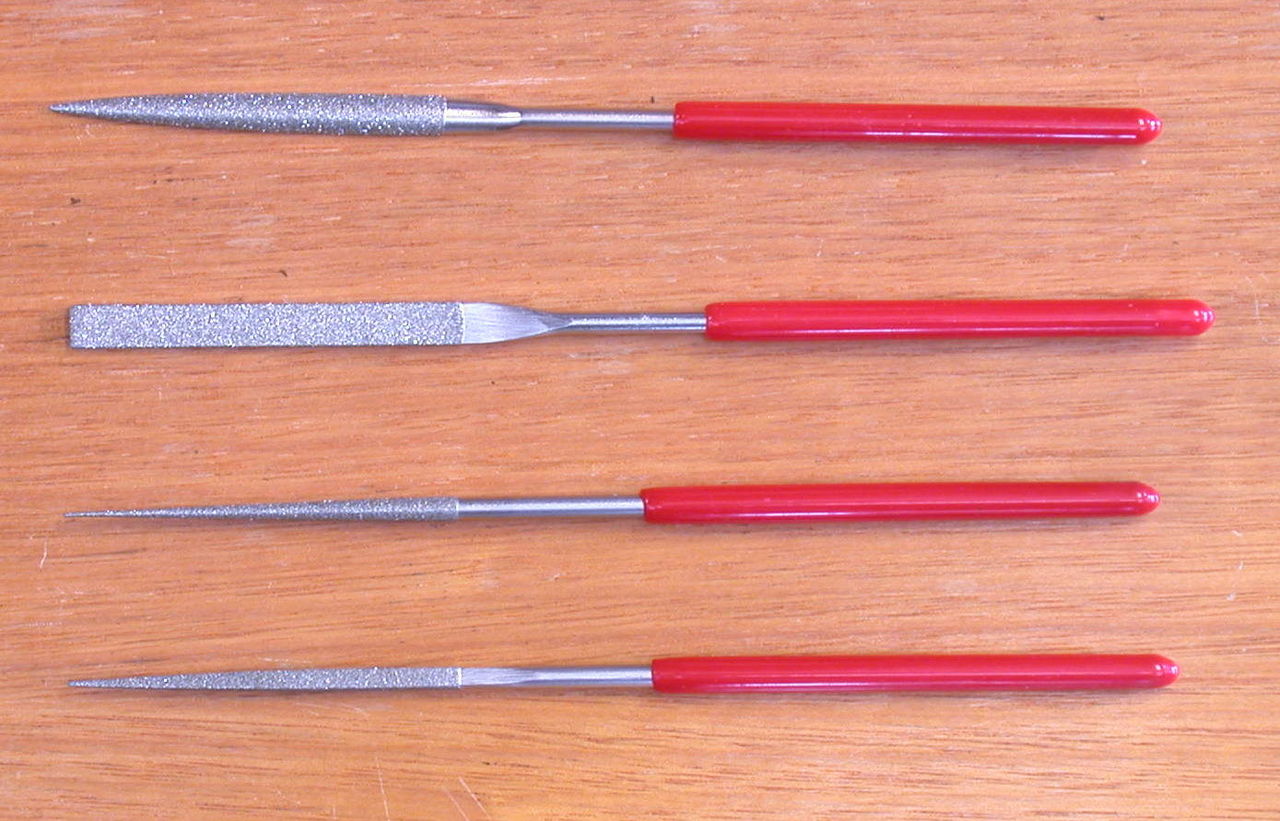





Characteristics and components
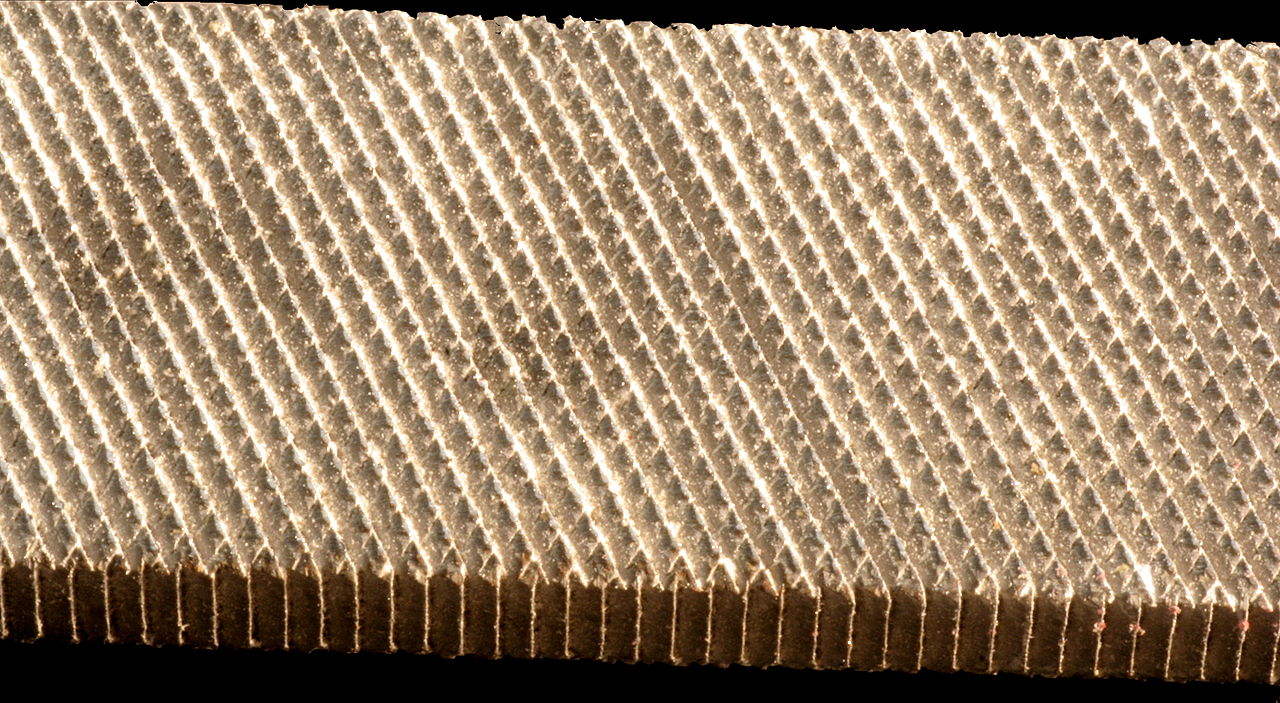
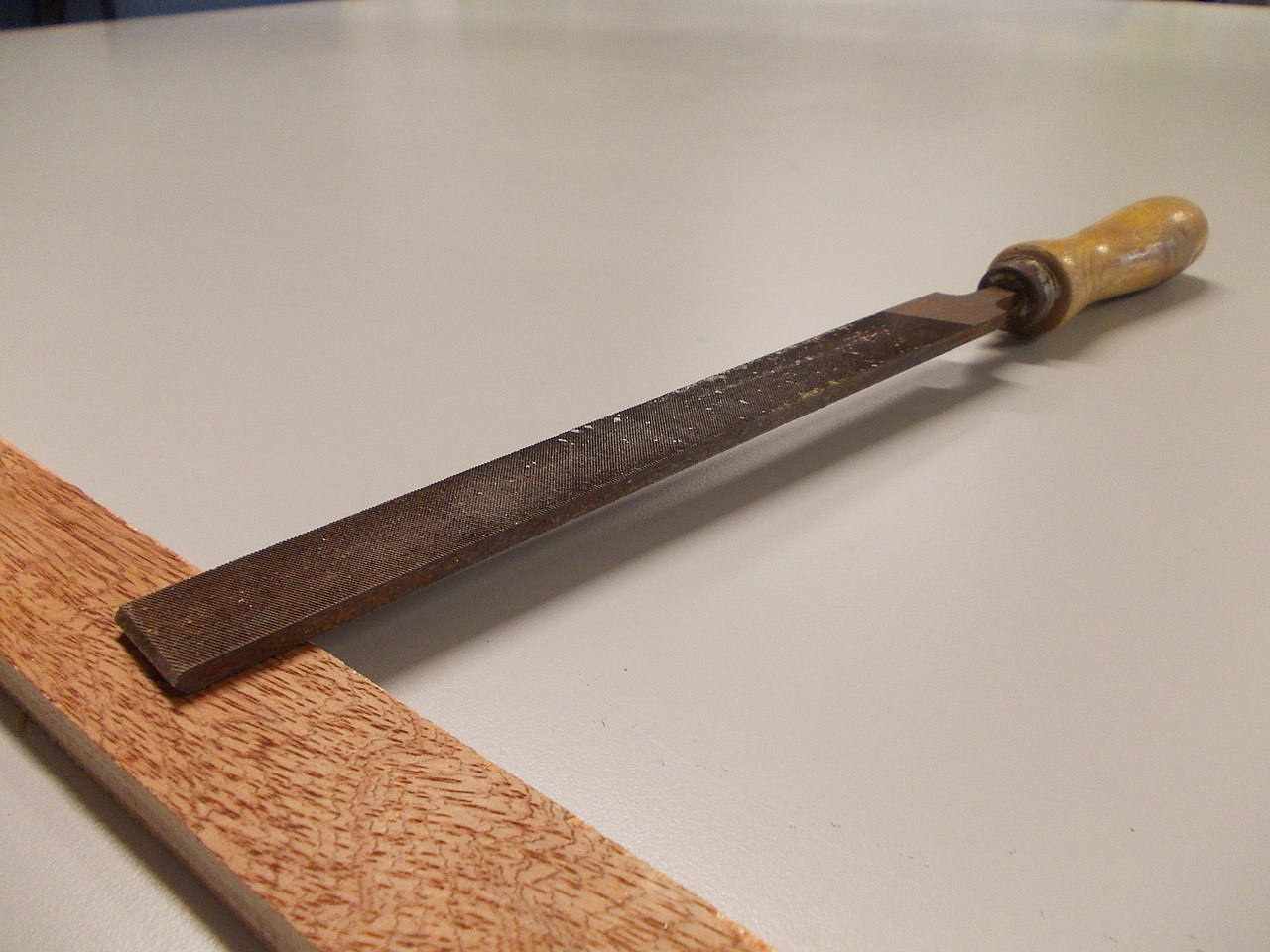
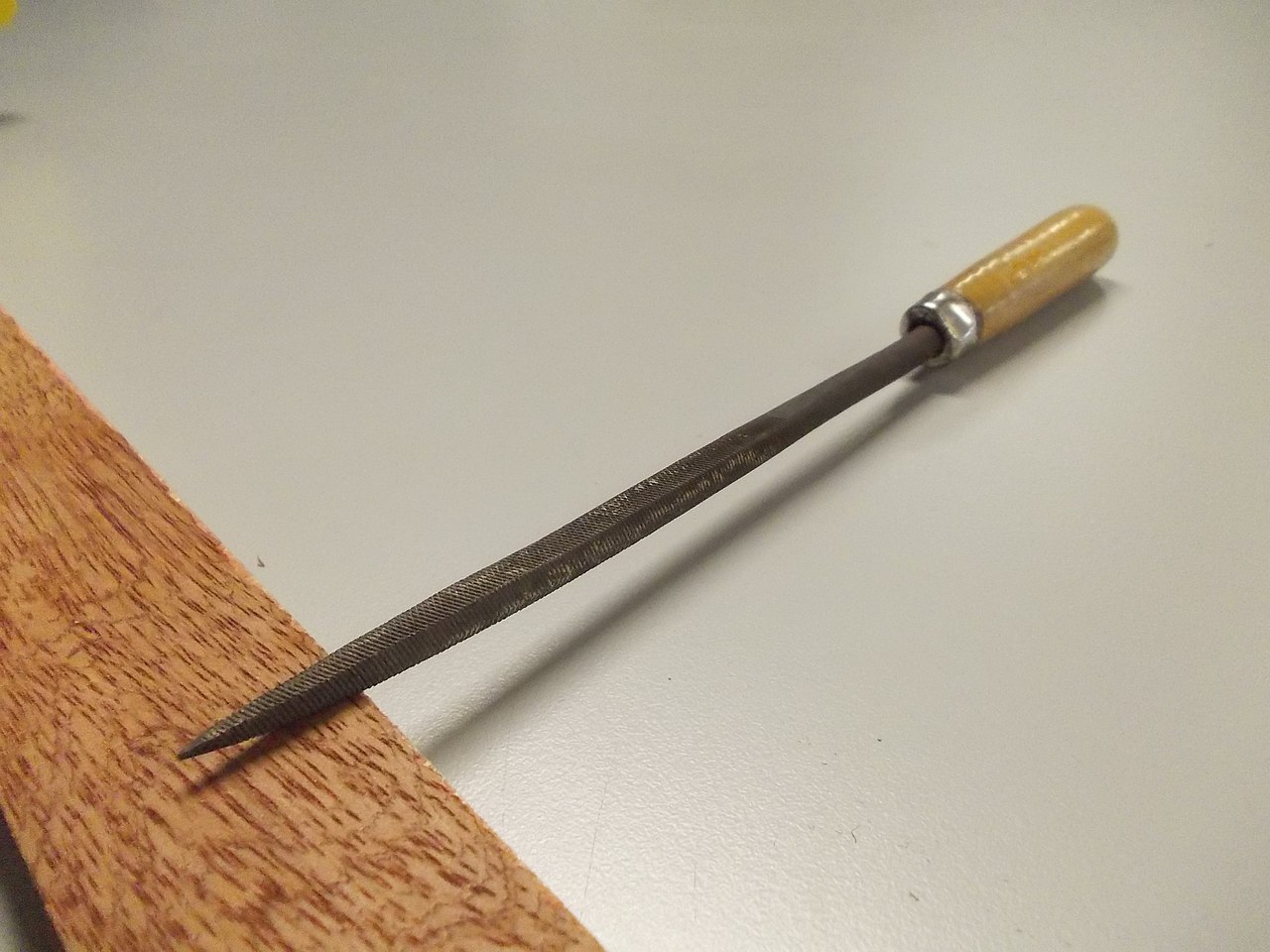
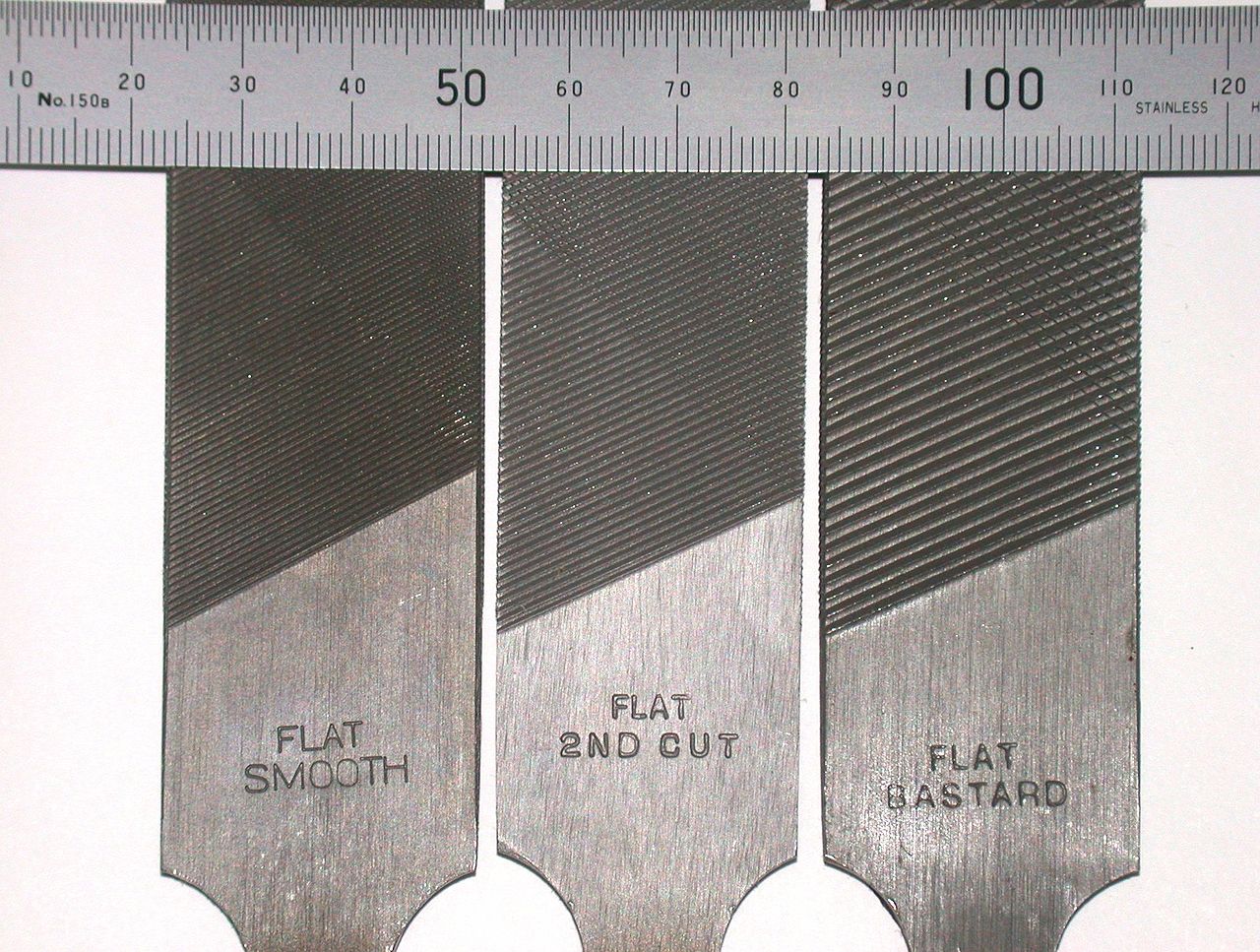
Most files consist of a steel bar with a series of teeth or serrations formed on one or more faces. The body may be rectangular, square, triangular, round, half-round, or specialty shaped to match a profile. Handles are often fitted to the tang for safer, more comfortable use. Files are described by their cut (single-cut or double-cut), coarseness (bastard, second-cut, smooth, etc.), and whether the teeth are cut on one face only or both.
Common types and cuts
- Flat files: used for general flattening and smoothing.
- Round and half-round files: used for curves, holes, and concave surfaces.
- Square and triangular files: used for slots, corners, and V-shaped grooves.
- Rasps: very coarse, used primarily on wood or soft materials.
History and development
Files are ancient tools that evolved alongside metalworking and woodworking trades. Historically hand-forged and individually patterned, files became standardized with industrial production and improved steelmaking. Modern variations include machine files, carbide-coated files and abrasive belts that build on the same principle of controlled abrasion.
Uses, examples and care
Files are essential in metalworking, fitting parts in mechanics, sharpening, deburring edges, and finishing joinery in carpentry. A distinct subgroup is nail files, designed specifically for shaping keratin rather than metal or wood. To keep a file effective, users should clean teeth with a brush or file card, avoid overheating, and store tools to prevent damage. For safety and guidance on selection, consult a trusted tool reference resource.
Notable distinctions
Files may be described as "blunt" when both ends are the same width, or "tapered" when one end narrows to a point. Single-cut files have rows of parallel teeth suited to finishing, while double-cut files have intersecting teeth for faster material removal. For specialized tasks, abrasives or powered equivalents can replace hand files, but the hand file remains valued for fine control and precision. See additional guidance on types and maintenance at tooling reference.
Related articles
Author
AlegsaOnline.com File (tool) Leandro Alegsa
URL: https://en.alegsaonline.com/art/34292