
Fender Jazz Bass
Iconic offset-body electric bass introduced by Fender in 1960, noted for its two single-coil pickups, narrower neck, bright tone, and wide influence across jazz, rock, funk and studio work.
Overview
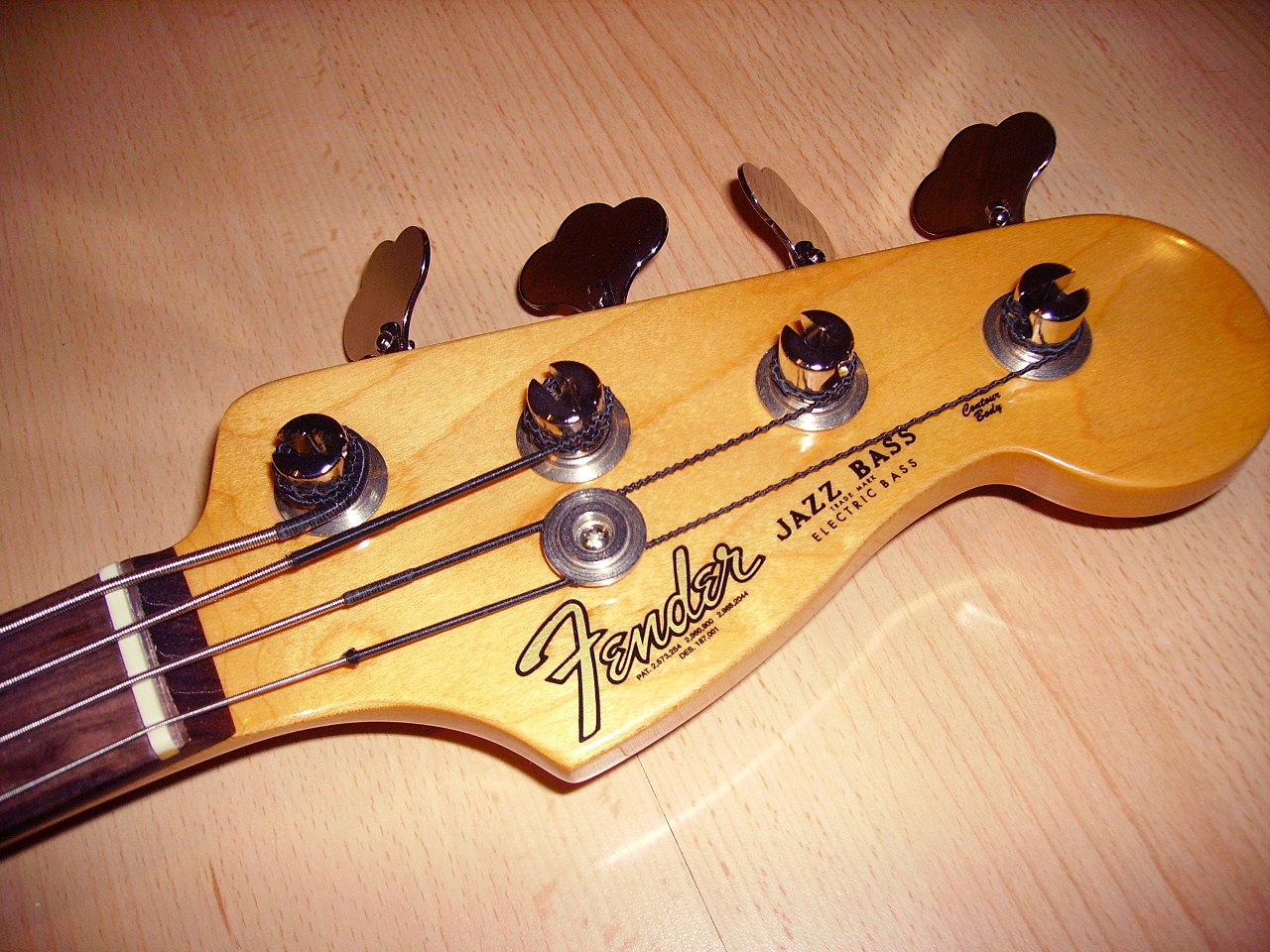
The Fender Jazz Bass, often shortened to J‑Bass, is a solid‑body electric bass model first offered by Fender in 1960. It was the company's second mass‑produced electric bass after the Precision Bass. The Jazz Bass established a distinct voice and feel that made it a long‑running staple for players who wanted more clarity and a slimmer neck than the Precision.
Image gallery
4 Images


Design and components
The original Jazz Bass features an offset waist body, a narrower, more tapered neck profile, and two single‑coil pickups positioned near the neck and bridge. Controls were typically two individual volume knobs (one per pickup) and a master tone control, which allows blends from warm to bright. The combination of bridge pickup clarity and neck pickup warmth gives the J‑Bass a versatile tonal range.
History and development
Introduced as an alternative to the earlier Precision model, the Jazz Bass was aimed at players seeking a different feel and a more articulate sound. Over the decades Fender has produced many variants and updates—different neck shapes, active electronics, fretless options, and additional strings—while preserving the model's basic layout and sonic identity.
Playing styles and notable users
Because of its clarity and punch, the Jazz Bass became popular in jazz, funk, rock and studio work. Its bridge pickup cuts through mixes for fingerstyle and slap techniques, while the neck pickup offers rounder tones for melodic playing. Well‑known players associated with the instrument include Jaco Pastorius, Marcus Miller and Geddy Lee, among others.
Variants, manufacturing and legacy
Fender has produced the Jazz Bass in many forms: four‑ and five‑string models, fretless versions, signature editions and both passive and active electronic configurations. It has been made in multiple factories and reissued in vintage recreations. Its influence is reflected in countless bass designs and it remains a standard reference instrument for tone and playability.
Key distinctions and further reading
Compared with the Precision Bass, the Jazz Bass typically has a slimmer neck and two single‑coil pickups, offering greater tonal variety and articulation. To learn more about pickup types and how they shape sound, see information on pickups and consult model histories available through makers and collectors.
Related articles
Author
AlegsaOnline.com Fender Jazz Bass Leandro Alegsa
URL: https://en.alegsaonline.com/art/33970