
Fender Precision Bass
The Fender Precision Bass (P-Bass) is a landmark solid-body electric bass introduced by Fender in 1951, influential in popular music for its tone, playability, and role in shaping electric bass design.
Overview
The Fender Precision Bass is a four-string solid-body electric bass first produced by Fender in 1951. Designed to give bassists a portable, amplified alternative to the upright double bass, the Precision Bass quickly became a standard instrument in studios and on stages. Its name reflects the fretted neck, which made intonation and fast playing more accessible to musicians accustomed to fretted instruments.
Image gallery
9 Images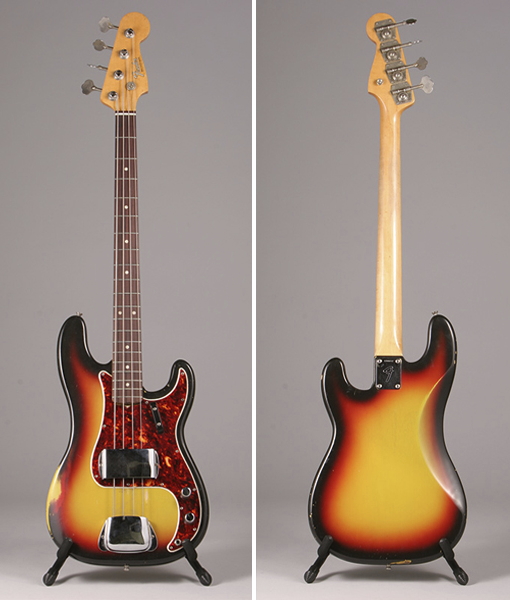



Design and key characteristics
The classic Precision Bass features a 34-inch scale, four strings tuned E–A–D–G, a solid single-piece body, and a bolt-on maple neck with a maple or rosewood fingerboard. Early models used a single-coil pickup, while later designs adopted a staggered split-coil pickup that reduced hum and produced a thicker midrange sound; this pickup design is one of the instrument's defining elements (split-coil).
Controls are typically simple—volume and tone—though modern variants add active preamps, multiple pickups, and additional tone-shaping options. The instrument's construction and electronics contribute to a punchy, warm tone with strong midrange presence that sits well in mixes and across many musical styles.
History and development
Leo Fender developed the Precision Bass to address practical and sonic limitations of the upright bass in amplified settings. By offering a fretted, electrified instrument with a solid body, Fender enabled greater portability, sustained volume, and new playing techniques. The P‑Bass was mass-produced and became widely adopted by studio musicians, touring bands, and beginners, influencing subsequent bass designs worldwide.
Variants and comparisons
- Standard 4-string vs extended: Four-string models remain most common, but five- and six-string Precision-style instruments are available for extended range.
- Passive vs active electronics: Vintage-style passive wiring contrasts with modern active preamps that add gain and EQ control.
- Precision Bass vs Jazz Bass: The P‑Bass typically has a chunkier neck, a single split-coil pickup for thicker midrange emphasis, and simpler controls; the Fender Jazz Bass uses two single-coil pickups, a slimmer neck, and a brighter tonal character.
Uses, influence, and notable players
The P‑Bass has been a workhorse across genres—rock, soul, R&B, funk, punk, country, and pop—valued for its ability to anchor a mix. It played a prominent role in 1960s Motown recordings and in countless studio sessions. Renowned session bassists such as James Jamerson and other studio professionals favored its feel and tone, helping define many classic bass lines.
Over seven decades of production, the Precision Bass has spawned numerous editions—from road-ready Player Series models to high-end American-made versions and budget Squier copies—ensuring its continued presence in contemporary music and instrument manufacturing. For more details on construction options and models, see related resources: electric bass overview, manufacturer history, and pickup designs.
Related articles
Author
AlegsaOnline.com Fender Precision Bass Leandro Alegsa
URL: https://en.alegsaonline.com/art/33971