
Federal University of Rio de Janeiro (UFRJ)
Major public university in Brazil, tracing roots to an 18th‑century military college; based in Rio de Janeiro with broad research, hospitals and museum collections including the National Museum.
Overview
The Federal University of Rio de Janeiro, known in Portuguese as Universidade Federal do Rio de Janeiro (UFRJ), is one of Brazil's largest and most influential public higher education institutions. A federal university, it plays a central role in undergraduate and graduate education, research, clinical care and public outreach in the state of Rio de Janeiro and nationally. UFRJ educates tens of thousands of students across a wide array of fields and maintains a substantial portfolio of research centers and cultural institutions.
Image gallery
10 Images





Campuses, facilities and collections
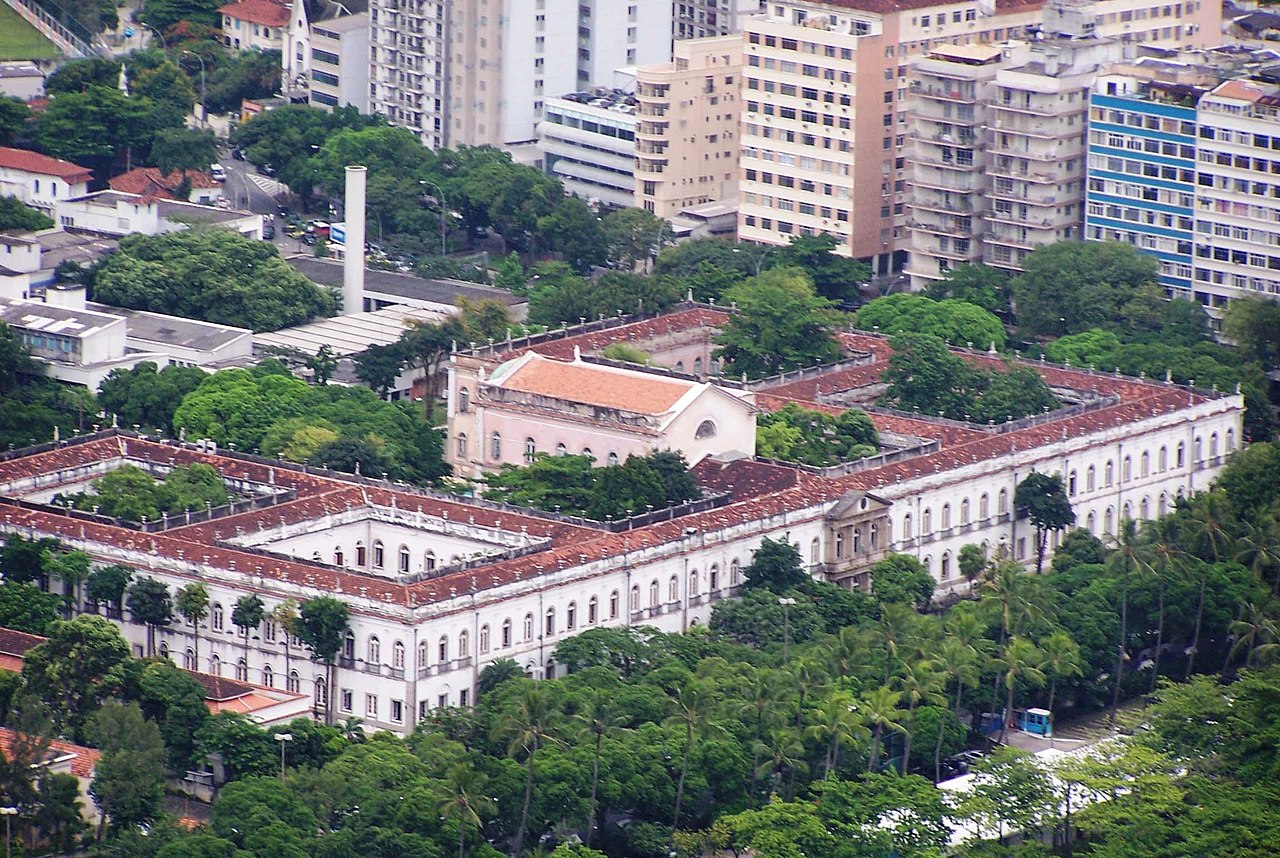
UFRJ's primary campus and administrative core are located in the city of Rio de Janeiro; the institution also maintains additional campuses and teaching units in other locations. It operates multiple university hospitals and clinics that serve as teaching hospitals and community health providers. The university is also responsible for important cultural collections and museums, most prominently the National Museum, referred to here as the National Museum, along with smaller specialized museums and research collections.
History and development
The institutional roots of UFRJ reach back to the late 18th century, when a military and technical academy was established in 1792. Over time this and several later schools and faculties were federated and reorganized, and the modern university was formally constituted in the early 20th century, becoming a comprehensive university in 1920. Since then UFRJ has grown in size and scope, adapting to Brazil's changing educational and scientific needs while preserving lines of teaching that date to its earliest foundation.
Academics, research and admissions
UFRJ offers a broad spectrum of undergraduate, professional and graduate programs across the sciences, engineering, health sciences, humanities, arts and social sciences. Research activity spans basic and applied fields, including oceanography, engineering, medicine, biology and cultural studies. Admission is competitive and normally conducted through national and institutional entrance procedures; many programs are noted for rigorous selection processes.
Significance and notable facts
- As a federally funded institution, UFRJ is part of Brazil's public higher education system and contributes substantially to national research output and trained professionals.
- The university manages hospitals, experimental stations and museums that serve both academic purposes and public engagement.
- Its museum holdings have been internationally important; the National Museum suffered a catastrophic fire in 2018 that damaged much of its collection, an event that prompted national and international attention and recovery efforts.
- For an official description and campus information, see references to the university's central campus in Rio de Janeiro on sites describing Brazil's federal universities: central campus information and general listings of federal universities.
Related articles
Author
AlegsaOnline.com Federal University of Rio de Janeiro (UFRJ) Leandro Alegsa
URL: https://en.alegsaonline.com/art/33857
Sources
- economist.com : "Lessons from the destruction of the National Museum of Brazil"