
February 30: history, calendar rules, and notable exceptions
February 30 does not exist in standard Julian or Gregorian calendars. This article explains why February is shorter, describes the rare historical exception in Sweden, and notes cultural and technical uses of the date.
Overview
February 30 is not a regular calendar date in the two most widely used systems, the Julian and Gregorian calendars. Normally February has 28 days and gains a 29th day in leap years. The idea of a 30th of February appears only in a few specific historical or theoretical contexts and as a rhetorical device.
Image gallery
2 Images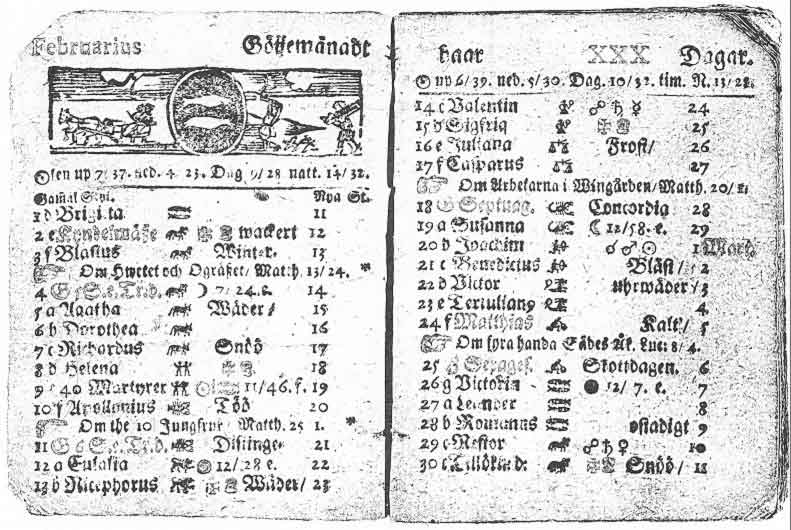

Why February is short
The short length of February dates back to adjustments made in the Roman calendar and later reforms. The Julian reform (1st century BCE) set February at 28 days and added a leap day every four years. The Gregorian reform (1582) kept that basic pattern but refined leap-year rules to skip three leap days every 400 years so the civil year stays aligned with the solar year.
- Julian rule: every year divisible by 4 is a leap year.
- Gregorian rule: years divisible by 4 are leap years, except century years not divisible by 400 (for example, 1900 is not a Gregorian leap year).
Historical exception: Sweden (February 30, 1712)
An oft-cited real occurrence of 30 February happened in Sweden in 1712. Ongoing attempts to change the national calendar produced an unusual corrective step: an extra leap day was inserted into February, giving that year two consecutive leap days and producing a date labelled 30 February 1712 in Swedish records. This was a temporary, local anomaly tied to a change of practice rather than a permanent alteration of the Julian or Gregorian systems.
Cultural, literary and technical uses
Because it is impossible in normal civil reckoning, "February 30" is sometimes used humorously or rhetorically to mean an impossible or nonexistent date. In databases, software tests, and programming examples it can appear as a placeholder or an input error that must be validated. Some calendar reform proposals and fictional calendars imagine months of uniform length; these speculative systems can be described as having dates that would include a 30 February, but such schemes are not part of mainstream civil calendars.
Notable distinctions and takeaways
The absence of 30 February in everyday use is a consequence of historical compromises between astronomical reality and civil convenience. When exceptional dates do appear in records, they almost always reflect local administrative choices, temporary reforms, or errors. For practical purposes, modern users of Gregorian or Julian-derived civil calendars should assume February has at most 29 days.
Related articles
Author
AlegsaOnline.com February 30: history, calendar rules, and notable exceptions Leandro Alegsa
URL: https://en.alegsaonline.com/art/33810
Sources
- timeanddate.com : "February 30 Was a Real Date"
- esquire.com : "A Classic Ray Bradbury Esquire Story"