
Fallacy: Types, Examples, and How to Recognize Faulty Reasoning
A fallacy is faulty reasoning that makes an argument invalid or unsound. This article explains formal and informal fallacies, common examples, history, and ways to spot and avoid them.
A fallacy is an error in reasoning that renders an argument invalid, unsound, or unreliable. In everyday discussion and formal inquiry alike, fallacies can distort conclusions even when premises seem plausible. They arise in fields such as logic, rhetoric and debate, and may also appear in mathematical arguments when conditions for a method are ignored.
Image gallery
2 Images
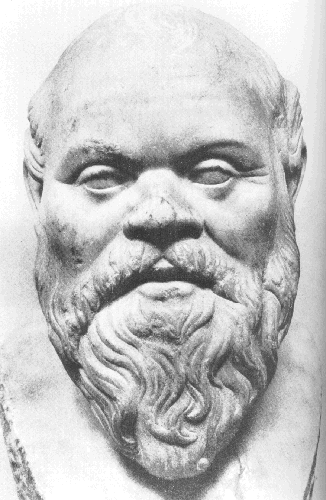
Types and distinguishing features
Broadly, fallacies fall into two categories. Formal fallacies are mistakes in the logical form of an argument: the pattern of inference does not guarantee the conclusion even if the premises are true. Informal fallacies depend on content, context or language: they include errors of relevance, ambiguity, presumption, or weak induction. Distinguishing form from content helps analysts choose appropriate remedies.
Common examples
- Affirming the consequent — treating a conditional as reversible and drawing an invalid inference.
- Denying the antecedent — wrongly concluding the negation of a cause proves the negation of its effect.
- Ad hominem — attacking a person rather than responding to the argument.
- Straw man — misrepresenting an opponent's position to make it easier to refute.
- False dilemma — presenting two options as the only possibilities when others exist.
Examples and analyses of specific patterns can be found in resources on critical thinking; for introductions and exercises see informal fallacies and discussions of formal validity at formal logic.
History and study
Discussion of fallacious reasoning goes back to classical antiquity, where philosophers catalogued flawed arguments as part of dialectical practice. Over centuries, logicians refined formal systems to separate valid forms from invalid ones, while rhetoricians and modern scholars elaborated informal categories to describe everyday errors in reasoning and persuasion.
Why recognizing fallacies matters
Identifying fallacies improves clarity, strengthens debates, and guards against manipulation in politics, media, and advertising. In science and mathematics, avoiding fallacious steps preserves the rigor of proofs and inference: a calculation or argument that violates its conditions can lead to a convincing but false conclusion. Practical techniques include making premises explicit, testing argument form, checking relevance and evidence, and asking whether alternative explanations exist. For further guidance on detection and pedagogy, consult introductory guides and critical thinking curricula at teaching resources and overview sites at academic summaries.
Awareness of fallacies is not a substitute for substantive evidence, but it is an essential tool for clearer reasoning. Learning the common patterns and practicing careful scrutiny helps readers and speakers avoid mistakes and engage more constructively with complex claims.
Related articles
Author
AlegsaOnline.com Fallacy: Types, Examples, and How to Recognize Faulty Reasoning Leandro Alegsa
URL: https://en.alegsaonline.com/art/33368
Sources
- logical-critical-thinking.com : logical-critical-thinking.com/logical-fallacy/appeal-to-probability/
- toolkitforthinking.com : "Appeal to probability - Toolkit For Thinking"
- fallacyfiles.org : "Logical Fallacy: Red Herring"
- logical-critical-thinking.com : logical-critical-thinking.com/logical-fallacy/red-herring-fallacy/
- logicalfallacies.info : "Logical Fallacies» Red Herring"