
Faith No More
American alternative metal band formed in San Francisco in 1981. Known for genre-blending, hits like "Epic" and the cover "Easy," they split in 1998 and reunited in 2009, influencing alternative and metal scenes.
Faith No More is an American rock band best known for merging metal, funk, punk and experimental sounds into a distinctive alternative-metal approach. Formed in San Francisco in 1981, the group developed a reputation for abrupt stylistic shifts, theatrical live shows and inventive arrangements. For background on their genre and broader context see genre profile and for band overviews see band biographies.
Image gallery
6 Images

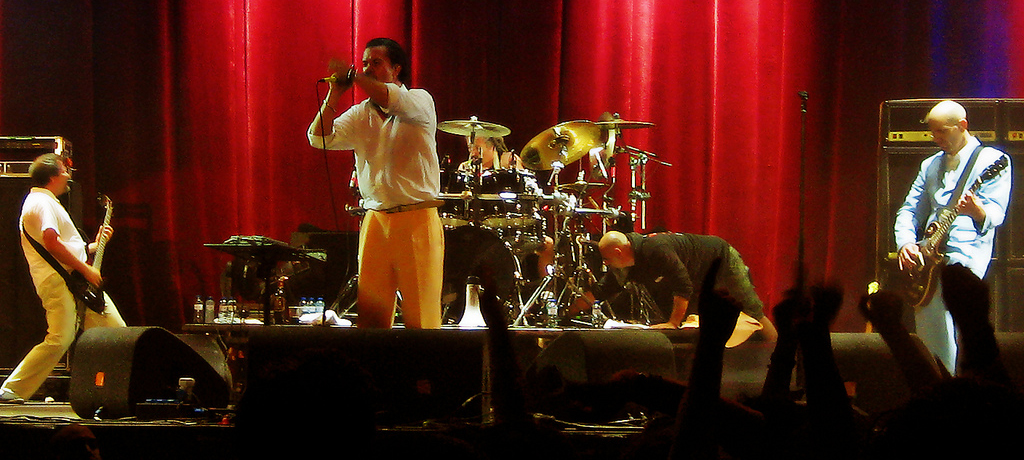


Members and musical traits
The core lineup that brought wide recognition consisted of bassist Billy Gould, drummer Mike Bordin and keyboardist Roddy Bottum; vocalist Mike Patton joined later and became the public face during the band's most commercially successful period. Guitarists who contributed to the band across different eras included Jim Martin and later Jon Hudson, with occasional outside contributors. Their sound is characterized by rhythmic funk-derived bass and drums, diverse vocal techniques, heavy guitar textures and unconventional keyboard use.
Career highlights and discography
Faith No More released several studio albums that showed clear evolution in style. Early releases featured a rawer post-punk/funk edge, while later albums combined sampling, orchestration and more polished production. Notable albums and songs include:
- The Real Thing era, which produced the crossover hit "Epic" and broadened their audience (see album history).
- Experimental follow-ups that drew critical attention for daring arrangements and uneasy, inventive songwriting (see coverage at critical essays).
- Their well-known cover of Lionel Richie's "Easy," which illustrated the band's willingness to reinterpret unexpected material (song notes).
Breakup, reunion and later activity
The band announced a split in April 1998 but reformed in 2009 and resumed touring and recording in subsequent years. The reunion revived interest in their catalogue and introduced their music to new listeners. For timelines and announcements consult interviews and news archives.
Influence and legacy
Faith No More is widely cited as influential in the development of alternative metal and related hybrid styles. Their combination of funk rhythms, heavy riffing and eclectic songcraft informed many bands that followed. They are noted for pushing boundaries of mainstream rock with experimental production, genre-hopping songwriting and an idiosyncratic sense of humor. For retrospectives and analyses see retrospectives.
Beyond records, the band's live performances—marked by unpredictable set lists and energetic delivery—helped cement their reputation. Their work remains a touchstone for musicians and listeners interested in the intersection of heaviness and experimentation, and their catalogs are regularly revisited in discussions of the late 20th-century alternative scene.
Related articles
Author
AlegsaOnline.com Faith No More Leandro Alegsa
URL: https://en.alegsaonline.com/art/33307