
English Defence League
A street protest movement formed in England in 2009 opposing what it calls Islamism and Sharia; known for demonstrations, controversial tactics, and clashes with anti-fascist groups.
The English Defence League (EDL) is a protest movement that emerged in England in 2009. It mobilised supporters for public demonstrations opposing what its members describe as the spread of Islamism and Sharia law in the United Kingdom. The organisation gained attention for street-level activism, frequent rallies in towns and cities, and a confrontational style that attracted both media coverage and police scrutiny.
Image gallery
10 Images
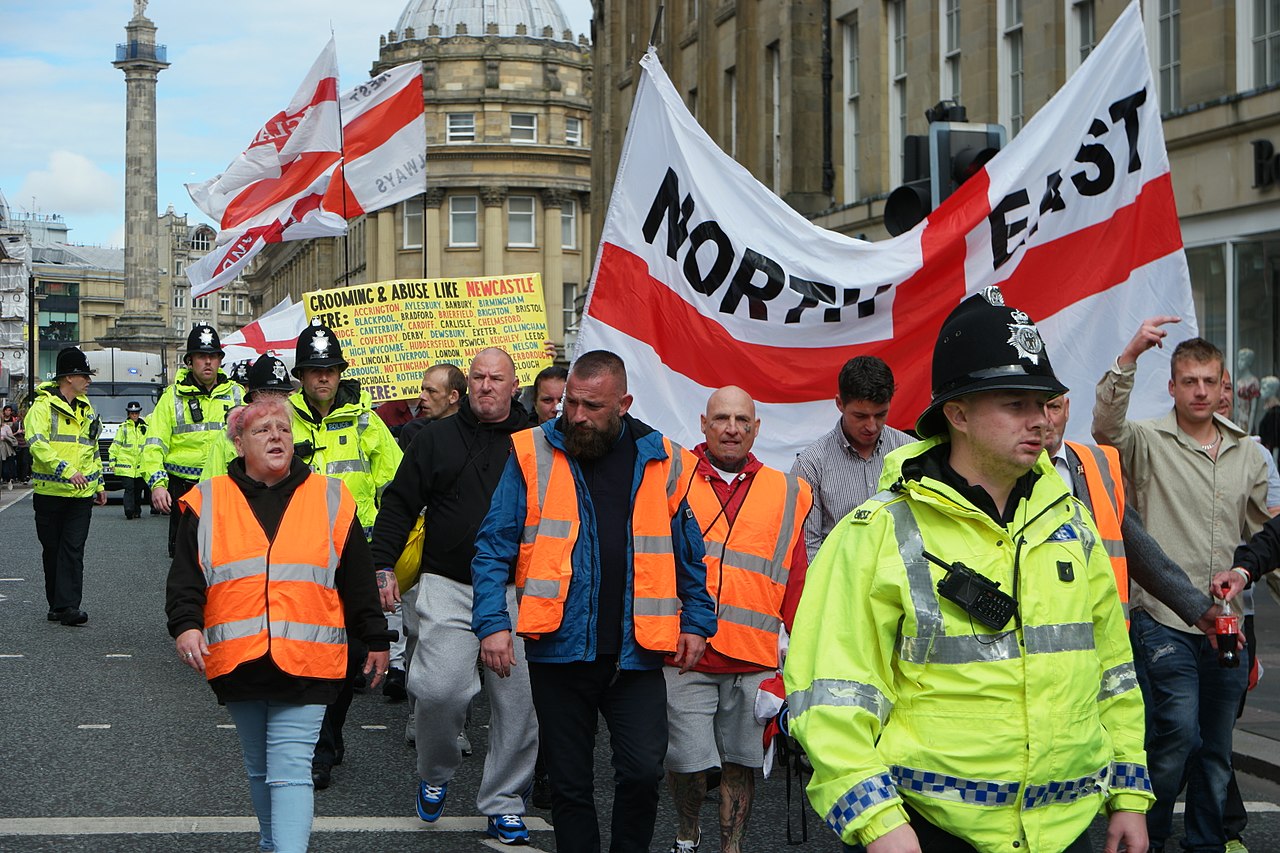


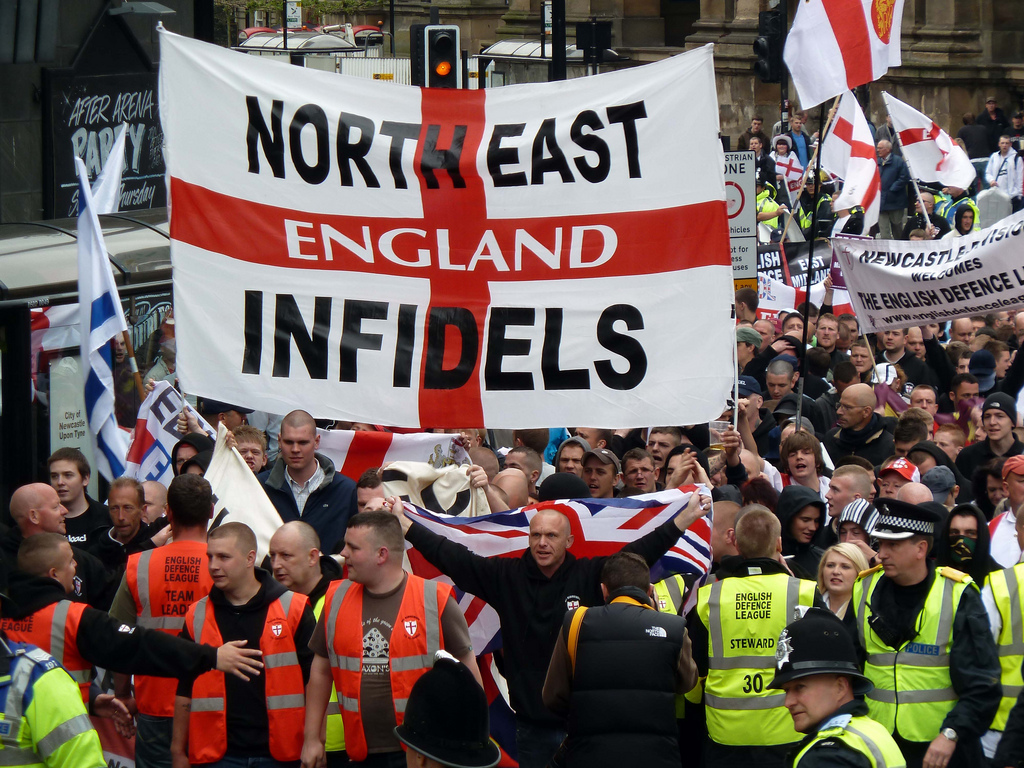


Origins and organisational profile
The EDL began as a local group in Luton and quickly expanded through social media and word of mouth. Its founder, Tommy Robinson, became a public figure associated with the movement; he left the organisation in October 2013, after which leadership figures including Tim Ablitt took on prominent roles. The name was also used for related projects such as the European Defence League, an attempt to coordinate similar groups beyond Britain.
Characteristics and activities
- Core activity: organised street demonstrations and marches, often planned for town centres and football-related venues.
- Communication: relied heavily on social media and online fora to recruit and coordinate supporters.
- Demographics: surveys and reports have indicated a heavy male participation rate; one report found around 81% of supporters were male.
- Culture: some observers have noted links with football-fan networks and elements of organized street mobilisation.
Controversy and public response
The EDL has been the focus of contentious public debate. Commentators, researchers and rival political groups have variously described it as part of the broader far-right landscape and criticised it for anti-Muslim rhetoric. The movement presents itself as opposing Sharia law and Islamism, while opponents such as Unite Against Fascism and activist collectives like Anonymous have staged counter-protests and online campaigns. Police forces have often been required to manage demonstrations to prevent clashes and disorder.
Impact and later developments
At its height in the early 2010s the EDL influenced public discussion about integration, security and free speech in the UK, though it also prompted strong pushback from community organisations and civil society. Internal disagreements, leadership changes and the changing landscape of political activism contributed to fragmentation after 2013. The movement's legacy is contested: some view it as a grassroots reaction to perceived cultural change, while others see it as a source of polarisation and tension in local communities.
For further reading on the group's formation, activities and reception, see contemporary news coverage and research by scholars of social movements and political extremism. Detailed timelines and analyses are available through academic articles and investigative reports that track the EDL's public events and organisational changes.
Related articles
Author
AlegsaOnline.com English Defence League Leandro Alegsa
URL: https://en.alegsaonline.com/art/31472
Sources
- guardian.co.uk : "Sharia, Law, religious courts"
- books.google.com : Framing Muslims: Stereotyping and Representation After 9/11
- guardian.co.uk : Anonymous-linked groups publish EDL supporters' personal information
- globalpost.com : "The anti-Islam English Defense League plans a massive European rally"
- hopenothate.org.uk : Counter-Jihad report: Organisations Defence Leagues Network
- bbc.com : "EDL boss Tommy Robinson quits group"
- theguardian.com : "EDL supporters are young, male and anti-immigration, says survey"