
ETA (Euskadi Ta Askatasuna): Basque separatist organization
Overview of ETA, the Basque separatist group: origins, goals, tactics, history of violence and ceasefire, political context, and legacy within Basque nationalism.
Overview
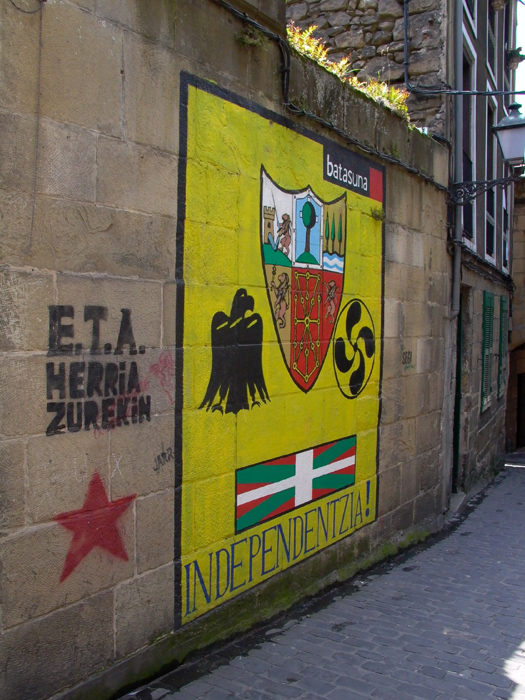
Euskadi Ta Askatasuna (commonly abbreviated as ETA) was a Basque nationalist organization that sought independence for the Basque Country. Founded in the late 1950s by students and activists opposed to Francoist Spain, ETA combined political aims with an armed campaign. Its stated goal was to create an independent Basque state covering parts of northern Spain and southwestern France, a cultural area often referred to as Euskal Herria. The Basque people are a distinct ethnic group; some speak Euskara, a non‑Indo‑European language.
Image gallery
9 Images



History and development
ETA emerged in a period of authoritarian rule in Spain and initially focused on cultural and political assertion. Over the following decades it radicalized and moved to armed struggle. The group carried out bombings, assassinations, robberies and kidnappings as part of its campaign. These actions caused significant public debate and security responses in Spain and abroad. After decades of violence and political shifts in the Basque Country, ETA declared a cessation of armed activity in 2011 and announced the end of its armed campaign; the organization formally disbanded in 2018.
Organization, tactics and political links
ETA combined clandestine militant cells with broader political and social networks. It was often associated with a range of legal and illegal supporting organizations, including political parties and social movements that shared or sympathized with Basque nationalist aims. Security forces accused ETA of clandestine planning and of using improvised explosive devices and targeted killings; critics and many governments classified ETA as a terrorist organization. Over time, Spanish and French law enforcement operations, arrests, and legal bans on political affiliates affected its capacity.
Impact, reception and legacy
The campaign had profound human and political consequences in the Basque Country and beyond. Hundreds of people were killed or injured during the decades of violence, while many others suffered displacement, intimidation or trauma. The conflict shaped regional politics, policing, and public debate about autonomy, identity, and reconciliation. In the years after the ceasefire, efforts focused on victim support, truth-seeking, and political channels for expressing Basque identity. The legacy of ETA remains contested: some remember it as a resistance movement; many others condemn its use of violence.
Key characteristics and notable facts
- Name: "Euskadi Ta Askatasuna" means "Basque Homeland and Freedom."
- Language and culture: Their agenda was tied to Basque cultural revival and language preservation, including Euskara.
- Geography: Activity largely centered on areas of Spain and France inhabited by the Basque people, who are discussed in studies of the Basque ethnic group.
- Pronunciation and identity: Native pronunciation and name details are documented in linguistic sources (pronunciation references).
For further reading on political movements in the Basque region and the long-term social effects of separatist campaigns, consult scholarly and contemporary sources that examine both the cultural roots of Basque nationalism and the legal and human consequences of the conflict.
Questions and answers
Q: What does ETA stand for?
A: Euskadi Ta Askatasuna, which translates to "Basque Homeland and Freedom".
Q: Who did ETA represent?
A: ETA represented the nationalist separatist militants who wanted to establish a separate nation-state for the Basque people.
Q: Where do the Basque people live?
A: The Basque people are an ethnic group living in areas of northern Spain and southwestern France.
Q: How many Basques are there in the region?
A: There are between 2 and 2.5 million Basques in the region.
Q: What language do some of them speak?
A: Some of them speak an indigenous, non-Indo-European language called Euskara.
Q: What was the goal of ETA?
A: The goal of ETA was to establish a separate nation-state for the Basque people.
Related articles
Author
AlegsaOnline.com ETA (Euskadi Ta Askatasuna): Basque separatist organization Leandro Alegsa
URL: https://en.alegsaonline.com/art/32338