
Emily Carr (Canadian artist and writer)
Emily Carr (1871–1945) was a Canadian painter and author known for her expressive portrayals of Pacific Northwest landscapes, Indigenous totem poles, and contributions to Canadian modernism and literature.
Overview
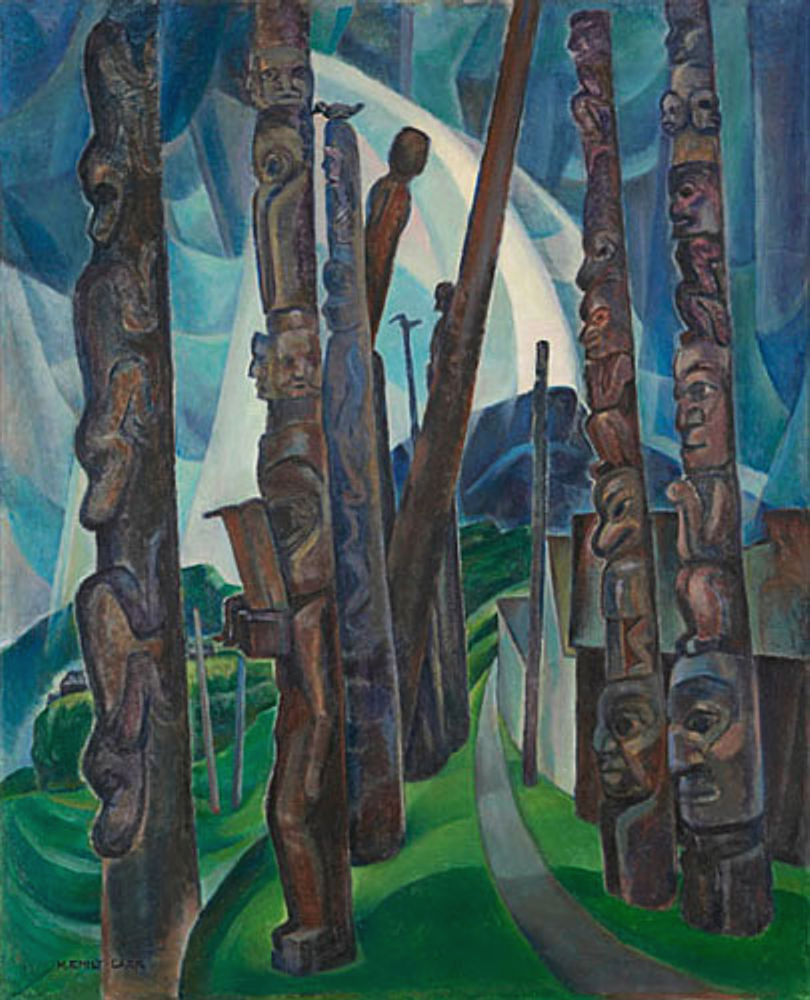
Emily Carr (December 13, 1871 – March 2, 1945) was a Canadian artist and writer whose work is closely associated with the landscapes and Indigenous cultural sites of British Columbia. She became known for powerful, expressive paintings of forests, coastal villages and totem poles, and for books that recounted her life, travels and encounters with Indigenous communities. Carr is regarded as a central figure in the development of Canadian modern art and as an important literary voice of her era.
Image gallery
10 Images


Life and artistic development
Born in Victoria, British Columbia, Carr trained and travelled to study art in North America and Europe before settling back in the Pacific Northwest. Over several decades she experimented with different styles, moving from realistic representation toward a looser, more modernist approach that emphasized rhythm, color and the emotional presence of place. She spent extended periods visiting coastal Indigenous village sites to document carved poles and houses, work that both inspired her art and shaped her subject matter for life.
Style, subjects and techniques
Carr’s paintings are noted for their vigorous brushwork, strong compositions and atmospheric use of light and color. Recurrent subjects include ancient trees, misty forests, shoreline scenes and the monumental forms of totem poles. While rooted in close observation, her late work increasingly expressed a spiritual response to landscape, often simplifying forms into sweeping planes and energetic marks that align her with broader currents of early 20th-century modernism.
Writings and public recognition
In addition to painting, Carr wrote several books that blend memoir, travelogue and cultural reflection. Her collection Klee Wyck, which recounts episodes from her life and encounters with Indigenous people, won critical acclaim and contributed to her reputation beyond visual arts. Recognition of her importance grew especially in the decades after her death, and today her work is represented in major Canadian collections and exhibitions.
Legacy and critical perspective
Emily Carr’s legacy includes influence on subsequent Canadian artists, the naming of institutions such as an art and design university in Vancouver, and a prominent place in national cultural history. Her documentation of totem poles and village sites is valued as a historical record, though modern scholarship also examines the complexities of cultural representation and the colonial contexts in which she worked. Carr remains a subject of study for her artistic innovation, literary voice and the ways her work engages with place and memory.
Further reading
- Selected paintings and writings can be found in museum catalogues and anthologies devoted to Canadian art.
- For a concise introduction and links to sources, see further resources on Emily Carr.
Related articles
Author
AlegsaOnline.com Emily Carr (Canadian artist and writer) Leandro Alegsa
URL: https://en.alegsaonline.com/art/31173
Sources
- biblio.com : Emily Carr biography