
Elio Berhanyer — Spanish fashion designer (1929–2019)
Elio Berhanyer (Elio Berenguer Úbeda) was a leading Spanish designer known for elegant eveningwear, tailored daywear and high-profile uniform commissions. Active from the postwar period into the late 20th century.
Elio Berhanyer (born Elio Berenguer Úbeda, 20 February 1929 – 24 January 2019) was a Spanish fashion designer whose career combined couture and practical design. Over several decades he became known for refined evening gowns, structured coats and tailored daywear, and for high-profile institutional commissions that made his work widely visible in Spain and abroad.
Image gallery
1 Image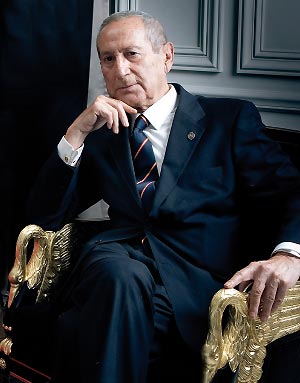
Early life and training
Berhanyer was born in Córdoba, Andalusia, and began his professional life in the years after the Second World War. He worked in different Spanish cities and established himself in Madrid, where he opened ateliers and presented collections to a national clientele. His Andalusian origin and classical training informed a aesthetic that balanced regional sensibility with cosmopolitan tailoring.
Design approach and signature
His designs are often described as elegant and disciplined: clean lines, precise cuts, attention to proportion and an economy of ornament. He favored silhouettes that flattered the figure without unnecessary embellishment, producing garments that were both wearable and sophisticated. Berhanyer worked across scales, from bespoke couture pieces to ready-to-wear garments and uniforms, adapting the same concern for fit and finish to different contexts.
Clients and notable commissions
Berhanyer's gowns and coats were chosen by international film stars and performers; among those associated with his name are Ava Gardner and Cyd Charisse. He also dressed members of the Spanish royal family, including Queen Sofía and Infanta Pilar. Beyond private clients, he accepted institutional commissions that brought his designs into everyday public life: he created uniforms for the national carrier Iberia, designed costumes for the public broadcaster RTVE, and produced the attire for hostesses at the 1982 FIFA World Cup held in Spain.
- Film and stage clients: Ava Gardner, Cyd Charisse
- Royal patrons: Queen Sofía, Infanta Pilar
- Institutional work: Iberia, RTVE, 1982 World Cup
Awards, teaching and legacy
During his career Berhanyer received several prizes and official recognitions for his contribution to fashion and design. In later years he shared his experience through teaching and mentorship; he taught fashion courses linked to the University of Córdoba and contributed to professional training of younger designers. His work is cited in studies of Spanish fashion history as an example of postwar elegance combined with practical design solutions.
Exhibitions and public collections
Examples of his garments have appeared in exhibitions and retrospectives devoted to Spanish costume and contemporary design, where curators have highlighted his mixture of couture technique and everyday utility. His pieces are of interest to researchers tracing the development of Spanish fashion in the 20th century and the relationship between national identity and dress.
Berhanyer maintained ties to his native Andalusia throughout his life; local archives and cultural institutions in Córdoba preserve records relating to his biography and work (Córdoba resources). He died in Madrid on 24 January 2019 at the age of 89, a passing reported by national media and cultural outlets (reports on his death).
Related articles
Author
AlegsaOnline.com Elio Berhanyer — Spanish fashion designer (1929–2019) Leandro Alegsa
URL: https://en.alegsaonline.com/art/30841
Sources
- lavanguardia.com : "Córdoba muestra su "dolor" ante la pérdida de un "referente" como Bernhayer"
- rtve.es : "Imprescindibles - Elio Berhanyer, maestro del diseño"
- espanadiario.es : "Muere el diseñador Elio Berhanyer a los 89 años"