
1982 FIFA World Cup
The 1982 FIFA World Cup in Spain introduced a 24-team format and produced memorable matches, controversies and Italy's triumphant campaign led by Dino Zoff and Paolo Rossi.
Overview
The 1982 FIFA World Cup was the 12th edition of the tournament and took place in Spain. It marked the first World Cup to feature 24 teams, expanding the finals from previous editions. The competition ran across several Spanish cities and concluded with Italy defeating West Germany 3–1 in the final at the Santiago Bernabéu in Madrid. The event combined high-quality football, surprise results and enduring controversies.
Image gallery
10 Images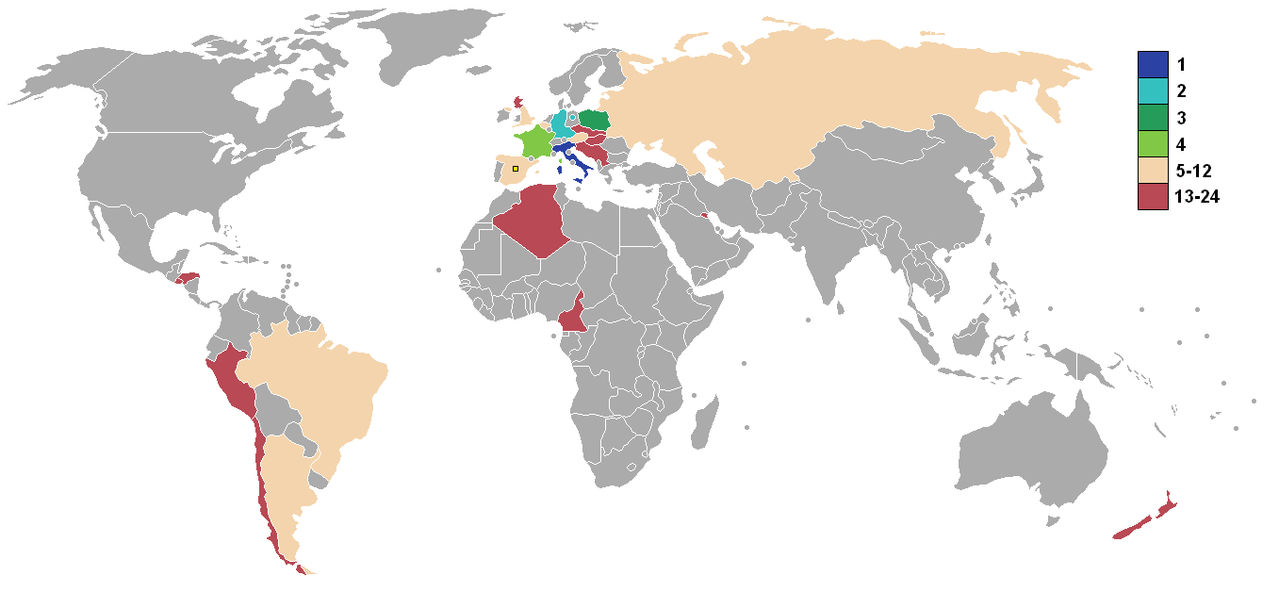




Format and participants
The tournament began with six groups of four teams. The top two from each group advanced to a second group stage of four three-team groups; the winners of those groups moved on to the semi-finals. This two-phase group system distinguished 1982 from earlier single-elimination formats and influenced how teams managed squad rotation and tactics.
Key matches and controversies
The 1982 World Cup produced several notable moments. A shock group-stage victory by an underdog team against a traditional power captivated viewers, while the final-round match between West Germany and Austria resulted in a widely criticized outcome that prompted FIFA to change rules: after 1982, final group matches were scheduled to kick off simultaneously to reduce match-result manipulation.
Italy's campaign and notable figures
Italy won its third World Cup title. The team combined experienced leadership and a decisive attacking return by a forward who finished as the tournament's top scorer and most celebrated player. The captain, an experienced goalkeeper who set an age-related record for winners, provided stability throughout the competition.
Legacy and impact
The 1982 World Cup is remembered for expanding the global field of competitors and for tactical and administrative lessons that shaped later tournaments. It helped spread the game's popularity in new regions, highlighted the importance of match scheduling fairness, and produced moments and players that remain part of World Cup lore.
Quick facts
- Tournament page
- Host country: Spain
- Champion: Italy
- Runner-up: West Germany
Questions and answers
Q: When and where was the 1982 FIFA World Cup held?
A: The 1982 FIFA World Cup was held in Spain in 1982.
Q: Which team won the 1982 FIFA World Cup?
A: Italy won the trophy in the 1982 FIFA World Cup.
Q: Which team did Italy beat in the final of the 1982 FIFA World Cup?
A: Italy beat Germany in the final of the 1982 FIFA World Cup.
Q: Was the 1982 FIFA World Cup a football or a tennis event?
A: The 1982 FIFA World Cup was a football (soccer) sporting event.
Q: Who were the hosts of the 1982 FIFA World Cup?
A: Spain were the hosts of the 1982 FIFA World Cup.
Q: How many teams participated in the 1982 FIFA World Cup?
A: It is not mentioned in the text how many teams participated in the 1982 FIFA World Cup.
Q: Did Italy win the trophy in the 1982 FIFA World Cup after defeating Germany?
A: Yes, Italy won the trophy in the 1982 FIFA World Cup after defeating Germany in the final.
Related articles
Author
AlegsaOnline.com 1982 FIFA World Cup Leandro Alegsa
URL: https://en.alegsaonline.com/art/112175
Sources
- fifa.com : FIFA